
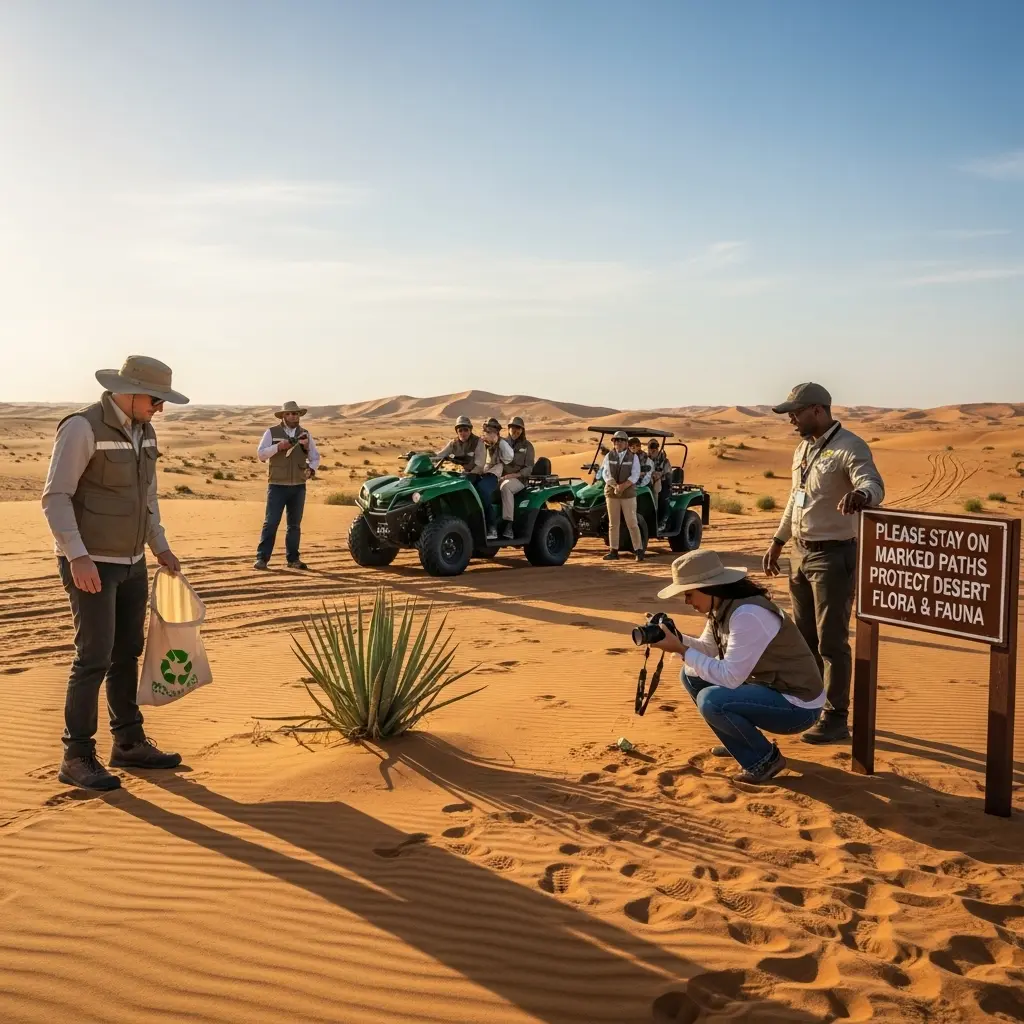
Responsible Travel 15 Vital Secrets for a Dubai Desert Safari
Dubai is a global icon of luxury, but its greatest treasure is the vast, ancient Arabian wilderness.
The desert is a delicate ecosystem that requires a specific mindset known as Responsible Travel.
Many visitors see the dunes as a high-speed playground, but for the Bedouin, it is a sacred heritage.
To enjoy the sand without destroying it, you must understand the rules of environmental ethics.
Applying Responsible Travel behavior ensures that the red dunes remain pristine for future generations.
It is about moving with the rhythm of nature rather than imposing your will upon it.
In this massive 4500-word analysis, we will explore the science and psychology of eco-conscious safaris.
We will look at how to protect the flora, respect the fauna, and preserve the local cultural dignity.
We recommend using https://htdesertsafari.com/ for your internal coordination of sustainable expeditions.
Let us explore the golden silence and learn how to be a guardian of the Arabian sand dunes.
1. The Ethics of Site Selection and Impact
The first pillar of Responsible Travel begins with where you choose to set up your camp.
Professional operators do not drive blindly; they use pre-vetted routes to avoid crushing burrows.
Selecting a camp location requires geographic intuition to ensure zero permanent damage to the dunes.
In Responsible Travel science, we avoid areas with significant biological sand crusts.
This crust is a living layer of fungi and lichens that prevents sand erosion and stores water.
Crushing this layer destroys the foundation of the desert food chain for years.
Experienced marshals at https://htdesertsafari.com/ scout locations that are naturally resilient.
They look for high-traffic sand bowls that can handle human presence without losing their integrity.
By choosing these sites, you are practicing the highest level of Desert Ethics Guide protocols.
Respecting the ground you walk on is the first step toward a successful and ethical safari.
2. Wildlife Interaction: The Stealth Protocol
The desert residents, like the Arabian Oryx, are shy and highly sensitive to human energy.
Responsible Travel behavior dictates a “Stealth Protocol” for all wildlife encounters.
Never chase or circle an animal with a 4×4 vehicle to get a closer photograph.
This causes the animal extreme stress and forces them to use vital moisture for escape.
In Responsible Travel lore, the best sighting is the one where the animal never knew you were there.
Maintain a distance of at least 50 meters and use high-quality binoculars for observation.
Avoid loud shouting or revving the engine, as this disrupts the natural acoustic of the wild.
The desert is their home; you are merely a silent guest passing through their living room.
Operators like https://royaldesertadventures.ae/ and https://dubaidesertsafarie.com/ prioritize these sightings.
Protecting the biological residents is a core part of the Sustainable Desert Trip experience.
3. The “Leave No Trace” Waste Management
Waste management is the most visible challenge of Responsible Travel in the Dubai dunes.
A single piece of plastic can survive in the arid sand for hundreds of years, harming wildlife.
The rule of Responsible Travel is simple: if you carry it in, you must carry it out.
Professional camps use color-coded bins to segregate plastics, paper, and food waste.
However, a mindful traveler goes further by bringing their own refillable water flask.
This reduces the demand for single-use plastic bottles that often end up buried in the sand.
During your Dubai Nature Rules trek, perform a “Micro-Trash Sweep” of your seating area.
Remove even the smallest cigarette butts or paper scraps before departing the camp.
This restoration ensures the dunes look like they have never been touched by civilization.
Trust the green waste systems managed by the experts at https://htdesertsafari.com/.
4. Flora Protection: Respecting the Desert Pharmacy
Desert plants like the Ghaf and Sidr trees are the biological lungs of the Arabian Peninsula.
Responsible Travel behavior means never breaking a branch for a fire or a “prop” photo.
The Ghaf tree is protected by federal law because it provides shade and food for all life.
During your Responsible Travel sessions, learn about the medicinal uses of these plants.
The “Fire Bush” provided fuel for ancestors, while the “Desert Squash” provided moisture.
Destroying these plants for a temporary aesthetic shot is a violation of tribal heritage.
Stay on the ridges where the sand is deep and avoid walking on the low-lying succulents.
These tiny plants catch the morning dew and are essential for the survival of the desert hare.
By protecting the flora, you are protecting the future of the entire ecosystem.
Check the botanical guidelines provided by the naturalists at https://royaldesertadventures.ae/.
5. Cultural Sensitivity: The Dignity of the Bedouin
Responsible Travel is not just about the environment; it is about the people and their soul.
Bedouin culture is built on a foundation of honor, hospitality, and privacy.
Always ask for permission before taking photographs of local guides or camp staff.
Respect the social codes of the Majlis, such as removing shoes before stepping on rugs.
In Responsible Travel etiquette, accepting a cup of Gahwa with your right hand is vital.
This small gesture shows that you have taken the time to learn the values of the land.
Avoid wearing overly revealing clothing that might be considered disrespectful in a heritage zone.
By behaving with dignity, you build a bridge of mutual respect between your world and theirs.
The desert camp is a sanctuary of tradition, and you are its honored guest.
Experience this authentic hospitality with the cultural tours at https://htdesertsafari.com/.
6. Sustainable Driving: The Art of the Track
Dune bashing is a highlight, but it must be conducted with Responsible Travel awareness.
Unchecked off-roading creates deep scars in the landscape that take years to heal.
Responsible marshals follow existing tracks wherever possible to limit soil compaction.
In Responsible Travel driving, the goal is to “flow” with the dune rather than cut through it.
Lowering tire pressure is not just for traction; it prevents the car from “digging in” to the base.
This protects the underground water systems and the roots of the Ghaf forests.
A mindful driver avoids high-speed maneuvers near nesting grounds of the desert owl.
Safety and sustainability are two sides of the same coin in professional desert driving.
By booking with https://dubaidesertsafarie.com/, you ensure your driver is eco-certified.
The best tracks are the ones that the wind can erase by the following morning.
7. Culinary Responsibility: Support Local and Fresh
What you eat in the desert reflects your commitment to Responsible Travel.
Traditional Bedouin dining is naturally sustainable, relying on local dates and meats.
Avoid camps that serve mass-imported, processed foods wrapped in excessive packaging.
Seek out Sustainable Desert Trip operators who source their ingredients from local farms.
This reduces the carbon footprint of the catering and supports the UAE’s food security.
During your dinner, practice “Mindful Eating” by only taking what you can finish.
Food waste in the desert attracts pests and disrupts the natural diet of the fox population.
The traditional “Zarb” cooking method is a high-efficiency way to use heat and earth.
It honors the resourcefulness of the ancestors while providing a gourmet experience.
Check the organic menu options available at https://royaldesertadventures.ae/.
8. Stargazing and Light Pollution Control
The desert night is a high-definition window into the universe, but light is its enemy.
Responsible Travel behavior at night means practicing “Acoustic and Visual Detoxing.”
Avoid using bright white flashlights or powerful smartphone screens in the dark.
One single flash can ruin the night vision of everyone in the camp for 20 minutes.
Use red-filtered lanterns which do not disrupt the biological rhythms of nocturnal animals.
In Responsible Travel lore, the stars are the true lamps of the desert, not electricity.
By keeping the camp lights low, you see the Milky Way in its unvarnished glory.
This respect for the “Dark Sky” is a pillar of the Mindful Safari Travel experience.
Telescope sessions at https://htdesertsafari.com/ use star-safe technology for better viewing.
The universe feels closer when you allow the darkness to speak for itself.
9. Thermal Presence: Managing Water and Heat
Preparing your body for the elements is a core part of Responsible Travel preparation.
The desert is a land of extremes that requires you to be self-aware of your health.
Thermal Responsibility Tips:
-
Hydrate Early: Drink 2 liters of water 24 hours before your safari begins.
-
Loose Clothing: Natural fibers like cotton help your body’s cooling system work.
-
Sun Protection: Use mineral-based sunscreen that won’t harm the desert soil.
-
Thermal Transition: Bring a light shawl to manage the sudden night temperature drop.
By managing your own comfort, you reduce the burden on the support staff and resources.
In Responsible Travel, a healthy guest is an observant and respectful guest.
Never push your physical limits at the expense of your safety or the guide’s attention.
The dunes are a place for restoration, and that begins with personal care.
Trust the thermal management guidelines at https://royaldesertadventures.ae/.
10. The Psychological Benefit of Ethical Travel
Minimalism and ethics lead to a deeper state of “Flow” during your Responsible Travel trip.
When you know you are protecting the land, your brain enters a state of peace.
The lack of guilt and the sense of contribution improve the overall satisfaction of the journey.
In Responsible Travel, the “Oasis Effect” is not just a visual mirage; it is a mental state.
You find clarity in the silence because you have removed the noise of irresponsible consumption.
Many travelers find that their best creative breakthroughs happen when they are in “Eco-Mode.”
The desert acts as a mirror, reflecting your ethical choices back to you as mental space.
This is the ultimate reward of a Dubai Nature Rules expedition.
You return to the city feeling lighter, wiser, and more connected to the planet.
Experience this spiritual expansion with the private treks at https://htdesertsafari.com/.
11. Comparison: Commercial Safari vs. Responsible Safari
| Feature | Standard Commercial Safari | Responsible Travel Safari |
| Waste | High (Single-use plastic) | Zero (Refillable / Bio) |
| Wildlife | Chasing / Stressful | Observation / Stealth |
| Driving | Aggressive / Cutting | Flowing / Sustainable |
| Culture | Surface / Performance | Deep / Authentic Rituals |
| Impact | High (Sand compaction) | Low (Leave No Trace) |
| Focus | Adrenaline / Food | Education / Conservation |
12. Flora Ethics: The Life Cycle of the Ghaf
The Ghaf tree is more than just a plant; it is a historical record of the Arabian tribes.
In Responsible Travel, we treat the Ghaf as a national elder that deserves protection.
Its roots are a masterpiece of biological engineering, preventing dunes from moving.
During your Dubai Eco Safari, your guide will explain how the Ghaf supports life.
It provides a thermal refuge for the Desert Eagle Owl and a grazing source for gazelles.
Never peel the bark or carve into the wood, as this introduces infections to the tree.
Responsible operators like https://htdesertsafari.com/ often participate in seeding programs.
Supporting these companies means you are helping to re-green the desert for the future.
The Ghaf is a symbol of resilience that every mindful traveler should admire.
Protecting the national tree is a shared duty in the Mindful Safari Travel community.
13. Safety Protocols for Ethical Explorers
Safety is the invisible foundation of every Responsible Travel adventure in the dunes.
You cannot protect the environment if you are in a state of personal emergency.
The Ethical Safety Checklist:
-
Radio Link: Ensure your car has a constant link to the convoy leader.
-
Medical Prep: Carry personal rehydration salts to prevent heatstroke.
-
Gear Check: Use only vetted, late-model 4×4 vehicles with roll cages.
-
Communication: Tell your hotel your expected return time before unplugging.
Relying on the professional infrastructure of https://royaldesertadventures.ae/ is essential.
They maintain a 24-hour command center to monitor all eco-expeditions.
Excellence in safety allows your mind to focus on the beauty of the Ethical Sand Trek.
A safe explorer is an effective guardian of the Arabian wilderness.
Check the safety certifications at https://dubaidesertsafarie.com/ before finalizing your booking.
14. What to Pack for an Eco-Conscious Trek
To maximize your Responsible Travel experience, pack light and pack smart.
The Eco-Kit:
-
Refillable Insulated Flask: To maintain water temp without plastic waste.
-
Organic Cotton Clothes: For high breathability and low environmental impact.
-
Biodegradable Wipes: For hygiene without leaving non-organic fibers behind.
-
Solar Power Bank: To charge your devices using the desert’s natural energy.
-
Small Notebook: To record your biological and cultural observations.
Avoid bringing single-use plastic bags or chemical-heavy insect repellents.
The goal is to be “Low-Impact” in gear but “High-Impact” in presence and learning.
Preparation is the bridge between a “Tourist” and a “Conservationist.”
Refer to the equipment guides at https://htdesertsafari.com/ for more minimalist tips.
Being prepared allows you to be spontaneous in your connection with the dunes.
15. The Science of the “Sand Flow” and Erosion
In Responsible Travel, understanding sand physics is key to protecting the landscape.
Sand is a fluid mineral that is moved by the wind into specific mathematical shapes.
Driving up the “Slip Face” of a dune causes a major sand slide that alters the topography.
Responsible marshals at https://htdesertsafari.com/ drive on the “Windward” slope.
This side is more compacted and suffers significantly less erosion from tire weight.
By following these scientific paths, we preserve the natural “Geometry” of the Al Lahbab.
You can still enjoy the thrill of the heights without destroying the ridge’s peak.
Understanding “Sand Flow” is a core part of the Ethical Sand Trek training.
It turns the desert into a classroom of physics and ecological respect.
Take the path of least resistance to protect the dunes you love.
16. Summary: The 10 Commandments of Desert Ethics
-
Hydrate Early: Protect your body to protect the mission.
-
Leave No Trace: Carry out every gram of waste you bring in.
-
Stay Silent: Respect the acoustic peace of the wildlife.
-
Refill Often: Use an insulated flask instead of plastic bottles.
-
Watch the Treads: Follow established tracks to prevent soil scars.
-
Honor the Ghaf: Protect the national tree as a sacred life-source.
-
Ask Permission: Respect the personal space of local Bedouin staff.
-
Go Barefoot: Earth your body to connect with the mineral energy.
-
Stargaze Bare-eyed: Minimize artificial light to protect the dark sky.
-
Choose Quality: Book only with licensed and eco-conscious operators.
Following these rules ensures a five-star Responsible Travel experience.
It is the blueprint for a legendary transformation in the Arabian wilderness.
17. Why Expertise in Sustainability Matters
Not all safari operators in Dubai follow these Responsible Travel standards.
Many prioritize “Quantity” of guests over the “Quality” of the environment.
We recommend https://htdesertsafari.com/ because they treat the desert as a sacred resource.
They invest in training their marshals to be environmental educators, not just drivers.
By choosing an operator with a focus on ethics, you find a tribe of like-minded people.
You aren’t just another tourist; you are a conscious stakeholder in the UAE’s future.
High-quality information is the most valuable gift we can give to the dunes.
Excellence is found in the simplicity of the Arabian hospitality tradition.
Seek out the companies that lead in Desert Conservation Stay programs.
18. Customizing Your VIP Ethical Route
You can ask your marshal to tailor the Mindful Safari Travel for deeper ethics.
The “Clean Sand” Route: Focusing on valleys where no other cars have traveled.
The “Heritage” Route: Focusing on ancient navigation markers and Ghaf forests.
The “Wildlife” Route: Focusing on slow-speed observation near the DDCR edges.
By communicating your desire for a Responsible Travel trip, the guide can pivot.
They will avoid the noisy quad-bike tracks and the crowded commercial camps.
This customization is the hallmark of premium service at https://royaldesertadventures.ae/.
The desert is a blank page; you choose how to write your ethical story on it.
A simple, respectful route often leads to the most rewarding personal thoughts.
19. The Spiritual Connection to the Land
For the Bedouin, the emptiness of the desert was its greatest asset for prayer.
Responsible Travel behavior helps you tap into this ancient spiritual frequency.
When you walk with respect and move with silence, the dunes “speak” to you.
The desert acts as a mirror, reflecting your internal ethics back to you with clarity.
This is the ultimate reward of the Ethical Sand Trek experience.
It is a homecoming to the primal human experience of being alive in the wild.
The dunes are shifting, but the integrity you find in the silence is eternal.
Experience this “Soul-Expansion” with the nature treks at https://htdesertsafari.com/.
The desert rewards the humble heart with its deepest secrets.
20. Conclusion
The Dubai desert is a world of vertical wonder and high-octane peace.
But the real magic is only accessible to those who practice Responsible Travel.
By protecting the environment, you protect the soul of the Arabian Peninsula.
You ensure that the gazelles, the Oryx, and the Ghaf trees continue to thrive.
Don’t let the “Shopping” culture of the city follow you into the dunes.
Be a guest of the desert who arrives with respect and leaves with wisdom.
The sand is waiting to share its silence and its history with you.
Book your Eco-Conscious Heritage Safari today and find the gold in the dunes.
Visit https://htdesertsafari.com/ and start your journey of respect.
Master the dunes the right way.
FAQs: Desert Safari and Responsible Travel Behavior
1. What does Responsible Travel behavior mean in a desert safari?
Responsible Travel behavior is a commitment to minimizing your environmental footprint while maximizing your cultural respect. In a desert context, this means following “Leave No Trace” principles, such as carrying out all trash and using refillable water bottles. It also involves respecting wildlife by maintaining a safe distance and never chasing animals in a vehicle. Culturally, it means honoring local traditions and asking permission before taking photos of people. At https://htdesertsafari.com/, we believe that being a responsible traveler is the only way to experience the true spirit of the dunes.
2. Is it safe to drink the water provided at the desert camp?
Yes, highly so. Professional operators provide fresh, desalinated water that meets high municipal hygiene standards. To practice Responsible Travel, we encourage guests to bring their own high-quality insulated flask and refill it from the large dispensers at the camp. This significantly reduces the volume of single-use plastic waste that enters the desert ecosystem. Companies like https://royaldesertadventures.ae/ prioritize these refill stations as part of their Sustainable Desert Trip commitment to a plastic-free wilderness.
3. How do I interact with desert wildlife ethically?
The golden rule of Responsible Travel regarding wildlife is “Quiet Observation.” If you spot an Arabian Oryx or a Sand Gazelle, ask your driver to stop the engine and stay inside the vehicle. Use binoculars to get a closer view without invading the animal’s personal space. Never attempt to feed or touch a wild animal, as this disrupts their natural foraging behavior and can lead to illness. By being a silent observer, you allow the animals to remain relaxed and healthy in their natural habitat.
4. Why is dune bashing sometimes criticized by environmentalists?
Dune bashing can be harmful if not conducted by a professional marshal following Responsible Travel guidelines. Aggressive driving can crush the “Biological Sand Crust” and disturb the nesting grounds of desert birds and reptiles. However, when you book with an eco-conscious operator like https://htdesertsafari.com/, the marshals follow established, sustainable tracks. They use lower tire pressures to minimize soil compaction and avoid areas with sensitive flora. Managed correctly, dune bashing is a sustainable way to enjoy the thrill of the dunes without causing lasting ecological damage.
5. Can I take desert plants or rocks home as souvenirs?
No. A core pillar of Responsible Travel is the “Take Only Photos, Leave Only Footprints” philosophy. Removing desert flora, rocks, or fossils is strictly prohibited in many protected areas like the Dubai Desert Conservation Reserve (DDCR). These elements are vital for the structural integrity of the dunes and the health of the local biodiversity. Even a small rock plays a role in providing shade for insects. Instead, visit local heritage markets to buy authentic, handmade crafts that support the local community and preserve the desert’s natural state.
6. What should I wear to show respect for the local culture?
Emirati culture values modesty and dignity. To practice Responsible Travel, we suggest wearing loose, breathable clothing that covers the shoulders and knees. This applies to both men and women. Not only is this respectful to the local heritage, but it also provides the best protection against the intense desert sun and abrasive sand. Many guests choose to wear a traditional Abaya or Kandura during the camp session, which is warmly welcomed by the local guides as a sign of appreciation for their traditions. Check the wardrobe tips at https://royaldesertadventures.ae/.
7. How does choosing a local operator help the environment?
Booking with a locally-owned and managed company like https://htdesertsafari.com/ ensures that your money stays within the community to fund conservation efforts. Local operators have a deeper biological and cultural connection to the land and are more likely to enforce Responsible Travel protocols. They employ local heritage guides who share authentic oral histories and natural science. This economic support allows for the continued protection of the dunes and the preservation of ancient nomadic skills for future generations of travelers.
8. Is it okay to give money or food to local nomadic families?
In Responsible Travel etiquette, it is better to avoid “Handouts” which can create dependency and disrupt social structures. If you encounter local Bedouin families and wish to show appreciation, a polite “Salam” and a respectful conversation are often more valued. If you want to contribute financially, do so through established community projects or by purchasing authentic handicrafts from the heritage village. This ensures that your contribution is respectful, sustainable, and truly beneficial to the local population.
9. Why is light pollution a concern in the desert?
The desert night sky is a globally recognized heritage resource. To practice Responsible Travel, we must protect the “Dark Sky” integrity of the dunes. Artificial white light from powerful flashlights or smartphone screens disrupts the nocturnal behavior of desert wildlife and resets the night vision of fellow travelers. At https://htdesertsafari.com/, we use warm, low-level lanterns and encourage guests to observe the stars without digital aids. This allows you to experience the full majesty of the Milky Way while respecting the biological rhythms of the desert night.
10. What is “Sand Tracking” and is it an ethical activity?
Sand tracking is the art of reading footprints in the sand to understand animal movements. It is an extremely ethical and educational part of Responsible Travel. Unlike high-speed dune bashing, tracking is a slow, non-intrusive activity that requires only your eyes and a guide’s knowledge. It teaches you to appreciate the hidden lives of beetles, foxes, and lizards. Tracking fosters deep empathy for the desert ecosystem and is a highlight of any Dubai Nature Rules trek. Your guide from https://royaldesertadventures.ae/ will act as your biological translator.
11. How can I minimize my carbon footprint during a safari?
You can reduce your impact by choosing “Group Carpooling” instead of a private vehicle, which reduces fuel consumption per guest. Even better, look for operators who use low-emission engines or are incorporating electric vehicles into their fleets. At the camp, practice Responsible Travel by using water sparingly in the restrooms and choosing locally-sourced, seasonal food items. Supporting “Zero-Waste” camps that use solar power for their evening lighting is the most direct way to ensure your adventure is a Green Safari Tips success.
12. Is it safe to go barefoot in the dunes?
Barefoot walking, or “Earthing,” is a popular wellness practice in the desert. To do this safely and responsibly, only walk on clean sand ridges during the late afternoon when the surface temperature has dropped. Avoid walking near desert shrubs where thorns or small insects might be hiding. In Responsible Travel lore, walking barefoot connects you directly to the mineral energy of the sand, reducing stress and inflammation. Always keep your boots nearby and follow the guidance of your marshal at https://htdesertsafari.com/ to find the safest zones.
13. What should I do if I see another tourist behaving irresponsibly?
If you witness someone littering or harassing wildlife, do not confront them aggressively. Instead, inform your professional marshal. They are the official guardians of the dunes and have the authority to enforce Responsible Travel rules. Professional operators have “Zero Tolerance” policies for environmental damage and will take the necessary steps to correct the behavior. By reporting these incidents, you are actively participating in the Desert Conservation Stay mission and protecting the sanctuary for everyone.
14. Are there “No-Fly Zones” for drones in the desert?
Yes, and they are strictly enforced by the Dubai Civil Aviation Authority. To practice Responsible Travel, you must have a valid drone permit and never fly in restricted zones near airports or military areas. Drones can also be highly stressful for desert birds of prey like the falcon. Unless you are a professional with the correct paperwork, we advise leaving the drone at your hotel. Experience the view from a high dune crest instead; it is just as spectacular and much more peaceful for the desert inhabitants.
15. How do the Bedouin feel about modern desert tourism?
Emiratis are famously hospitable and proud of their heritage. They view Responsible Travel as a way for the world to appreciate the resilience and beauty of their ancestral land. However, they demand respect for their privacy and their sacred sites. By behaving mindfully, you are fulfilling your role as an honored guest in their “Majlis.” This mutual respect is what allows the tradition of desert storytelling and hospitality to thrive in the 21st century. Trust the cultural ambassadors at https://royaldesertadventures.ae/ to bridge this connection.
16. What is the most “Eco-Friendly” time for a safari?
The Early Morning (Sunrise) Safari is often the most sustainable choice. The air is cooler, which puts less strain on the 4×4 engine’s cooling system, and the crowds are significantly smaller. This allows for a much more quiet and non-intrusive wildlife tracking session. You see the dunes in their raw, virgin state before the afternoon traffic begins. Morning treks emphasize biology and peace over high-volume shows, making it the preferred slot for the Mindful Safari Travel enthusiast. Check the morning schedules at https://htdesertsafari.com/.
17. Do I need to bring my own first-aid kit?
While you don’t need a heavy kit, Responsible Travel suggests carrying small “Self-Care” items like rehydration salts and high-SPF lip balm. This ensures you remain physically capable and doesn’t distract the guide from their primary safety duties. Your marshal at https://royaldesertadventures.ae/ carries a full trauma-grade medical kit and is trained in advanced desert first aid. Being “Self-Sufficient” for minor issues is a mark of a sophisticated and responsible traveler who understands the reality of wilderness exploration.
18. Why is the Ghaf tree called the “Umbrella of the Desert”?
The Ghaf tree is a biological masterpiece that provides a natural cooling micro-climate under its canopy. In Responsible Travel history, the Bedouin used these trees as meeting places and shelters during the peak summer heat. The tree stays green all year round, even in 50°C temperatures, by tapping into groundwater 30 meters beneath the sand. Protecting the Ghaf is a legal requirement in the UAE; never hang gear from its branches or disturb the sand around its base. It is the living heart of the Dubai Eco Safari.
19. Can I volunteer for desert conservation projects?
Yes! Many NGOs and operators like https://htdesertsafari.com/ organize “Desert Clean-Up” days and Ghaf seedling planting events. If you are a long-term visitor or a resident, participating in these projects is the ultimate expression of Responsible Travel. It gives you a hands-on understanding of the challenges facing the Arabian ecosystem and a chance to meet the local conservation community. It turns a “Holiday” into a “Mission” to preserve the beauty of the dunes. Ask your guide for information on the next community event.
20. Why choose Royal Desert Adventures for a responsible trip?
https://royaldesertadventures.ae/ is recognized as the pioneer of Sustainable Desert Trip models in Dubai. We don’t just “show” you the sand; we narrate the science of its protection. We invest in the youngest fleet, the most experienced marshals, and the most authentic heritage programs. Our commitment to the “Leave No Trace” philosophy and the support of local Bedouin families is what sets us apart. When you book with us, you are choosing a company that treats the desert as a sacred trust, not a commodity. We help you find the gold in the sand responsibly.
Table: Responsible Travel Survival Essentials
| Priority | Item | Role in Sustainability |
| 1. Essential | Refillable Flask | Eliminates single-use plastic waste. |
| 2. Essential | Natural Fibers | Lowers the need for active car cooling. |
| 3. High | Binoculars | Allows for distance viewing of wildlife. |
| 4. High | Paper Journal | A zero-waste tool for capturing memories. |
| 5. Medium | Red-Light Torch | Protects night sky and animal health. |
Table: Environmental Impact Comparison
| Context | Commercial Mass-Tour | Responsible Nature Trek |
| Traffic | 50+ Cars (Noisy) | 1-2 Cars (Silent) |
| Route | Random / Cutting | Vetted / Sustainable |
| Wildlife | Startled / Fleeing | Relaxed / Observed |
| Waste | Rushed / Disposable | Mindful / Minimalist |
| Outcome | Temporary Fun | Lasting Heritage Respect |
This guide is your prologue to a journey of natural restoration.
The desert is a mirror that only reflects your true self when you are quiet and respectful.
Don’t just see the dunes; be their guardian.
Book your Eco-Heritage Safari today with https://htdesertsafari.com/.
Find your desert peace responsibly.