
Full Moon Desert Safari: Witnessing the Silver Sands of Dubai
The desert is usually defined by the sun.
We think of heat, golden sand, and bright blue skies.
But there is another face to the desert.
It reveals itself only once a month.
A Full Moon Desert Safari is a secret spectacle.
It transforms the familiar landscape into something alien and beautiful.
When the sun sets and the full moon rises, the world changes color.
The red dunes turn into silver waves.
The heat dissipates, replaced by a cool, gentle breeze.
Visibility remains high, but it is a ghostly, ethereal light.
You do not need a flashlight to walk.
The moon acts as a natural floodlight.
This experience is rare because the timing must be perfect.
You have only a few days each month to see it.
This exclusivity makes it special.
It is perfect for romantics, photographers, and nature lovers.
It offers a peace that the day cannot provide.
In this guide, we will explore the magic of the lunar night.
We will discuss why the full moon changes the safari experience.
We will cover photography, dining, and safety.
We will show you how to book this unique adventure.
Prepare to see Dubai in a whole new light.
Why the Full Moon Changes Everything
Light is the painter of the landscape.
During the day, the sun flattens the dunes at noon.
At sunset, the shadows lengthen.
But during a Full Moon Desert Safari, the light is cool.
It creates deep, ink-black shadows.
The crests of the dunes glow white.
This high contrast is visually stunning.
It feels like walking on the surface of the moon itself.
The atmosphere also changes.
The desert wildlife behaves differently.
Animals that hide during the day come out.
They feel safer under the cover of night, yet the moon aids their hunting.
For the human visitor, the mood shifts from adrenaline to awe.
You stop shouting and start whispering.
The beauty demands reverence.
It is a spiritual connection to the earth.
You realize how bright the night can actually be.
Planning Your Dates: The Lunar Calendar
You cannot book a Full Moon Desert Safari on a random Tuesday.
You must consult the lunar calendar.
The full moon occurs roughly every 29.5 days.
The days immediately before and after the peak are also excellent.
This gives you a 3-day window each month.
Planning is essential.
These dates are popular with photographers and locals.
You should book your trip weeks in advance.
Check the moonrise time as well.
Ideally, you want the moon to rise just as the sun sets.
This prevents a period of total darkness.
It creates a seamless transition from golden hour to silver hour.
Winter months are the most comfortable.
The air is clear, making the moon appear sharper.
Summer months can be humid.
This creates a halo around the moon, which is also beautiful.
The Drive: A Different Kind of Dune Bashing
Dune bashing is usually a high-speed thrill ride.
During the day, drivers use the sun to see the depth of the dunes.
At night, depth perception is trickier.
However, during a Full Moon Desert Safari, visibility is surprisingly good.
The moonlight highlights the edges of the sand.
Drivers can still navigate with skill.
But the pace is often slightly slower.
It becomes a rhythmic dance over the sand.
The headlights cut through the dark.
But often, drivers will dim them for a moment.
This allows you to see the dunes lit only by the moon.
It is a surreal experience.
You feel like you are floating in a grey ocean.
The engine noise seems louder in the quiet night.
It is thrilling but in a moody, atmospheric way.
Photography: Capturing the Moonlight
Taking photos at night is a challenge.
But the full moon provides a strong light source.
You might not need a flash.
Use a tripod if you have one.
Long exposures will make the desert look like daytime.
But with a strange, blue tint.
To capture the Full Moon Desert Safari authentically, adjust your ISO.
A higher ISO allows you to shoot handheld.
Focus on the contrast.
Silhouette your family against the bright moon.
Or silhouette a camel against the horizon.
These shots are iconic.
The moon itself is hard to photograph with a phone.
It often looks like a white blob.
lowering the exposure slider helps.
It reveals the craters on the lunar surface.
If you have a DSLR, bring a zoom lens.
The “moon illusion” makes it look huge near the horizon.
This is the best time for that hero shot.
Wildlife Encounters Under the Moon
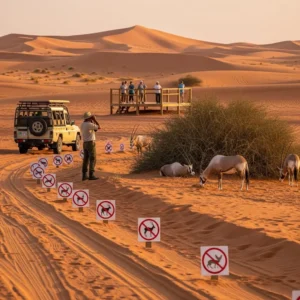
The desert is not dead; it is nocturnal.
Many animals sleep during the heat.
They wake up when it cools down.
The full moon helps you spot them.
You might see a desert fox darting across the sand.
Their eyes reflect the light.
You might see a gecko hunting insects.
The Full Moon Desert Safari is a safari in the true sense.
You are observing nature.
Owls are active, hunting for small rodents.
You might hear their hooting in the distance.
Beetles leave tracks that are visible in the moonlight.
It is a biology lesson in real-time.
Your guide can point out these signs.
Without the blinding sun, you can look closer.
You notice the small details of the ecosystem.
Dining in the Silver Light
The camp dinner is a staple of the safari.
But the ambiance changes under the moon.
Most camps turn down their artificial lights.
They let the moon do the work.
Eating BBQ under a Full Moon Desert Safari sky is romantic.
The shadows of the palm trees dance on your table.
The food tastes better in the fresh night air.
You can see your food clearly.
It is not pitch black like a new moon night.
It is a natural candlelight dinner.
Couples often choose this time for dates.
It is quiet and intimate.
The noise of the large tour groups fades away.
You are left with the crackle of the fire and the glow of the moon.
It is the perfect setting for deep conversation.
The Silence of the Lunar Landscape
We must talk about the sound.
Or rather, the lack of it.
The desert at night is incredibly quiet.
The wind dies down.
The birds stop singing.
During a Full Moon Desert Safari, stop talking for a minute.
Walk away from the camp (safely).
Listen.
You can hear your own heartbeat.
You can hear the sand shifting.
This silence is heavy and profound.
It creates a sense of peace.
It creates a sense of solitude.
It is a meditative experience.
Many people find it healing.
It disconnects you from the stress of the city.
It reconnects you with the universe.
Camel Riding at Midnight
Riding a camel during the day is fun.
Riding a camel at night is magical.
The desert looks endless from the high vantage point.
The camel’s shadow is long and dark on the silver sand.
It feels like a journey back in time.
Travelers used the full moon to navigate for centuries.
You are repeating an ancient tradition.
The air is cool, making the ride comfortable.
The camel is calm.
During a Full Moon Desert Safari, this is a must-do.
It is peaceful.
The rhythmic swaying of the camel is relaxing.
You feel like a Bedouin explorer.
It is a great photo opportunity too.
The silhouette of a rider against the moon is classic.
Safety Considerations
Is it safe to be out at night?
Yes, absolutely.
The full moon provides excellent visibility.
You are less likely to trip than on a dark night.
However, temperatures drop.
It can get cold in the winter months.
Bring a jacket or a hoodie.
The desert can be 10 degrees cooler than the city.
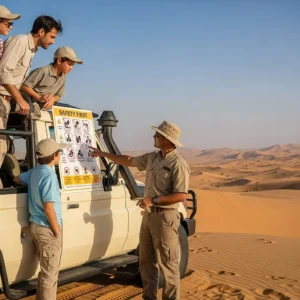
Stick with your guide.
Even with the moon, the dunes look similar.
It is easy to lose your sense of direction.
A Full Moon Desert Safari is safe if you follow rules.
Don’t wander off alone.
Keep your children close.
Watch where you step.
Shadows can hide uneven ground.
Bedouin Legends and the Moon
The moon is central to Arabic culture.
The calendar is lunar.
The crescent moon signals the start of months.
Bedouins told stories about the moon.
Ask your guide about these legends.
They might tell you about the moon guiding lost travelers.
Or poetry written about the moon’s beauty.
This cultural context adds depth.
A Full Moon Desert Safari becomes a history lesson.
It is not just a view; it is a heritage.
Understanding the significance makes it richer.
You appreciate why the moon is on flags.
You appreciate why it is revered.
It was the clock, the map, and the lamp of the desert.
Romantic Getaways
If you want to impress a partner, this is it.
It is far better than a restaurant dinner.
It is an adventure.
Book a private car.
Ask for a private table at the camp.
The setting is naturally romantic.
The soft light is flattering.
The isolation creates intimacy.
A Full Moon Desert Safari is popular for proposals.
Imagine kneeling on a silver dune.
The ring sparkling in the moonlight.
It is unforgettable.
Even for long-time couples, it sparks romance.
It is a shared memory that stands out.
It is different from the usual routine.
The Spiritual Aspect
For many, the desert is a spiritual place.
The vastness reminds us of our smallness.
The full moon adds to this feeling.
It is a celestial event.
Yoga retreats often happen during the full moon.
Meditation is powerful here.
Sit on a dune. Close your eyes.
Feel the energy of the Full Moon Desert Safari.
Breathe in the cool air.
Let go of your worries.
It is a cleansing experience.
You leave feeling lighter.
You leave feeling grounded.
It is therapy for the soul.
Choosing the Right Operator
This is crucial.
Not all operators understand the nuance.
Some will just run their standard bright lights.
You need an operator who respects the moon.
You need one who will turn off the floodlights.
We recommend Royal Desert Adventures.
They offer tailored night experiences.
They know the best spots away from light pollution.
They understand that the moon is the star of the show.
Check their packages at https://royaldesertadventures.ae/.
They can arrange private night drives.
They can arrange overnight stays.
Sleeping under the full moon is the ultimate version.
Don’t settle for a generic tour.
What to Pack
Your packing list is different for night.
Bring layers. It gets cold.
Bring a good camera.
Bring a tripod.
Bring binoculars.
You can look at the moon’s craters.
Avoid bright flashlights.
They ruin your night vision.
If you need a light, use a red light.
Bring water. The air is dry.
Wear closed shoes.
The sand is cool, but protection is good.
Being prepared ensures your Full Moon Desert Safari is comfortable.
You don’t want to be shivering.
You want to be enjoying.
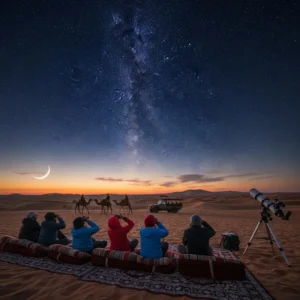
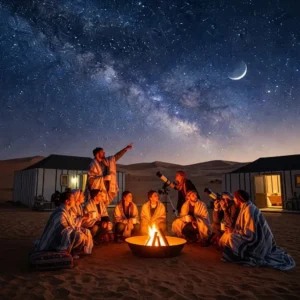
Combining with Stargazing
Wait, doesn’t the moon hide the stars?
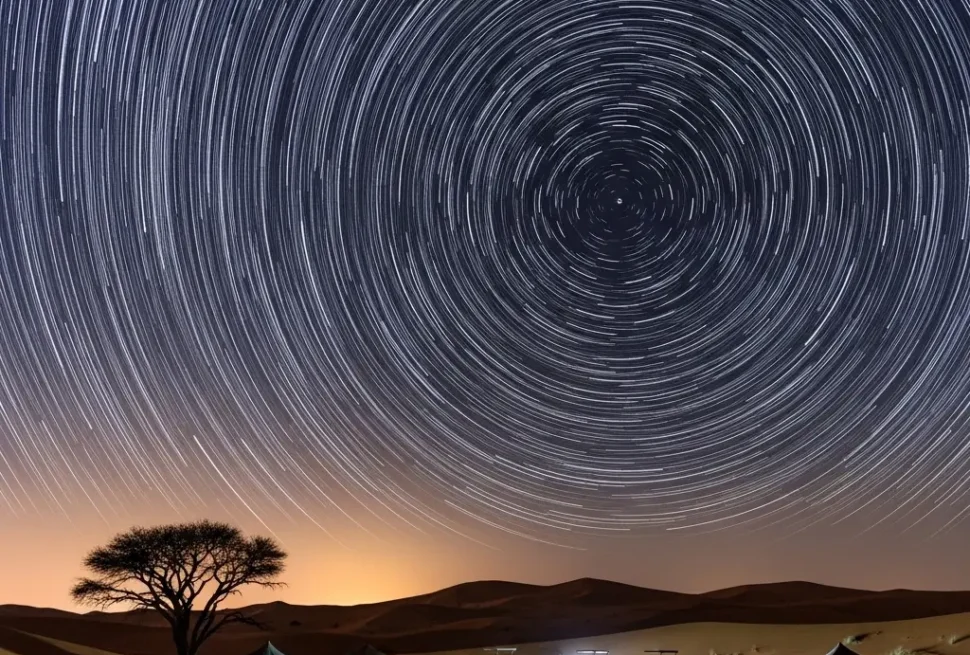
Yes, the full moon washes out faint stars.
You won’t see the Milky Way.
But you will see the brightest stars.
You will see the planets like Jupiter and Venus.
They shine through the moonlight.
It is a different kind of astronomy.
You focus on the moon itself.
You focus on the bright constellations.
A Full Moon Desert Safari is not for deep space viewing.
It is for lunar viewing.
Adjust your expectations.
Enjoy what is visible.
The landscape is the focus, lit by the sky.
The Morning After
If you stay overnight, the morning is special.
The moon sets as the sun rises.
You might see both in the sky at once.
The sun brings the color back.
The silver turns back to gold.
It is a beautiful transformation.
You witness the cycle of the day.
It completes the experience.
It is worth the overnight stay.
Conclusion
A trip to Dubai is full of highlights.
But a Full Moon Desert Safari is unique.
It is rare. It is beautiful. It is peaceful.
It changes your perception of the desert.
It is not just a hot, sandy place.
It is a place of cool, silver beauty.
It offers romance, adventure, and peace.
Check the calendar.
Find the next full moon.
Book your trip with https://htdesertsafari.com/.
Do not miss this celestial spectacle.
The moon is waiting to show you the way.
Go and find the magic in the dunes.
20 FAQs About Full Moon Desert Safari (Detailed Answers)
1. What is the difference between a regular and a Full Moon Desert Safari?
The main difference is the lighting and atmosphere. A regular evening safari relies on the sun setting and then artificial camp lights. A Full Moon Desert Safari takes place when the moon is at its brightest, naturally illuminating the dunes with a silvery glow. Visibility is high without flashlights. The mood is quieter, more romantic, and mysterious. You can see the landscape clearly at midnight, whereas on a regular night, the desert beyond the camp lights is pitch black.
2. Can we see the stars during a full moon safari?
You can see the brightest stars and planets (like Jupiter, Venus, Mars), but you will not see the Milky Way or faint stars. The brightness of the full moon acts as natural light pollution, washing out the dimmer celestial objects. However, the trade-off is that the landscape itself is visible and beautiful. If your priority is deep-space stargazing, go during a New Moon. If your priority is seeing the glowing dunes, go during a Full Moon.
3. Is it safe to drive in the dunes at night?
Yes, it is safe when done by professional drivers. During a Full Moon Desert Safari, the visibility is actually quite good because the sand reflects the moonlight. Drivers are trained to read the terrain shadows. They also use headlights when necessary but often dim them to let guests appreciate the natural light. The pace is typically slightly slower and smoother than the aggressive daytime dune bashing, focusing more on the flow of the drive.
4. How do I know when to book?
You need to check a lunar calendar for Dubai. The full moon happens roughly every 29-30 days. The 3 days surrounding the full moon (the day before, the day of, and the day after) offer the best experience. You should book your tour for these specific dates well in advance, as they are limited. Operators like https://royaldesertadventures.ae/ can advise you on the exact dates for the upcoming months to plan your trip.
5. Is it cold in the desert during the full moon?
Yes, it can be chilly. The clear skies that allow you to see the moon also allow heat to escape the earth rapidly. In winter, night temperatures can drop to 10°C. Even in summer, the breeze can feel cool compared to the day. It is highly recommended to wear long trousers and bring a hoodie, jacket, or shawl. Being warm allows you to stay outside and enjoy the Full Moon Desert Safari without discomfort.
6. Can I take good photos with my phone?
Modern smartphones with “Night Mode” can take decent photos of the lit landscape. However, the moon itself often appears as a bright white flare on phone cameras. To get better shots, try to tap on the moon on your screen to lower the exposure slider. For high-quality images, a DSLR with a tripod is best. You can take long-exposure shots that make the desert look like a surreal daylight scene with blue skies.
7. What wild animals can we see?
The full moon stimulates nocturnal activity. You have a good chance of seeing desert foxes, which are active hunters at night. You might see wildcats, geckos, and beetles. The bright light makes it easier for you to spot movement on the sand compared to a dark night. Your guide can help point out tracks and signs of life. It is a great time for wildlife observation.
8. Is the camp dinner different?
The food menu is usually the same delicious BBQ buffet (meats, salads, rice, sweets). However, the dining experience is different. Many camps will dim the electric lights to enhance the moonlight ambiance. Dining under a Full Moon Desert Safari sky feels more like a candlelight dinner. It is quieter and more atmospheric. Some private packages offer dinner setups directly on the dunes away from the main camp for maximum moon viewing.
9. Can we stay overnight?
Yes, combining a full moon safari with an overnight stay is the ultimate experience. You can watch the moon travel across the sky all night. The moon shadows move and change. It is incredibly peaceful to sleep under the bright moon (you might even need an eye mask!). You can then watch the moonset and sunrise in the morning. Check https://dubaidesertsafarie.com/ for overnight camping options.
10. Is it suitable for children?
Yes, children often find the glowing desert magical. It is less scary than a pitch-black night because they can see their surroundings. It is a great educational opportunity to teach them about the moon phases and nature. However, ensure they are dressed warmly. The late night might be tiring for toddlers, so a private car is recommended to leave when they get sleepy.
11. Do I need a flashlight?
Technically, no. The full moon is bright enough to walk by safely. However, it is always wise to carry a small torch or use your phone light for finding things in your bag or going to the bathroom. If you bring a light, try to use a red light filter to preserve your night vision and the ambiance for others. Avoid shining bright white lights into people’s eyes.
12. Is it a romantic experience?
Extremely. The Full Moon Desert Safari is one of the most romantic activities in Dubai. The silver light, the cool breeze, and the isolation create a perfect date setting. Many couples book private dinners during this time. It is a popular setting for marriage proposals. The natural beauty provides a stunning backdrop without the need for artificial decorations.
13. What if it is cloudy?
Clouds are the enemy of the full moon safari. If it is overcast, the desert will be dark, and you miss the effect. However, Dubai has very few cloudy days. The risk is low. Fog is more common in winter mornings. If the weather is bad, reputable operators will inform you. But even with some clouds, the moon often shines through, creating a dramatic, moody sky which is also beautiful.
14. Are there mosquitoes?
Mosquitoes are generally rare in the dry open desert. However, during the winter months or after rain, there might be a few. The breeze usually keeps them away. If you are sensitive to bites, apply a little repellent. The main “bugs” you see will be beetles on the sand, which are harmless.
15. Can I ride a camel at night?
Yes, camel riding at night is a highlight of the Full Moon Desert Safari. It is cooler for the camel and the rider. The view from the top of the camel allows you to see further across the illuminated dunes. It is a very peaceful and rhythmic experience. Ensure you hold on tight as the ground shadows can sometimes be tricky to judge, but the camels are sure-footed.
16. Why is Royal Desert Adventures recommended for this?
We recommend https://royaldesertadventures.ae/ because they are flexible with timings. They understand that you want to be out in the dunes when the moon is rising, not stuck in a buffet line. They can arrange private cars to take you deeper into the desert, away from the light pollution of the roads and camps, ensuring you get the full impact of the moonlight.
17. Is there a surcharge for full moon dates?
Usually, no. The price is typically the same as a standard safari. However, because the dates are specific and limited (3 days a month), seats fill up fast. Private cars might be in higher demand. The “cost” is in the planning and booking early, rather than a higher ticket price. It offers exceptional value for such a unique view.
18. Can I see the moon craters with binoculars?
Yes! Binoculars are fantastic for a Full Moon Desert Safari. Even a standard pair will reveal the major craters and the “seas” (dark patches) on the moon. The brightness might be intense, so don’t look for too long. Looking at the edge of the moon (the limb) often shows the best detail of the terrain relief.
19. Does the sand color change?
Yes, this is one of the most striking features. The famous “Red Dunes” of Lahbab do not look red at night. Under the moonlight, they appear silver, grey, or even blueish. Photography with long exposure might bring back some of the red tone, but to the naked eye, it is a monochrome, silver landscape. It feels like a different planet.
20. Is it scary?
Not at all. The full moon makes the desert feel open and welcoming. Visibility is high. You don’t have the fear of the unknown that comes with total darkness. It is serene and calming rather than scary. The silence is peaceful. With a professional guide, you are completely safe to enjoy the mystery of the night.