Environmental Awareness Tours 11 Amazing Reasons to Explore Nature
Dubai is a city of immense vertical growth and technological wonder.
However, the foundation of this nation lies in the horizontal vastness of its sand.
For decades, tourism focused on the high-octane thrill of the dunes.
But today, a new movement is rising in the Arabian sands.
Environmental Awareness Tours are changing how we view the desert.
These tours are not just about adrenaline or luxury dining.
They are about the delicate balance of life in an arid landscape.
The desert is often misunderstood as a barren wasteland.
In reality, it is a complex biological engine.
It is home to specialized flora and endangered fauna.
By joining an eco-conscious tour, you become a guardian of this heritage.
You learn that every grain of sand has a purpose in the global climate.
In this massive guide, we will analyze the rise of sustainable tourism.
We will show you how to identify a truly green operator.
We recommend booking with https://htdesertsafari.com/ for their commitment to preservation.
Let us explore the dunes with a conscience and a heart for nature.
1. The Shift Toward Responsible Travel
The global travel industry is undergoing a massive transformation.
People no longer want to just consume a destination.
They want to contribute to its longevity and health.
In Dubai, this has led to the creation of Environmental Awareness Tours.
These experiences prioritize the “Leave No Trace” philosophy.
They focus on low-impact vehicles and waste management.
The goal is to provide a world-class experience without damaging the soil.
Traditional dune bashing can sometimes compact the sand too much.
Eco-tours use specialized tire pressures to minimize the footprint.
They also limit the number of vehicles allowed in sensitive areas.
This ensures that the desert remains pristine for the next generation.
It is a shift from mass tourism to mindful exploration.
2. Wildlife Conservation as a Primary Goal
The Arabian Oryx was once extinct in the wild.
Its return to the dunes is a miracle of modern conservation.
Environmental Awareness Tours fund the protection of these animals.
A portion of your ticket price goes directly to habitat management.
You aren’t just looking at an antelope; you are helping it survive.
Guides on these tours are trained in zoology and ecology.
They explain the breeding programs and the tracking technology used.
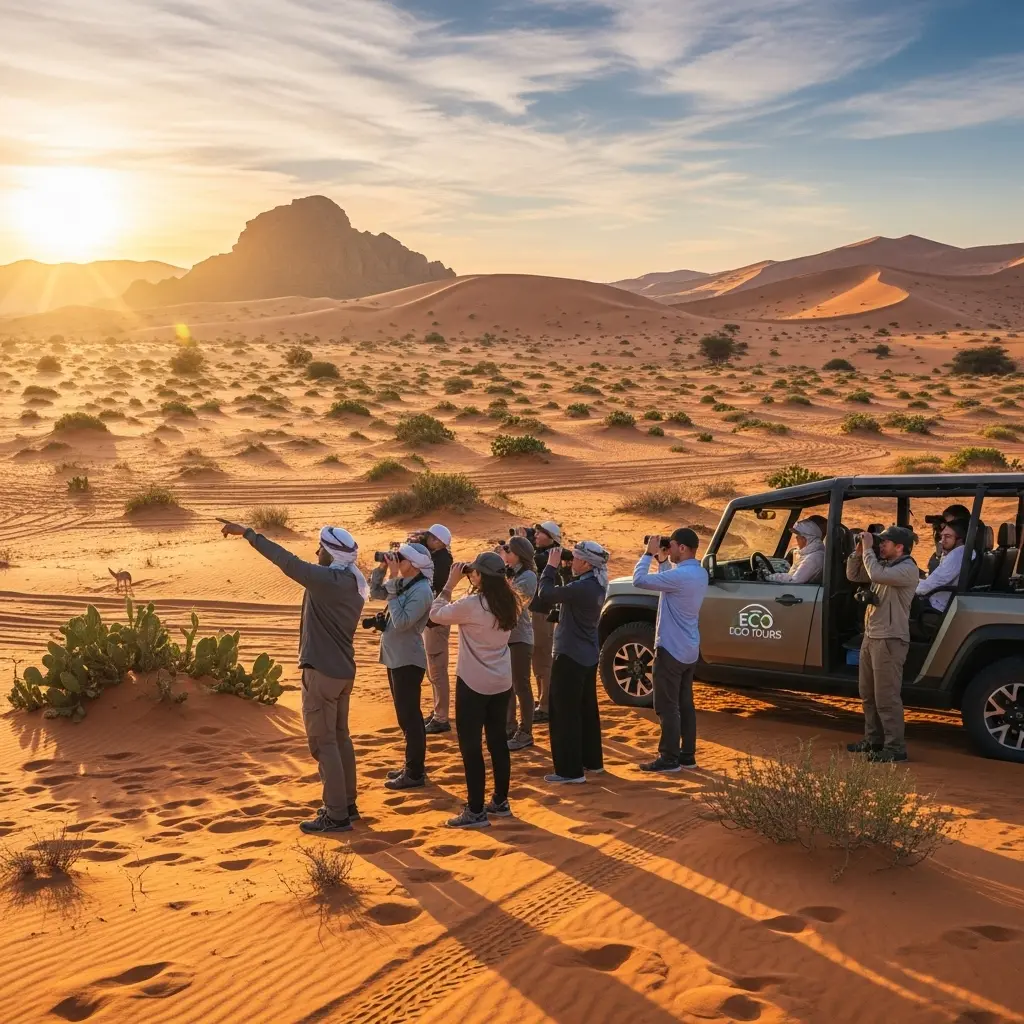
They teach you how to observe animals without causing them stress.
Stress in desert animals leads to rapid dehydration and death.
Responsible operators like https://royaldesertadventures.ae/ enforce strict distance rules.
This allows the animals to graze and socialise naturally.
It turns a sighting into a lesson in biological respect.
3. Protecting the National Tree: The Ghaf
The Ghaf tree is a symbol of resilience in the UAE.
It is a biological wonder that can find water 30 meters underground.
During Environmental Awareness Tours, the Ghaf is a major focus.
Many of these trees are hundreds of years old.
They provide shade, food, and homes for countless desert species.
Eco-tours teach travelers why we must never cut or damage these trees.
They explain the legal protections in place for the Ghaf.
You learn about the “Ghaf Seeding” programs designed to combat desertification.
The desert would be a much harsher place without this green umbrella.
By understanding its value, tourists become advocates for local flora.
It is a connection between the soil and the soul of the country.
Sustainability starts with protecting the lungs of the desert.
4. Waste Management in the Wilderness
One of the biggest challenges for desert tourism is trash.
Plastic bottles and food waste are deadly to camels and gazelles.
Environmental Awareness Tours use zero-plastic initiatives.
They provide reusable water bottles and centralized filtered water.
The camps for these tours are designed to be mobile or low-impact.
Every piece of waste is transported back to the city for recycling.
They do not bury trash in the sand, as many irresponsible operators do.
You learn the importance of “Pack In, Pack Out” principles.
It encourages travelers to be mindful of their own consumption.
Clean sand is the hallmark of a high-quality tour operator.
Visit https://htdesertsafari.com/ to see their clean-desert protocols in action.
5. The Education of the Guide
A guide on an eco-tour is much more than a driver.
They are educators and environmental ambassadors.
In Environmental Awareness Tours, the narration is key.
They talk about the “Sabkha” salt flats and the “Crust” of the desert.
They explain how the wind shapes the dunes over centuries.
They identify the medicinal properties of desert scrub plants.
This knowledge transforms the landscape from a “sandbox” into a “library.”
You leave the tour with a much deeper IQ regarding the UAE environment.
You understand the historical Bedouin relationship with the land.
The Bedouin were the first environmentalists, wasting nothing.
Modern guides bring this ancient wisdom to a modern audience.
The quality of the guide determines the quality of the awareness.
6. Sustainable Transport and New Technology
The 4×4 vehicle is the icon of the safari, but it has a carbon footprint.
Environmental Awareness Tours are experimenting with hybrid and electric SUVs.
While the technology is still evolving for deep sand, progress is being made.
Eco-operators also use newer engines with higher emission standards.
They avoid “Idling” the engine during photo stops to save fuel.
Some tours have shifted to electric dune buggies for short distances.
This reduces both noise pollution and air pollution in the dunes.
Noise pollution is a major factor that drives wildlife away.
Silent or quiet vehicles allow for much better animal sightings.
It is a win-win for the traveler and the environment.
Compare the green fleets at https://dubaidesertsafarie.com/.
7. Supporting Local Conservation Reserves
The Dubai Desert Conservation Reserve (DDCR) is a protected sanctuary.
Only a handful of companies are allowed to operate within its gates.
Environmental Awareness Tours usually take place in these reserves.
The rules here are much stricter than in the public desert.
Driving is limited to existing tracks to protect the topsoil.
There is a strict cap on the number of daily visitors.
This prevents the “overcrowding” that ruins the wilderness feel.
The fees paid by operators fund the rangers and the research scientists.
By booking an authorized tour, you are a shareholder in the reserve.
You are helping to expand the protected areas of the UAE.
It is the most direct way to ensure the desert’s future.
8. Flora Identification and Biodiversity
Biodiversity is the insurance policy of our planet.
Environmental Awareness Tours highlight the variety of life in the sand.
You learn to see the “Fire Bush” and the “Desert Squash.”
You learn that what looks like a dead stick is actually a dormant plant.
It is waiting for the rare rain to explode into bloom.
Guides show you the tracks of the desert beetle and the fringe-toed lizard.
They explain how these small creatures support the larger food chain.
Without the beetle, the lizard starves, and the falcon disappears.
It is a lesson in the “Butterfly Effect” of ecology.
Understanding biodiversity makes the desert feel “busy” and alive.
It removes the fear of the “empty” space and replaces it with awe.
Nature’s complexity is revealed one track at a time.
9. The Role of the Conscious Tourist
The traveler is the most powerful force in the tourism industry.
If tourists demand Environmental Awareness Tours, operators will adapt.
By choosing a green safari, you are sending a market signal.
You are saying that you value the earth over a cheap thrill.
Conscious tourists also behave differently on the ground.
They stay on the paths. They don’t harass the camels.
They ask questions about sustainability and carbon offsets.
They share their knowledge with their friends and family.
Your review of an operator can highlight their eco-practices.
This helps other travelers make better, greener choices.
You are not just a passenger; you are an advocate for the planet.
Operators like https://htdesertsafari.com/ value these discerning guests.
10. Water Conservation in an Arid Zone
Water is the most precious commodity in the desert.
Environmental Awareness Tours emphasize water ethics.
The camps use low-flow taps and water-saving laundry practices.
They educate guests on how Bedouins survived on just a few liters a day.
It puts our own water usage in the city into perspective.
Many eco-camps use grey-water recycling for the few desert plants they maintain.
Every drop is tracked and valued as a sacred resource.
It is a lesson in gratitude for the abundance we have at home.
It reminds us that the desert is a land of scarcity that requires wisdom to inhabit.
Sustainable water management is a pillar of responsible tourism.
It ensures that the limited desert aquifers are not depleted.
11. Indigenous Knowledge and Heritage
Bedouin culture is built on a deep respect for nature.
They lived in the desert for thousands of years without destroying it.
Environmental Awareness Tours often integrate this indigenous wisdom.
They show you how the elders read the stars and the wind.
They explain the “Hima” system—an ancient form of protected area management.
This heritage is the original “Environmental Awareness.”
By learning from the past, we can build a better future for the dunes.
It gives the tour a cultural soul that matches its ecological mission.
It is a tribute to the people who called this land home long before the skyscrapers.
The desert is a cultural monument as much as a natural one.
Preserving the stories is as important as preserving the sand.
12. Conclusion
The desert is not a static place; it is a living, breathing miracle.
Environmental Awareness Tours give us the eyes to see that miracle.
They offer a path to adventure that does not come at the cost of the earth.
By choosing sustainability, you ensure that the golden dunes remain golden.
You ensure that the Oryx still roams and the Ghaf still grows.
Do not just visit the desert; understand it.
Join a movement that values the footprint as much as the fun.
The Arabian sands are waiting to share their secrets with those who care.
Book your eco-adventure today.
Visit https://htdesertsafari.com/ and choose the Green Path.
Leave the desert better than you found it.
FAQs: Desert Safari Environmental Awareness Tours
1. What makes a desert safari “environmentally aware”?
An Environmental Awareness Tour focuses on four main pillars: low-impact driving, waste reduction, wildlife protection, and education. These tours use vehicles that are strictly maintained to reduce emissions, avoid sensitive vegetation areas, and often use reusable materials instead of single-use plastics. More importantly, they employ guides who are trained to educate guests about the desert’s ecology, the importance of the Ghaf tree, and the conservation of species like the Arabian Oryx.
2. Are eco-friendly safaris less fun than regular ones?
Not at all! In many ways, they are more rewarding. While you might avoid some of the more aggressive dune bashing that damages the sand’s crust, you gain much deeper experiences. You get better wildlife sightings because the guides are expert trackers. You enjoy quieter, more exclusive locations. The sense of peace and connection with nature is much stronger on a sustainable tour. It is a “Quality over Quantity” approach to adventure.
3. Do these tours cost more?
Sometimes they carry a small premium. This is because high-quality maintenance, specialized guide training, and the fees for entering protected conservation reserves are higher. However, the value you receive is significantly better. You are paying for a more private, educational, and ethical experience. Most travelers find that the knowledge that their money is supporting wildlife protection is well worth the extra cost. Check the rates at https://htdesertsafari.com/.
4. What is the Dubai Desert Conservation Reserve (DDCR)?
The DDCR is the UAE’s first national park. It covers about 225 square kilometers and is a strictly protected area. Access is limited to a few licensed operators who follow rigorous environmental guidelines. It is the best place in the region for Environmental Awareness Tours because the ecosystem is pristine, and you are almost guaranteed to see Arabian Oryx and Sand Gazelles in their natural habitat.
5. How do the vehicles avoid damaging the sand?
Expert drivers on eco-tours use specific tire pressures (usually between 12-15 PSI) which allow the tire to “float” on the sand rather than dig into it. This prevents the compaction of the sub-soil. They also stick to established tracks as much as possible. By following the “ridged” areas of the dunes, they avoid crushing the flatter areas where desert plants and insects are more likely to have their homes.
6. Can I participate in conservation activities during the tour?
Yes, some specialized Environmental Awareness Tours offer “Citizen Science” opportunities. This can include helping the guide record wildlife sightings, identifying plant species, or even participating in a brief “Desert Clean-Up” session. Many guests find this highly engaging, especially families with children who want to learn about environmental stewardship hands-on.
7. Is there a zero-plastic policy on these safaris?
Reputable eco-operators like https://royaldesertadventures.ae/ strive for a zero-plastic environment. They provide chilled water in reusable glass bottles or dispensers and use biodegradable or reusable plates and cutlery at the camp. They also encourage guests to bring their own reusable water bottles. Reducing plastic waste is the single most important thing a tourist can do to protect desert wildlife.
8. Will I see the Arabian Oryx on an awareness tour?
While nature is never guaranteed, your chances are much higher on a dedicated awareness tour. Because these tours operate in protected areas and use quiet, methodical driving techniques, the animals are less likely to be scared away. The guides know the grazing patterns and the locations of natural water sources, making a sighting very probable.
9. How do these tours handle camp waste?
Sustainable camps use a “Closed Loop” waste system. All organic waste is often composted if possible, or transported back to specialized facilities. All recyclables are sorted on-site. These camps do not use open fires with treated wood (which can release toxins); they use sustainably sourced charcoal or local deadwood under strict control. The goal is to leave the campsite exactly as it was found.
10. What should I wear to be an eco-conscious traveler?
Wear natural, breathable fabrics like organic cotton or linen. Avoid synthetic “fast fashion” items that shed microplastics. Choose neutral, earthy colors that blend into the landscape, which is less disruptive to wildlife. Most importantly, wear sturdy, closed shoes so you can walk on the dunes without disturbing the sand too much or hurting yourself on desert scrub.
11. Are the guides certified in environmental studies?
Many guides on Environmental Awareness Tours hold certifications from organizations like the Dubai Department of Economy and Tourism (DET) and have undergone specific training in desert ecology. Some are even former rangers or biology students. Their expertise is what separates a “ride” from an “expedition.” They can explain the “how” and “why” of everything you see.
12. Can children join these tours?
Absolutely. In fact, these tours are highly recommended for children. They provide a fantastic outdoor classroom experience. Kids learn about animal tracks, water conservation, and the importance of protecting the planet. It sparks a sense of wonder and responsibility that stays with them long after the holiday ends.
13. Do eco-safaris use solar power?
Many sustainable desert camps are increasingly moving toward solar power. They use solar panels for lighting and to power small appliances. This removes the need for loud, polluting diesel generators. The silence of a solar-powered camp is one of the most beautiful parts of the Environmental Awareness Tours experience. You can actually hear the sounds of the night.
14. What is the Ghaf tree seeding program?
Some tours include a talk about the “Give a Ghaf” initiative. The Ghaf is the national tree of the UAE and is essential for the desert’s health. Some operators allow guests to donate to or even participate in the planting of Ghaf seeds in designated areas. This is a direct, positive impact that helps fight desertification and supports local biodiversity.
15. Is noise pollution a concern in the desert?
Yes, very much so. Loud shouting and high-revving engines can disturb the communication and mating patterns of desert wildlife. Eco-tours promote “Quiet Observation.” The guides will often turn off the engines completely at scenic spots to allow guests to experience the true silence of the dunes. This respectful approach leads to a much more peaceful and spiritual trip.
16. How can I verify if a safari company is truly “Green”?
Look for certifications on their website. Check if they are authorized to enter the DDCR. Read their sustainability policy. A true green company will be transparent about their waste management and vehicle maintenance. Avoid companies that promote “extreme” bashing or show photos of trash in their reviews. https://htdesertsafari.com/ is a great example of a transparent, eco-focused operator.
17. Do eco-tours support the local community?
Yes, sustainable tourism often prioritizes local hiring and sourcing. The food is often bought from local Emirati farms, and traditional crafts are purchased from local artisans. This ensures that the economic benefits of tourism stay within the local community, fostering a culture of pride and protection for the desert heritage.
18. What is “Sand Crust” and why is it important?
The sand in the desert often has a thin, biological crust made of fungi, lichens, and mosses. This crust prevents erosion and helps plants take root. Careless off-roading destroys this crust, leading to shifting sands and the death of vegetation. Environmental Awareness Tours teach guests to respect this invisible layer and stay on designated paths.
19. Are there toilets on these tours?
Yes, but the facilities are designed to be eco-friendly. They often use water-saving tech and biodegradable cleaning products. The waste is contained and transported out of the desert for proper treatment. These facilities are maintained to high hygiene standards while minimizing the environmental impact on the surrounding sand.
20. Why is HT Desert Safari a leader in environmental awareness?
https://htdesertsafari.com/ has invested heavily in guide training and low-impact logistics. They have a clear mission to preserve the beauty of the Dubai dunes. Their tours are designed for the “Thinking Traveler” who wants to see the world’s beauty without leaving a scar. Their partnership with local conservationists ensures that their operations are always in line with the latest environmental research.
Table: Standard Safari vs. Environmental Awareness Tour
| Feature | Standard Safari | Environmental Awareness Tour |
| Primary Goal | Adrenaline & Entertainment | Conservation & Education |
| Location | Public Desert (Crowded) | Protected Reserves (Private) |
| Driving Style | High-speed Bashing | Low-impact Tracking |
| Wildlife | Rare (Scared away) | Common (Protected habitats) |
| Waste Management | Minimal focus | Zero-plastic / Full recycling |
| Guide Expertise | Driving skills | Ecology & Heritage knowledge |
| Noise Level | High (DJs/Engines) | Low (Nature-focused silence) |
Table: Desert Eco-Checklist for Travelers
| Action | Why it Matters |
| Use Reusable Bottles | Prevents wildlife from choking on plastic. |
| Stay on Tracks | Protects the biological sand crust and plants. |
| Keep Voices Low | Reduces stress for desert mammals and birds. |
| Support Reserves | Direct funding for Oryx and Gazelle programs. |
| Respect the Ghaf | Protects the primary habitat for desert life. |
This guide is your compass for a greener planet.
The desert is a masterpiece that we must protect together.
Don’t just be a tourist; be a steward of the sand.
Book your Environmental Awareness Tour today at https://htdesertsafari.com/.
Explore with purpose.