
Educational Desert Safari 19 Incredible Lessons Students Will Learn
The classroom has four walls.
But the world is much bigger.
An Educational Desert Safari breaks these walls down.
It turns the vast golden sands of Dubai into a laboratory.
Teachers often struggle to keep students engaged.
Textbooks can be dry and boring.
But standing on a dune is different.
Feeling the wind is different.
Seeing a camel up close changes everything.
This is experiential learning at its best.
It covers biology, physics, history, and culture.
It teaches survival and sustainability.
It builds character and teamwork.
Many schools are now recognizing this value.
They are moving away from standard museums.
They are heading into the wild.
This guide explores why this is the ultimate field trip.
We will dive into the specific lessons taught.
We will see how science comes alive in the sand.
We will explore the deep cultural roots of the UAE.
Prepare to see the desert as a school.
The Biology of Adaptation
The first lesson is biology.
The desert is a harsh environment.
Yet, life thrives here.
How is this possible?
Students learn about adaptation.
They see the Ghaf tree.
They learn about its deep roots.
These roots go down 30 meters to find water.
They see the Arabian Oryx.
They learn why its coat is white.
White reflects the sun and keeps it cool.
They study the camel.
The camel is a biological marvel.
It has three eyelids to block sand.
It can drink 100 liters of water in minutes.
Its hump stores fat, not water.
Seeing this is better than reading it.
It makes the concept of “survival of the fittest” real.
Guides from https://royaldesertadventures.ae/ are experts in this.
They explain the food chain.
They show the tracks of beetles and lizards.
It turns a walk into a detective story.
Physics on the Dunes
Dune bashing is not just fun.
It is a physics lesson.
Why do we deflate the tires?
Students learn about surface area.
They learn about pressure.
Lower pressure means more surface area.
This prevents the car from sinking.
This is practical physics.
They also learn about momentum.
To climb a dune, you need speed.
If you stop, you slide back.
Gravity is constantly at work.
Friction is different on sand than on asphalt.
The driver explains these forces.
He explains the mechanics of the 4×4.
It is an engineering class in motion.
Students feel the forces on their bodies.
They understand inertia when the car turns.
It makes Newton’s laws unforgettable.
Astronomy and Navigation
The desert sky is a map.
Long before GPS, there were stars.
Bedouins used the stars to navigate.
An Educational Desert Safari often ends at night.
The light pollution is low.
The stars are bright.
Students learn to find the North Star.
They learn the constellations.
They learn how the moon affects the tides.
This connects them to ancient history.
It connects them to the explorers of the past.
They realize how smart the ancestors were.
They survived without Google Maps.
They used the universe as their guide.
Astronomy becomes relevant.
It is not just dots on a screen.
It is a survival skill.
The History of Trade Routes
The desert was a highway.
It connected civilizations.
It was the route of the Silk Road.
Spices, silk, and pearls moved across these sands.
Students learn about the caravans.
They imagine the long journeys.
They learn about the “Ship of the Desert.”
This gives context to Dubai.
Dubai did not just appear.
It was built on trade.
It was built on movement.
Understanding this history is crucial.
It explains the multicultural nature of the UAE.
It explains the hospitality.
Traders needed a place to rest.
So, hospitality became a rule.
This lesson connects geography with economics.
It shows the big picture.
Bedouin Culture and Heritage
Culture is the soul of the nation.
Students must understand the people.
The Bedouins are the original inhabitants.
Their life was hard but dignified.
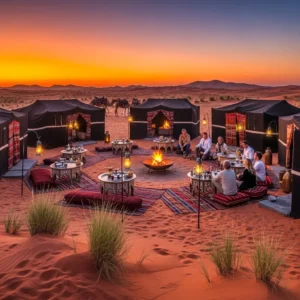
An Educational Desert Safari visits a camp.
Here, students see the lifestyle.
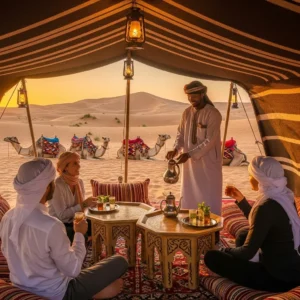
They see the tents made of goat hair.
They learn why they are black.
(Black absorbs heat, but the weave allows airflow).
They see the clothes.
Why do men wear white?
Why do women wear black?
They learn about social structures.
The tribe was the family.
Loyalty was everything.
They learn about the Majlis.
This is where decisions were made.
It teaches respect for elders.
It teaches the value of community.
Sustainable Tourism Practices
The modern lesson is sustainability.
We must protect the desert.
Tourism can be damaging.
But it can also be responsible.
Students learn about “Leave No Trace.”
They learn why litter is dangerous.
Plastic kills camels.
It destroys the ecosystem.
They see eco-friendly practices.
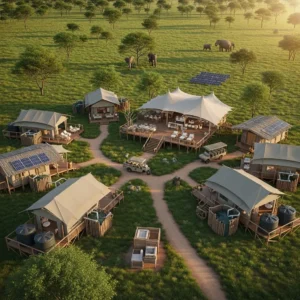
Some camps use solar power.
Some recycle water.
Operators like https://htdesertsafari.com/ focus on this.
They show that business can be green.
This inspires the next generation.
They are the future leaders.
They need to see solutions.
They need to see conservation in action.
Water Scarcity and Solutions
Water is gold.
In the desert, this is literal.
How did people survive with no rain?
Students learn about the “Falaj” system.
This is an ancient irrigation method.
It brought water from the mountains.
It used gravity.
It was fair and shared.
They also learn about modern solutions.
Desalination plants.
Cloud seeding.
Dubai is a pioneer in water.
This lesson is vital for the future.
Climate change is real.
Water scarcity is a global issue.
Seeing how the UAE manages it is a case study.
It teaches resourcefulness.
It teaches the value of every drop.
The Art of Falconry
Falconry is not a sport.
It is a heritage.
It was a way to get food.
Bedouins used falcons to hunt.
They caught the Houbara bustard.
It provided protein.
Students watch a falcon show.
They see the speed of the bird.
They learn about aerodynamics.
The falcon is the fastest animal.
Engineers study it to build planes.
They learn about the bond between man and bird.
It takes patience to train a falcon.
It takes trust.
This teaches biology and psychology.
It is a beautiful tradition.
It is a symbol of the UAE.
Geology of the Sands
Sand is not just sand.
It is rocks that have been ground down.
It took millions of years.
Students look at the sand closely.
They use magnifying glasses.
They see different colors.
Red sand has iron oxide.
White sand has calcium.
They learn about wind patterns.
The wind shapes the dunes.
Crescent dunes.
Linear dunes.
The landscape is always changing.
It is geology in real-time.
They learn about “Fossil Rock.”
Once, this desert was an ocean.
They can find fossils of shells.
This blows their minds.
It changes their concept of time.
It shows the history of the earth.
Survival Skills Workshop
What if you get lost?
This is a fun lesson.
Students learn basics.
How to find direction without a compass.
How to find water.
How to build a shelter.
How to signal for help.
It builds confidence.
It teaches problem-solving.
It reduces panic.
Knowing you can survive is empowering.
Guides demonstrate these skills.
They show how to light a fire.
They show which plants are edible.
It is practical knowledge.
It is better than a video game.
It engages their instincts.
The Economics of Tourism
Tourism is a business.
It supports the economy.
Students learn about the industry.
How many people work here?
Drivers, cooks, guides, managers.
It creates jobs.
It brings foreign currency.
They learn about marketing.
How does Dubai attract millions of visitors?
They learn about customer service.
Hospitality is a skill.
This is a business studies lesson.
It shows the supply chain.
It shows the impact of government policy.
Companies like https://dubaidesertsafarie.com/ are examples.
They show how to run a successful operation.
They show professionalism.
Team Building Activities
The desert is a playground.
It is perfect for team building.
Schools organize games.
Tug of war on the sand.
Sandboarding races.
Tent building competitions.
This builds bonds.
Students learn to work together.
They learn to communicate.
They support each other.
The environment levels the playing field.
The smart kid and the athletic kid are equal here.
They both struggle to walk in sand.
They both laugh.
It breaks down cliques.
It creates a unified class spirit.
Photography and Art
The desert is beautiful.
It inspires art.
Students bring sketchbooks.
They draw the dunes.
They draw the camels.
They learn about light and shadow.
Photography students have a field day.
The “Golden Hour” is perfect.
The contrast of colors is stunning.
It teaches observation.
You have to look to see the beauty.
You have to find the angle.
This nurtures creativity.
It allows for self-expression.
It captures memories.
Language and Literature
Stories are part of the desert.
Bedouin poetry is famous.
It is called “Nabati” poetry.
It speaks of love and hardship.
Students listen to these poems.
They learn about the oral tradition.
They learn Arabic words.
“Yalla” (Let’s go).
“Shukran” (Thank you).
Language is the key to culture.
Learning a few words shows respect.
It opens doors.
They might write their own poems.
Inspired by the silence.
Inspired by the vastness.
Renewable Energy
The sun is powerful.
The desert has plenty of it.
Students see solar panels.
They power the lights at the camp.
They learn about renewable energy.
Why is it important?
It reduces carbon footprint.
It saves oil.
The UAE is investing in this.
The Mohammed bin Rashid Solar Park is nearby.
It is a massive project.
Seeing solar tech in action is proof.
It proves it works.
It proves we can transition.
This is a physics and environmental science lesson.
The Role of Women
Bedouin women were strong.
They built the tents.
They wove the fabrics.
They raised the children.
Students learn about their role.
They see the “Sadu” weaving.
This is a UNESCO heritage art.
It is complex geometry.
It requires math.
It requires skill.
They meet female artisans.
They see the Henna art.
This empowers female students.
It shows that women were essential.
It challenges stereotypes.
It honors the mothers of the nation.
Health and Wellness
The desert is clean.
The air is fresh.
It is a detox.
Students learn about mental health.
They learn to disconnect.
No phones.
No social media.
Just nature.
They realize how good it feels.
They learn about medicinal plants.
Some plants cure stomach aches.
Some cure bites.
This is traditional medicine.
It is ethnobotany.
It teaches respect for nature’s pharmacy.
Culinary Arts
Food is history.
Students taste the food.
They eat dates.
They drink Arabic coffee.
They eat “Harees” and “Luqaimat.”
They learn how it is cooked.
Underground ovens.
Simple ingredients.
It is a nutrition lesson.
It is a cultural lesson.
Sharing food is bonding.
They learn dining etiquette.
Eat with the right hand.
Don’t waste food.
It is a sensory experience.
Global Citizenship
Finally, they learn their place.
They are global citizens.
They meet tourists from everywhere.
They see a different culture.
They learn tolerance.
They learn respect.
An Educational Desert Safari opens minds.
It destroys prejudice.
It builds bridges.
This is the most important lesson.
We are all humans.
We all share this planet.
We must understand each other.
The desert teaches humility.
It teaches us to listen.
Conclusion
An Educational Desert Safari is not a holiday.
It is a necessity.
It brings the curriculum to life.
It turns abstract concepts into reality.
Students who visit the desert change.
They become more curious.
They become more respectful.
They become more aware of the environment.
They will remember this trip forever.
They will forget the classroom lecture.
But they will remember the stars.
They will remember the camel.
Schools should prioritize this.
Parents should encourage this.
It is an investment in the future.
The desert is waiting to teach.
Are you ready to learn?
Book your educational journey with https://royaldesertadventures.ae/.
Find resources at https://dubaidesertsafarie.com/.
Plan your syllabus with https://htdesertsafari.com/.
Let the dunes be your classroom.
Comparison Table: Classroom vs. Desert Safari
| Feature | Classroom Learning | Educational Desert Safari |
| Environment | Artificial, Indoor | Natural, Outdoor |
| Method | Theory, Textbook | Practical, Experiential |
| Engagement | Passive Listening | Active Participation |
| Biology | Diagrams of animals | Seeing live animals |
| Physics | Formulas on board | Feeling forces in car |
| History | Dates and names | Visiting real sites |
| Social | Sitting in rows | Team building games |
| Memory | Short-term recall | Lifelong memories |
| Impact | Academic | Holistic (Mind & Body) |
20 FAQs About Educational Desert Safari
1. Is an Educational Desert Safari safe for students?
Yes, safety is the top priority for reputable operators. The vehicles are equipped with roll cages, first aid kits, and GPS tracking. The drivers are professional and certified by the government. They undergo specific training for driving with children and students. The camps are secure environments with supervision. Risk assessments are conducted regularly to ensure all activities are safe for various age groups.
2. What age group is this suitable for?
These safaris can be tailored for all age groups. For primary students, the focus is on sensory experiences, simple nature walks, and animal interaction. For secondary and high school students, the content becomes more academic, focusing on physics, geology, conservation, and cultural history. The activities are adjusted to match the cognitive and physical abilities of the students.
3. Can the safari be customized for our school curriculum?
Yes, operators like https://royaldesertadventures.ae/ specialize in bespoke itineraries. Teachers can provide their learning objectives (e.g., a focus on geology or sustainability), and the operator will design the route and activities to match. Guides can focus their commentary on specific topics to reinforce what is being taught in the classroom.
4. Is food provided for the students?
Yes, catering is a key part of the experience. Depending on the time of day, this could be a breakfast, a picnic lunch, or a full BBQ dinner buffet. The food is hygienic and suitable for children. Options usually include rice, mild chicken, pasta, salads, and fruits. Dietary requirements and allergies can be accommodated if notified in advance.
5. How long does an educational safari last?
The duration is flexible. A morning safari might last 4 hours (8 AM to 12 PM), which is perfect for younger students. An evening safari typically lasts 6 hours (3 PM to 9 PM) and includes dinner and stargazing. Overnight camping trips are also available for older students, providing a 24-hour immersive experience.
6. What should students wear?
Comfortable, loose clothing is best. Trousers or shorts are fine, but knees should be covered for cultural respect and protection. Sneakers or closed shoes are recommended for walking on sand and avoiding hot surfaces. A hat and sunglasses are essential for sun protection. In winter months, a light jacket is needed as the desert gets cold.
7. Are there medical facilities nearby?
The guides are trained in first aid and carry kits. For serious emergencies, the operators have direct lines to emergency services. The desert locations are usually within 45-60 minutes of a major hospital. However, for school trips, it is often recommended that the school nurse accompanies the group.
8. Is it too hot for students?
The safaris are timed to avoid the peak heat. Morning tours end before noon. Evening tours start as the sun is lowering. The vehicles are fully air-conditioned. Camps have shaded areas and fans. The winter months (October to April) are ideal for outdoor activities. Hydration is strictly monitored by the guides.
9. How do we transport the students?
Operators can arrange large buses to transport students from the school to the desert meeting point. From there, they transfer into 4×4 Land Cruisers for the dune drive. This logistics management is part of the package. All vehicles are insured and meet safety standards for student transport.
10. Can parents join the trip?
This depends on school policy. Some schools allow parent chaperones to assist teachers. The safari operators can accommodate as many adults as needed. It can be a great bonding experience for families, but usually, the focus is on the student-teacher dynamic and peer learning.
11. What is the teacher-to-student ratio?
The safari operator does not set the ratio, but they recommend one adult for every 10 students for supervision. In the 4×4 vehicles, there is usually one driver and up to 6 passengers. Teachers are distributed among the cars to ensure every group has adult supervision during the drive.
12. Is the dune bashing mandatory?
No. If the school prefers a “Nature Drive” without the adrenaline and shaking, this can be arranged. A nature drive is smooth and focuses on wildlife spotting. This is often better for taking notes and photos. For older students, dune bashing is often the highlight, but it is optional.
13. What educational materials are provided?
Some premium operators provide worksheets, checklists for animals, or binoculars. However, it is usually best for the teachers to prepare specific worksheets that align with their curriculum. The guides will support these materials by pointing out the relevant answers in the wild.
14. Are there bathrooms in the desert?
Yes, the desert camps have permanent, clean restroom facilities with running water. There is also a bathroom stop before entering the desert for the dune drive. Hygiene is maintained to a high standard. Hand sanitizers are available throughout the camp.
15. How does this help with team building?
The desert environment levels the playing field. Activities like setting up a tent or pulling a rope require cooperation. Students must communicate and help each other. The shared experience of a new environment breaks down social barriers and cliques that might exist in school.
16. Is it eco-friendly?
Yes, choosing the right operator ensures it is eco-friendly. They follow “leave no trace” principles. They educate students about conservation. Using links like https://htdesertsafari.com/ helps you find operators who prioritize the environment. This sets a good example for the students.
17. What happens if it rains?
Rain is rare in Dubai, but if it happens, it can be a unique educational opportunity to see the desert wet. However, heavy rain might cause cancellations for safety reasons. Operators usually have a flexible rescheduling policy for weather-related issues.
18. Can we do a specific biology project?
Yes. If the biology class is studying desert plants, the guide can take the group to a specific area rich in flora. They can stop and allow students to take samples (if permitted) or photos. The itinerary is not fixed; it serves the educational goal.
19. Is there internet access?
Signal can be patchy in the deep dunes but is usually available at the camp. However, teachers often prefer to treat the trip as a “digital detox” to encourage students to engage with nature and each other rather than their screens.
20. Why use the internal link royaldesertadventures.ae?
Using https://royaldesertadventures.ae/ ensures you are booking with a provider experienced in handling large groups and educational tours. They understand the specific safety and content requirements of schools. They provide the professional structure needed for a successful academic trip.