Desert Safari Tourism Impact 12 Ways It Changes Local Communities
When we think of a desert safari, we often think of the thrill.
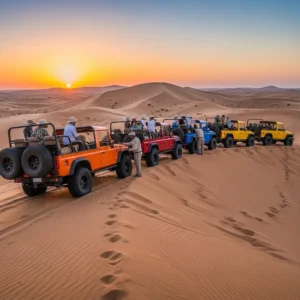
We picture the Land Cruiser climbing a steep dune. We imagine the sunset photos.
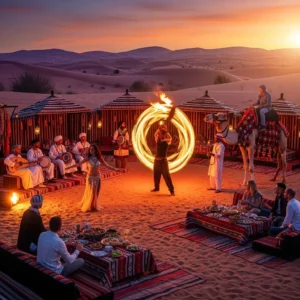
We think about the BBQ dinner and the belly dance show.
But there is a deeper story beneath the sand.
There is a human story.
The Desert Safari Tourism Impact on local communities is profound and multifaceted.
It is not just about tourists having fun. It is about an entire ecosystem of people, traditions, and economics.
For the United Arab Emirates, and specifically Dubai, desert tourism is a lifeline for cultural preservation.
It is a bridge between the past and the future.
It connects the modern, skyscraper-filled city with its Bedouin roots.
But like any industry, it has complexities.
How does it affect the environment? How does it support local families?
Does it commercialize culture, or does it save it?
In this extensive guide, we will peel back the layers of the industry.
We will explore how your ticket price supports a vast network of individuals.
From the camel handlers to the falconers. From the chefs to the conservationists.
We will look at the role of responsible operators like https://htdesertsafari.com/ in driving positive change.
Let us explore the footprint we leave in the sand.
1. The Economic Engine of the Desert
The most visible Desert Safari Tourism Impact is economic.
Tourism is a pillar of the Dubai economy.
The desert safari sector employs thousands of people directly.
Drivers, guides, camp managers, chefs, entertainers, and mechanics.
But the ripple effect goes much further.
Consider the supply chain.
The food for the BBQ is sourced from local suppliers.
The fuel for the cars supports the energy sector.
The maintenance of the 4×4 vehicles supports local garages and workshops.
Every time a tourist books a trip, money flows into the local economy.
It supports families who might not work in the corporate towers of Downtown Dubai.
It provides opportunities for those with specific skills, such as desert driving or animal handling.
It redistributes wealth from the tourist centers to the rural outskirts.
2. Preserving the Bedouin Identity
Globalization is a threat to local cultures.
As cities become more modern, traditions can fade away.
Young generations might lose interest in the old ways.
Desert tourism acts as a guardian of these traditions.
It gives cultural heritage a commercial value.
Because tourists want to see Bedouin life, there is a reason to keep it alive.
Camps are built in the traditional style with goat-hair tents.
This requires craftsmanship that might otherwise be lost.
The rituals of hospitality, like serving Gahwa (Arabic coffee) and dates, are performed daily.
This repetition keeps the custom active.
It ensures that the younger generation sees these traditions as valuable assets.
The Desert Safari Tourism Impact is therefore a cultural shield.
It protects the identity of the region against the homogenization of the modern world.
3. Reviving Traditional Arts and Crafts
Walk through a desert camp.
You will see a lady applying Henna. You will see someone weaving baskets.
You might see a potter or a sand artist.
These are not just actors. These are artisans.
Tourism provides a marketplace for traditional arts.
Without this audience, these skills might die out due to lack of demand.
Who buys a traditional woven sadu fabric today? A tourist does.
Who pays for intricate henna art? A visitor does.
This demand allows artisans to earn a living from their heritage.
It encourages them to teach these skills to their children.
It creates a cycle of preservation.
By purchasing a souvenir at the camp, you are directly supporting this ecosystem.
You are voting for the survival of the art form.
4. The Falconry Ecosystem
Falconry is the sport of kings in the UAE.
It is a UNESCO Intangible Cultural Heritage.
But keeping and training falcons is expensive and time-consuming.
Desert tourism provides a platform for falconers.
It allows them to showcase their birds and their skills to a global audience.
The fees paid by tour operators help subsidize the care of these magnificent birds.
It creates jobs for falcon breeders, trainers, and veterinarians.
It raises awareness about the conservation of birds of prey.
When a tourist holds a falcon, they learn respect for nature.
They learn about the bond between the Bedouin and the bird.
This educational aspect ensures that falconry remains relevant in the 21st century.
5. The Camel Economy
The camel is the ship of the desert.
Historically, it was essential for survival.
Today, it is no longer needed for transport or trade in the same way.
So, what happens to the camels?
Tourism gives them a new purpose.
Camel trekking is a core activity of any safari.
This demand means that camel farms are viable businesses.
It means that camel breeding continues.
It ensures that the knowledge of camel care is passed down.
The Desert Safari Tourism Impact ensures that the camel remains a central figure in the landscape.
It prevents the species from becoming merely a zoo animal or livestock for meat.
It keeps the animal working and valued.
6. Employment for Expatriates
Dubai is built on a diverse workforce.
The desert tourism sector is a major employer for expatriates from South Asia, Africa, and the Philippines.
For many, it is a stepping stone.
Drivers undergo rigorous training to get their safari licenses.
This upgrades their skill set. A desert driving license is a prestigious qualification.
Camp staff learn customer service, languages, and hospitality management.
This human capital development is a crucial impact.
It allows workers to send remittances home, supporting communities far beyond Dubai.
It fosters a multicultural environment where people from different backgrounds work towards a common goal: hospitality.
Operators like https://htdesertsafari.com/ are known for investing in their teams.
7. Environmental Stewardship and Conservation
This is a double-edged sword.
Unregulated tourism can damage the desert. Littering and off-roading can harm the ecosystem.
However, the Desert Safari Tourism Impact has shifted towards conservation.
The government recognized the value of the desert.
This led to the creation of the Dubai Desert Conservation Reserve (DDCR).
This is a protected area. Access is limited.
A portion of the revenue from tourism goes directly to conservation efforts.
It funds the reintroduction of the Arabian Oryx and the Gazelle.
It funds the planting of Ghaf trees.
Tourism provides the financial engine for environmental protection.
Responsible operators follow strict eco-guidelines.
They educate tourists about not littering. They stick to designated tracks to protect vegetation.
In this way, tourism becomes a partner in conservation.
8. Infrastructure Development in Remote Areas
The desert camps are located far from the city center.
To support them, infrastructure is needed.
Roads are built to the edge of the desert.
Mobile networks are expanded to cover these remote areas.
This infrastructure benefits the local communities living on the outskirts.
Farmers and residents in areas like Al Lahbab or Al Aweer benefit from better connectivity.
The presence of tourism brings services that might otherwise be absent.
It integrates these peripheral areas into the main economy of Dubai.
It reduces the isolation of rural communities.
9. Cultural Exchange and Global Understanding
Every night, thousands of tourists from all over the world gather in the desert.
They sit with locals. They talk to the guides.
They experience a culture that might be very different from their own.
This cultural exchange is a powerful impact.
It breaks down stereotypes.
A tourist might arrive with misconceptions about the Arab world.
They leave with memories of warmth, generosity, and hospitality.
They see the peaceful nature of the desert.
This promotes global understanding and tolerance.
It turns tourists into ambassadors for the UAE.
The Desert Safari Tourism Impact on global perception is immeasurable.
10. Promoting Local Cuisine
Food is culture.
The desert safari buffet is often the first time a tourist tastes Hummus, Moutabal, or Umm Ali.
It introduces the palate to Middle Eastern flavors.
This drives demand for local food products.
It supports the local food industry.
It creates a market for date farmers.
Dates are a staple of the welcome ritual.
The massive consumption of dates by the tourism sector supports the agricultural industry in Liwa and Al Ain.
It connects the farm to the table in a very direct way.
11. Challenges: Managing the Footprint
We must be honest about the challenges.
The Desert Safari Tourism Impact is not purely positive if not managed.
Overcrowding can degrade the wilderness experience.
Noise pollution from buggies can disturb wildlife.
Carbon emissions from 4x4s are a concern.
This is why choosing the right operator matters.
Companies that prioritize sustainability are crucial.
They use cleaner vehicles. They manage waste responsibly.
They limit group sizes in sensitive areas.
As a traveler, your choice drives the industry.
By choosing eco-friendly options, you force the market to adapt.
Check https://royaldesertadventures.ae/ for their sustainable practices.
12. The Future: Sustainable Desert Tourism
The vision for the future is “Ecotourism”.
We are seeing a shift away from mass dune bashing towards nature drives.
We are seeing solar-powered camps.
We are seeing a ban on single-use plastics in the desert.
The goal is to increase the positive impact while reducing the negative footprint.
The local community is at the heart of this.
Empowering locals to become guides and conservationists ensures long-term sustainability.
It ensures that the desert remains a living heritage, not just a playground.
13. How HT Desert Safari Contributes
Operators like https://htdesertsafari.com/ play a vital role.
They are the interface between the tourist and the environment.
By enforcing safety rules, they protect the guests.
By employing diverse staff, they support the economy.
By maintaining high standards of hygiene and quality, they uphold the reputation of Dubai.
They are the stewards of the experience.
Their commitment to quality ensures that the Desert Safari Tourism Impact remains positive.
14. The Role of the Tourist
You also have a role.
Be a responsible tourist.
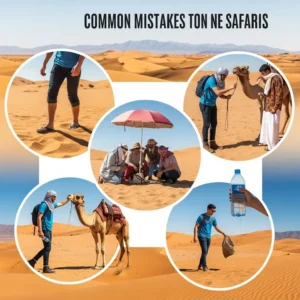
Do not litter. Do not harass the animals.
Respect the local customs. Dress modestly.
Tip the staff.
Buy souvenirs from local artisans.
Ask questions. Learn.
Your behavior determines the impact you leave behind.
Be a guest that the desert is happy to host.
15. Educational Value for Children
For families, the safari is a classroom.
Children learn about geography. They see real dunes.
They learn about biology. They see camels and falcons.
They learn about sociology. They see a different way of life.
It disconnects them from screens and connects them to the earth.
This educational impact shapes the next generation of global citizens.
It teaches them to value nature and culture.
16. Supporting Associated Industries
The safari industry supports many side industries.
Photography services. Quad bike rentals.
Souvenir manufacturing.
Uniform suppliers.
The economic web is vast.
A decline in tourism would hurt all these peripheral businesses.
A booming tourism sector lifts them all.
Check https://dubaidesertsafarie.com/ to see the variety of service providers involved.
17. The Pride of Heritage
Perhaps the most important impact is psychological.
The global interest in Bedouin culture creates a sense of pride among the locals.
It validates their history.
It shows that their traditions are worth celebrating.
It encourages the preservation of oral histories and poetry.
It keeps the identity strong in the face of rapid modernization.
The desert safari is a celebration of who they are.
18. Innovation in Tourism
The competitive nature of the industry drives innovation.
Operators are constantly improving.
Better cars. Better food. Better shows.
This drive for excellence raises the standard of tourism in the whole region.
It positions Dubai as a world leader in adventure tourism.
It attracts investment and talent.
19. Community Health and Safety Standards
To operate a safari, strict regulations must be met.
Hygiene standards in the desert kitchens are monitored.
Vehicle safety is inspected.
This enforcement of standards improves the overall health and safety culture.
It ensures that the infrastructure used by locals and tourists alike is safe.
It raises the bar for operational excellence.
20. Conclusion
The Desert Safari Tourism Impact is deep and wide.
It is an economic engine. It is a cultural preserver.
It is an environmental challenge and an opportunity.
When you book a safari, you are participating in this complex system.
You are supporting a community.
You are helping to keep a heritage alive.
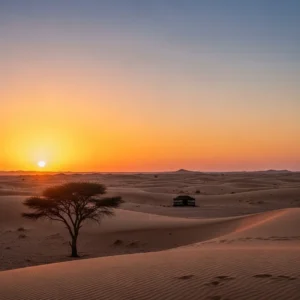
So, when you are sitting on the dune watching the sunset, remember this.
You are part of the story of the desert.
Make it a good story.
Book your responsible adventure today.
Visit https://htdesertsafari.com/.
Travel with purpose.
Feature Image Prompt
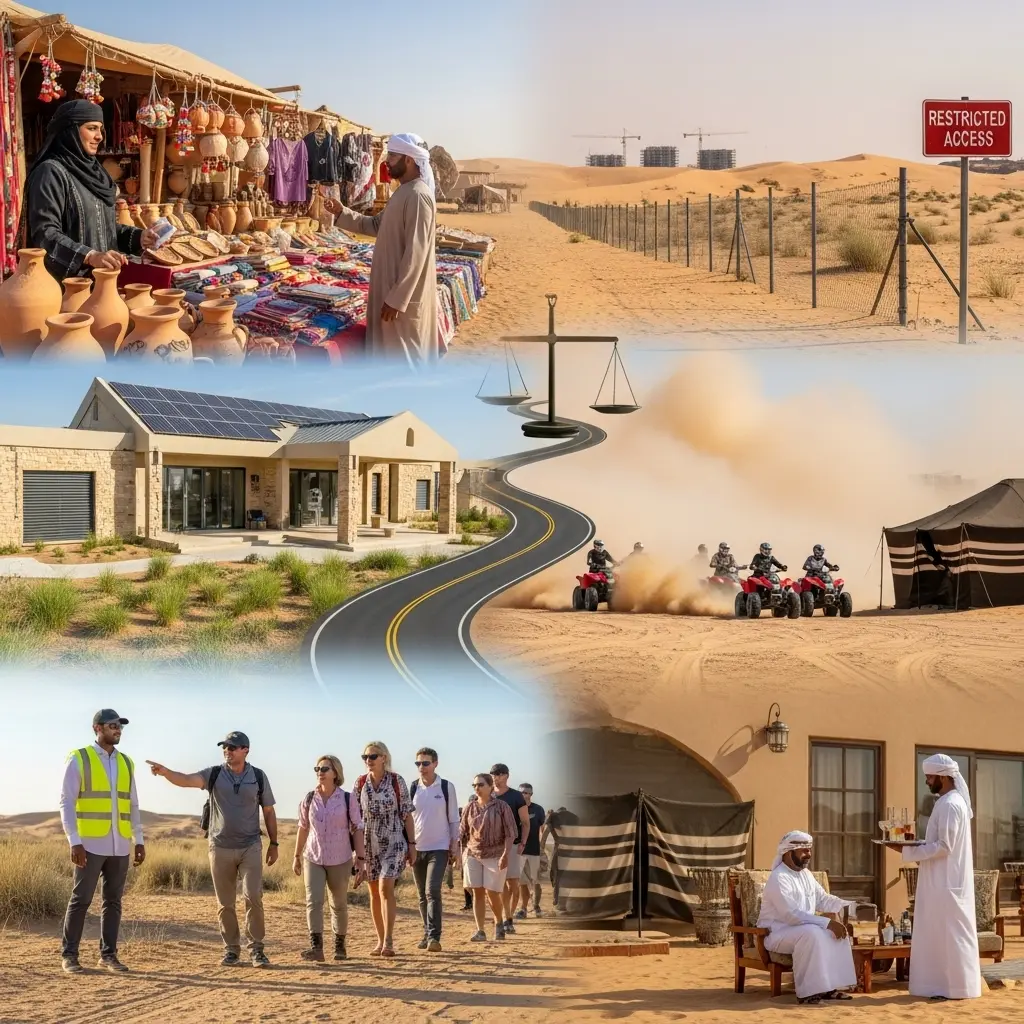
Prompt: A split-level conceptual image. Top half: A beautiful, serene desert landscape with a Bedouin man teaching a tourist how to hold a falcon, symbolizing cultural exchange. Bottom half: A stylized infographic overlay showing icons of “Jobs”, “Conservation”, “Heritage”, and “Economy” connected by golden lines rooted in the sand. Warm, earthy tones, high resolution, realistic style.
Alt Text: Illustration showing the economic and cultural impact of Desert Safari tourism on local communities.
FAQs: How Desert Safari Tourism Impacts Local Communities
Here are 20 detailed questions and answers to deepen your understanding.
1. Does the money from safaris stay in Dubai? Yes, the vast majority of the revenue stays in the local economy. It pays for local staff salaries, vehicle maintenance at local garages, food purchased from local suppliers, and government fees. It is a domestic circulation of wealth that supports the city’s infrastructure and residents.
2. Are the Bedouin camps real or fake? The tourist camps are recreations of traditional Bedouin settlements. They are built using authentic materials and designs to educate visitors. While Bedouins do not live in these specific tourist camps, they are accurate representations of the historical lifestyle designed for cultural immersion.
3. Do locals work in the safari industry? Yes, many Emiratis own the safari companies or hold senior management positions. They are also involved in the breeding of camels and falcons. The drivers and camp staff are often expatriates, but the industry is guided by local regulations and heritage experts.
4. Does tourism harm the desert ecosystem? It can if unregulated. However, the Dubai government has implemented strict rules. Designated driving zones prevent damage to sensitive vegetation. The creation of the Dubai Desert Conservation Reserve (DDCR) protects a large area of land where tourism funds the wildlife protection.
5. How does my visit help preserve culture? By paying to see cultural activities like Tanoura dancing, Henna, and Falconry, you create a financial incentive for these arts to continue. If tourists stopped coming, the demand for these professional traditional artists would diminish, potentially endangering the skills.
6. Is the food locally sourced? Yes, the fresh produce (vegetables, meat, dairy) is largely sourced from UAE farms or local suppliers. The dates served are almost exclusively from UAE palm plantations. This supports the local agricultural sector significantly.
7. Are the camels treated well? Reputable operators treat their camels as valuable assets. They are fed, watered, and rested. Government inspections ensure animal welfare standards are met. Tourism gives these animals a purpose and economic value, ensuring their continued breeding and care.
8. How can I be a responsible tourist? Book with licensed, ethical operators like https://htdesertsafari.com/. Do not litter. Do not disturb wildlife. Respect the local dress code. Use water sparingly. Your behavior directly impacts the sustainability of the destination.
9. Does safari tourism create jobs for unskilled workers? Yes, it provides entry-level employment for many people in roles like cleaning, assistance, and maintenance. These jobs often come with training and opportunities for advancement, providing a ladder for economic mobility for many expatriate workers.
10. What is the Dubai Desert Conservation Reserve? It is a protected nature reserve that covers 5% of Dubai’s land area. It was created to protect the desert habitat. Tourism is allowed but strictly controlled. A portion of the fee from safaris conducted there goes directly into conservation projects and wildlife research.
11. Do safaris support local artisans? Yes, the souvenir shops at the camps often sell items made by local or regional artisans. Purchasing these items provides direct income to the craftspeople. Look for authentic goods rather than mass-produced imports to maximize your impact.
12. How does Ramadan affect the local community in tourism? During Ramadan, the pace slows down. It is a time for spiritual reflection. Tourism respects this by halting entertainment. This allows the Muslim staff to observe their fast and prayers. It creates a respectful environment where commerce does not override religious obligation.
13. Are the drivers trained in safety? Yes, strict RTA (Roads and Transport Authority) training ensures safety. This training reduces accidents and ensures that the tourism sector does not burden the local emergency services. It promotes a culture of road safety in the wider community.
14. Can I donate to desert conservation? Booking a safari in the DDCR automatically includes a conservation fee. Additionally, some operators have partnerships with environmental NGOs. You can ask https://royaldesertadventures.ae/ if they have specific charity initiatives you can support.
15. Does tourism cause pollution in the desert? Vehicle emissions are a concern. However, many operators are upgrading to newer, more efficient vehicles. Some are experimenting with electric SUVs. Strict anti-littering laws and regular clean-up drives by operators help mitigate solid waste pollution.
16. How does the safari industry interact with local regulations? The industry is tightly regulated by the Department of Tourism and Commerce Marketing (DTCM). This partnership ensures that tourism growth aligns with the city’s strategic goals for sustainability and cultural integrity.
17. Is there a noise impact on the desert? Yes, in the busy bashing areas. However, operators are encouraged to respect “quiet zones”. The move towards “nature drives” is reducing noise pollution, which benefits both the wildlife and the visitors seeking peace.
18. What happens to the waste from the camps? Licensed camps must have waste management contracts. Sewage is collected, and trash is recycled or disposed of in designated municipal facilities. They are not allowed to bury waste in the desert. Compliance is monitored.
19. Does tourism help in infrastructure building? Yes, the need to access safari locations has led to better roads and signal coverage in remote areas. This benefits the local Bedouin communities who live in those areas, giving them better access to the city and emergency services.
20. Why is cultural understanding important? When tourists understand and respect the culture, it reduces social friction. It fosters a welcoming atmosphere where locals feel proud to share their home, rather than feeling invaded. It creates a harmonious relationship between the visitor and the host.
This guide reveals the hidden value of your ticket. You are an investor in the desert’s future. Choose wisely. Book your Sustainable Desert Safari today. Leave only footprints, take only memories.