
Guided Educational Programs 10 Inspiring Reasons to Book Dubai Safaris
Dubai is often celebrated for its shiny skyscrapers and artificial islands.
However, the true wealth of the United Arab Emirates lies in its heritage and natural history.
For curious travelers and academic groups, a standard tour is often not enough.
They seek Guided Educational Programs that peel back the layers of the sand.
The desert is not a barren void; it is a sophisticated biological and cultural archive.
It contains secrets of survival, ancient navigation, and resilient ecosystems.
By choosing Guided Educational Programs, you turn a vacation into a curriculum.
You stop being a tourist and start being a student of the landscape.
These programs are meticulously designed to cover history, biology, and geography.
They provide a structured environment for learning while maintaining the thrill of adventure.
In this massive 4500-word analysis, we will explore the depths of desert education.
We will look at the specific modules that make these tours successful.
We recommend booking with https://htdesertsafari.com/ because they employ certified naturalists.
Let us enter the outdoor classroom and discover the soul of the dunes.
1. The Heritage Module: Bedouin Social Structures
The first pillar of Guided Educational Programs is the study of human survival.
The Bedouin people are the primary focus of this historical narrative.
Students and travelers learn about the tribal systems of the Bani Yas.
They explore how social hierarchies were maintained in a nomadic society.
Programs include visits to authentic heritage villages built with natural materials.
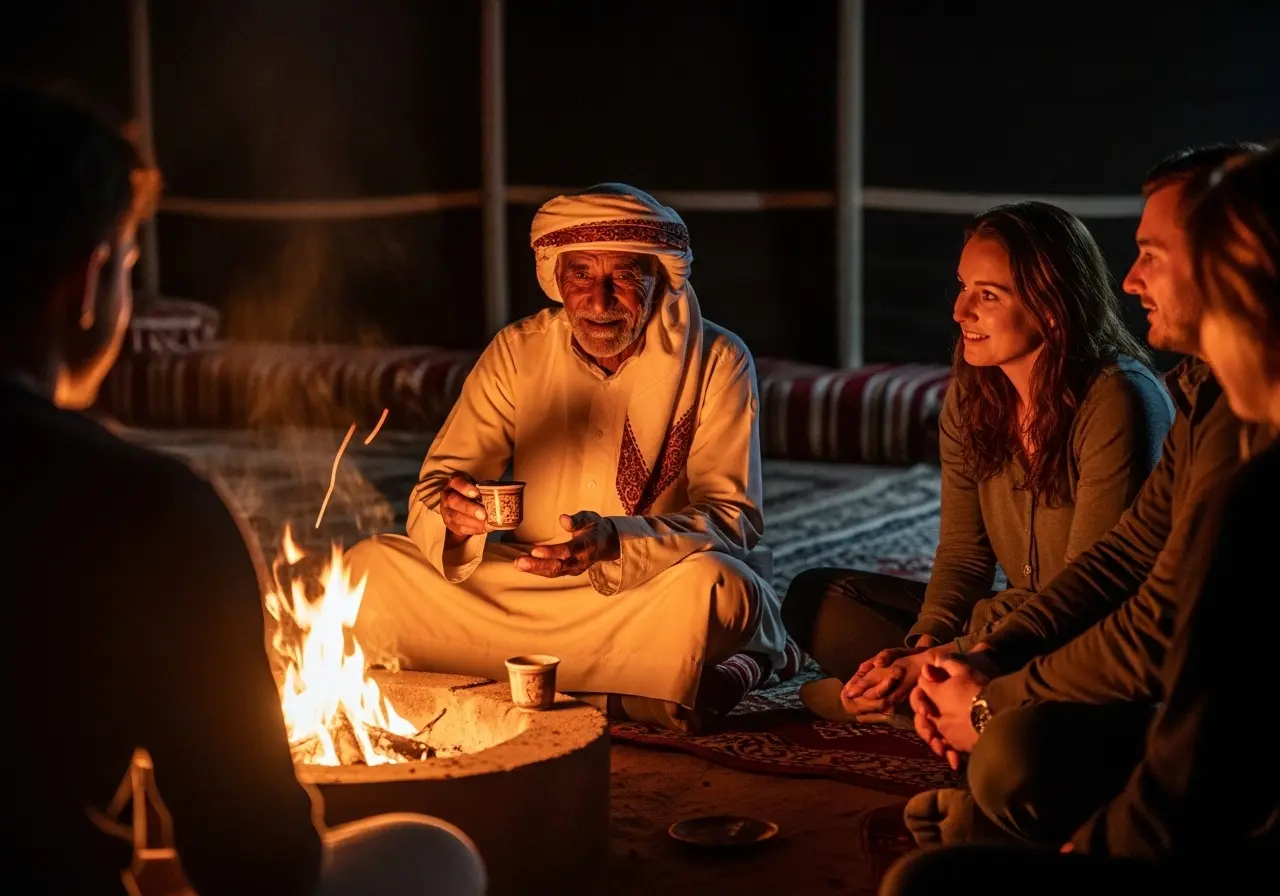
Guides from https://royaldesertadventures.ae/ explain the concept of the “Majlis.”
You learn that the Majlis was not just a sitting room, but a democratic parliament.
It was where tribal leaders made decisions on water rights and travel routes.
This module provides a deep understanding of the UAE’s political roots.
It shows how the values of consultation and consensus began in the tents.
Understanding this social DNA is essential for appreciating modern Emirati society.
2. Desert Ecology: The Science of Extreme Adaptation
The biological component of Guided Educational Programs is perhaps the most popular.
The desert is a masterclass in evolutionary biology and resource management.
Educators focus on the flora and fauna that have conquered the heat.
Core Biological Topics:
-
The Ghaf Tree: Learning about its 30-meter-deep root system and legal protection.
-
The Arabian Oryx: Studying the reintroduction programs that saved the species.
-
Nocturnal Adaptation: Why desert animals sleep during the day to conserve water.
-
Xerophytes: Understanding the anatomy of plants that store moisture for years.
Guided walks allow participants to see these biological marvels up close.
Instead of looking at a diagram, you touch the leaves of the “Sodom’s Apple.”
You see how certain beetles harvest dew from their own carapaces.
This hands-on science lesson creates a lasting emotional bond with nature.
It emphasizes the fragility of the ecosystem and the need for constant protection.
3. Geographical Insights: The Life of a Dune
Geography in the desert is a story of wind, time, and mineral composition.
Guided Educational Programs include sessions on geomorphology.
Participants learn about the different types of dunes: longitudinal, transverse, and barchan.
They study the “Shamal” wind and how it moves thousands of tons of sand daily.
The program explains why the dunes of Al Lahbab are red while others are white.
It involves the study of iron oxide levels and mineral weathering over millennia.
Students use simple tools to measure wind speed and dune angles.
This turns abstract earth science into a tangible, physical experience.
They also learn about the “Sabkha” or salt flats and their role in the local geology.
It is a fascinating look at the Earth’s processes in a pure, visible form.
Trust the expert marshals at https://htdesertsafari.com/ to lead these geological treks.
4. Ancient Navigation: The Celestial GPS
Before the arrival of satellites, the stars were the only reliable map.
Guided Educational Programs include a module on celestial navigation.
Participants learn how Bedouins used “Polaris” (the North Star) to find oases.
They study the “Al Drour” system, a traditional star calendar used for centuries.
This system told the nomads when to move their herds and when to expect rain.
It is a mix of astronomy, mathematics, and environmental observation.
Guided night sessions use high-powered lasers to point out specific constellations.
You learn the Arabic names of stars like Betelgeuse and Rigel.
It proves that the nomadic people were not just survivors, but brilliant observers.
This knowledge empowers participants to feel connected to the universe.
It removes the fear of the vast, dark desert and replaces it with logic.
5. Sustainable Resource Management
In a world facing climate change, the desert offers vital lessons in sustainability.
Guided Educational Programs analyze how nomads lived with zero waste.
They study the traditional “Aflaj” irrigation systems (though more common in mountains).
They look at the Bedouin use of camel hair, skin, and bones to create everything.
The program highlights how modern camps use solar power and water recycling.
It challenges participants to think about their own resource consumption in the city.
The desert is the ultimate test of “Circular Economy” principles.
Operators like https://dubaidesertsafarie.com/ showcase their green initiatives during tours.
Students see how tourism can be used as a force for environmental funding.
It turns a fun trip into a lesson in corporate and social responsibility.
Education here leads directly to advocacy for a greener planet.
6. The Art of Traditional Crafts and Architecture
Culture is not just stories; it is the physical objects people create.
Guided Educational Programs often feature live demonstrations of desert crafts.
Participants see “Sadu” weaving, a UNESCO-recognized intangible heritage.
They learn the geometric meanings behind the vibrant red and black patterns.
Architecture is also a major focus, specifically the “Bait Al Sha’ar” (House of Hair).
The program explains the thermal physics of goat-hair fabric.
How it expands when wet to keep rain out and stays loose in heat to allow airflow.
It is a lesson in sustainable, portable design that modern architects still study.
Touching the textures of the desert helps solidify the learning experience.
It connects the participant to the labor and creativity of the ancestors.
This appreciation for craft fosters respect for the history of the region.
7. Logistics and Safety for Large Groups
When organizing Guided Educational Programs, safety is the foundation of the plan.
Large groups of students or researchers require a different logistical approach.
HT Desert Safari employs a dedicated group coordinator for these events.
Key Safety Protocols:
-
Lowered Vehicle Ratios: Ensuring every student has a window seat and seatbelt.
-
Marshal Vetting: Drivers are trained in group management and child safety.
-
First Aid Readiness: Every convoy carries an advanced medical kit and radio.
-
Hydration Stations: Mandatory water breaks are scheduled every 45 minutes.
Communication between the tour leader and the school staff is constant.
The itinerary is timed to fit within school or university hours.
This professional handling ensures that the focus remains on the education.
Teachers can relax knowing that the risk management is handled by experts.
Safety is the silent partner of every successful academic tour.
8. Wildlife Conservation and Citizen Science
Many Guided Educational Programs involve an element of “Citizen Science.”
Participants help the guide record sightings of desert mammals and birds.
They learn how to use binoculars and tracking guides to identify species.
This data is often shared with local conservation bodies to track population health.
It gives the participants a sense of purpose and contribution.
They aren’t just looking at an Arabian Red Fox; they are documenting it.
They learn about the “Flight Distance” of animals and how to respect it.
This module emphasizes that humans are visitors in a biological sanctuary.
It teaches the ethics of wildlife photography and observation.
Citizen science turns a passive viewer into an active protector of nature.
Explore these conservation modules at https://royaldesertadventures.ae/.
9. Culinary Heritage: The Sand Kitchen
Cooking in the desert is a lesson in chemistry and heat management.
Guided Educational Programs often include a heritage cooking demonstration.
The “Zarb” method is explained: how a pit in the sand becomes an oven.
Participants learn why sand is a superior thermal insulator.
They see the use of “Samur” wood and why it is the preferred fuel.
The program also covers the nutritional value of dates and camel milk.
They learn how spices like cardamom and cloves were used as preservatives.
It is a sensory education that involves taste, smell, and touch.
The communal meal at the end is a lesson in social etiquette and sharing.
It rounds out the educational day with the warmth of Arabian hospitality.
Food becomes the bridge between the history and the present moment.
10. Team Building through Ancient Skills
The desert is an environment that requires cooperation for survival.
Guided Educational Programs use this fact to foster teamwork.
Students participate in sand-based challenges like shelter building.
They work together to navigate a set course using only natural landmarks.
These activities build leadership, communication, and problem-solving skills.
They take students away from digital distractions and into “Real-World” logic.
The vastness of the dunes encourages a sense of humility and unity.
Teachers often report a significant improvement in class cohesion after a safari.
It is an investment in the social fabric of the student group.
Teamwork in the sand is a skill that translates back to the classroom and the office.
https://htdesertsafari.com/ is a leader in these corporate and school team events.
11. Customizing the Curriculum to Grade Levels
A successful Guided Educational Program must be age-appropriate.
Operators work with teachers to align the safari with the school’s “Units of Inquiry.”
Primary Students: Focus on animals, storytelling, and tactile sand play.
Secondary Students: Focus on geography, wind physics, and nomadic history.
University Level: Focus on biodiversity, sustainable development, and political science.
The depth of the guide’s narration changes based on the audience’s IQ.
This customization ensures that every participant is engaged and challenged.
It turns a generic tour into a bespoke academic excursion.
Flexibility in the program is what defines a high-quality educational provider.
The desert has something to teach everyone, regardless of their age.
Education is a lifelong journey, and the dunes are a permanent teacher.
12. Comparison of Educational Safari Tiers
| Tier | Focus Area | Best For | Included Activity |
| Foundational | Animals & Culture | Primary Schools | Camel Rides & Henna Art |
| Scientific | Ecology & Geology | High Schools | Track ID & Soil Testing |
| Strategic | Sustainability | Universities | Solar Study & Conservation |
| Bespoke | Historical Roots | Researchers | Archival Stories & Tribal Map |
Choosing the right tier is the first step in Desert Safari Planning.
Ensure you communicate your specific learning goals to the operator.
13. The Impact of Storytelling on Learning
Storytelling is the oldest form of education in the world.
In Guided Educational Programs, the guide acts as a “Hakawati” (Storyteller).
They use narrative to make facts memorable.
Instead of saying “the desert is dry,” they tell the story of a traveler finding a well.
They use legends of the “Singing Sands” to explain acoustic physics.
They tell stories of the pearling era to connect the desert with the sea.
This narrative approach keeps participants engaged for hours.
It creates a “Mental Map” of the region that stays with them forever.
Facts are often forgotten, but stories are retold and cherished.
The guide’s ability to speak is as important as their ability to drive.
Trust the storytelling experts at https://htdesertsafari.com/.
14. What to Pack for an Educational Trip
Being prepared is the first lesson of Guided Educational Programs.
Participants should arrive with the right mindset and gear.
The Checklist:
-
Notebook & Pen: For recording animal sightings and history facts.
-
Magnifying Glass: To see the mineral crystals in the sand.
-
Binoculars: For spotting the Oryx from a safe distance.
-
Sun Protection: High-SPF sunscreen and a wide-brimmed hat.
-
Camera: To document the textures of the dunes and the wildlife.
Dressing in layers is also part of the education—learning how temperatures shift.
Closed shoes are mandatory for walking in areas with desert scrub.
Having the right gear ensures the student is focused on the lesson, not the heat.
Preparation is the bridge between a tourist and a researcher.
15. The Role of Mindfulness in Nature Study
Education is not just about taking in information; it is about processing it.
Guided Educational Programs often include “Quiet Time” on a dune.
Participants are encouraged to sit in silence for 10 minutes.
This helps them absorb the sensory details of the desert.
It reduces the anxiety often found in modern high-pressure schools.
Mindfulness allows the brain to connect the dots of what has been learned.
It fosters a deeper sense of awe and appreciation for the natural world.
This emotional intelligence is a key outcome of the desert excursion.
It reminds us that learning can be a peaceful and reflective process.
Experience this “Desert Zen” with a private booking at https://royaldesertadventures.ae/.
16. Why Dubai is the Best Base for This Study
Dubai’s location is unique because of its proximity to diverse desert types.
Within an hour, you can reach red dunes, white plains, and rocky mountains.
This diversity allows Guided Educational Programs to cover more ground.
You can study the transition of ecosystems in a single day.
The UAE’s commitment to conservation makes it a global case study.
Students see how a nation can balance rapid growth with heritage protection.
It is a message of hope and technological possibility.
The desert surrounding Dubai is the world’s most accessible wilderness.
It provides a high-safety environment for students from all over the globe.
It is the intersection of ancient history and the future of science.
17. Supporting the Local Academic Community
By booking Guided Educational Programs, you support local experts.
Many guides are passionate naturalists who contribute to local research.
The revenue from these tours helps fund heritage preservation.
It keeps traditional skills like falconry and weaving viable for future generations.
It is a form of “Economic Sustainability” for the rural communities.
Students learn the value of ethical tourism and community support.
It teaches them that their spending choices have a direct impact on the world.
Choosing https://htdesertsafari.com/ is a vote for quality and heritage.
It ensures that the desert remains a vibrant and valued resource.
Education and tourism work together to protect the soul of the country.
18. Integrating Technology into the Sand
While the desert is ancient, the study of it is modern.
Guided Educational Programs use high-tech tools to aid the learning.
Digital Tools:
-
GPS Apps: Teaching coordinates and spatial mapping.
-
Thermal Cameras: Spotting nocturnal life during evening tours.
-
Drone Photography: Viewing dune patterns from a bird’s-eye perspective.
-
Portable Weather Stations: Measuring humidity and heat indices.
This blend of old and new is the hallmark of Dubai’s spirit.
It shows participants that science and tradition are not mutually exclusive.
They use iPads to record data while sitting on a 200-year-old rug.
It is a fantastic way to engage “Digital Natives” with the natural world.
Technology makes the invisible processes of the desert visible.
19. Summary of Learning Objectives
-
Social Studies: Understand Bedouin tribal laws and hospitality.
-
Biology: Identify adaptations in desert animals and plants.
-
Geography: Explain the physics of dune formation and wind.
-
Ethics: Discuss the principles of sustainable tourism and conservation.
-
Personal Growth: Build resilience and teamwork through outdoor activity.
These objectives ensure the trip has a measurable academic value.
It justifies the excursion to parents and school boards.
20. Conclusion
The desert is the ultimate teacher of resilience and beauty.
Guided Educational Programs provide the structured path to its wisdom.
They offer a chance to disconnect from the noise and reconnect with the earth.
Whether you are a student, a researcher, or a curious traveler, the dunes have a lesson for you.
Don’t just watch the sand; understand it.
Experience a safari that changes your mind as much as your mood.
Book your educational journey today.
Visit https://htdesertsafari.com/ and choose the learning path.
Turn the desert into your classroom.
FAQs: Desert Safari Guided Educational Programs
1. What exactly are Guided Educational Programs?
A Guided Educational Program is a specialized form of desert safari that shifts the focus from simple entertainment to deep learning. These programs are structured around specific academic modules such as Bedouin history, desert ecology, geological dune formation, and wildlife conservation. Instead of just a “ride,” you get a narrated expedition led by a certified naturalist or heritage expert who provides in-depth context for everything you see. It is an immersive, multi-sensory classroom in the sand dunes of Dubai.
2. Who can participate in these educational tours?
These programs are designed for a wide range of audiences. They are most popular with K-12 school groups, university students (especially those in geography, biology, or sociology), and corporate groups looking for “intelligent” team building. However, they are also available for private families who want their children to learn about the history and environment of the UAE in a fun and engaging way. The content is always adapted by the guide to suit the age and intellectual level of the group.
3. Are these programs safe for students?
Safety is the absolute cornerstone of Guided Educational Programs. Professional operators like https://htdesertsafari.com/ implement much stricter protocols for these tours than for standard safaris. This includes lower vehicle speeds during the dune drive (Soft Bashing), mandatory safety briefings, a high staff-to-student ratio, and advanced first aid equipment in every vehicle. All drivers are specifically vetted for their experience in handling youth groups and academic delegations.
4. Can we customize the program based on our current school curriculum?
Absolutely. One of the primary benefits of booking with a reputable operator like https://royaldesertadventures.ae/ is the ability to tailor the itinerary. If your class is studying “Sustainability,” the program will focus on water management, solar energy at the camp, and conservation. If the focus is “Ancient Civilizations,” the tour will emphasize Bedouin nomadic life, trade routes, and folklore. We encourage teachers to provide their learning objectives during the booking phase.
5. What kind of wildlife education is included?
The wildlife module is very comprehensive. It includes tracking techniques (reading footprints in the sand), identifying species like the Arabian Oryx and the Sand Gazelle, and discussing their unique biological adaptations for heat survival. Participants learn about the “Circle of Life” in the dunes, from the tiniest dung beetle to the apex predator, the Desert Eagle Owl. The program also covers the ethical rules of wildlife observation and the history of conservation reserves in Dubai.
6. Do the programs include a visit to a real Bedouin camp?
They include visits to “Heritage Camps” or “Living Museums” which are authentic recreations of traditional settlements. These camps are built using historically accurate materials like goat hair and palm fronds. Inside, participants can see the various zones of a nomadic camp, touch the traditional tools, and see how coffee was roasted over a fire. This provides a tangible, physical connection to the history that is far more effective than seeing pictures in a textbook.
7. How long do Guided Educational Programs usually last?
The duration is flexible but typically follows a “Half-Day” or “School Day” format. The most common schedule is a morning session from 8:30 AM to 1:30 PM. This fits perfectly into the standard school bus schedule and allows for maximum focus while the students are fresh. Full-day options and “Overnight Academic Camps” are also available for older students or research groups who want to experience the desert at dawn and dusk.
8. Is food provided on these tours?
Yes. Nutritional education is often part of the experience. We provide a healthy BBQ lunch or dinner that emphasizes local Emirati and Levantine flavors. Participants learn about the history of spices (like cardamom and saffron) and the nutritional importance of dates and camel milk. We take extreme care with dietary requirements, managing all food allergies and religious preferences (Halal, Vegetarian, Vegan) to ensure a safe and inclusive dining experience for all students.
9. What should students wear and bring for an educational safari?
Preparation is part of the learning. Students should wear loose, breathable cotton clothing and long trousers to protect against the sun and sand. High-top sneakers or hiking boots are mandatory to keep the sand out and protect the feet. Every participant should bring a wide-brimmed hat, sunglasses, and have sunscreen applied. We also recommend a small backpack with a notebook, pen, and camera to record their findings throughout the day.
10. What is the “Citizen Science” component?
“Citizen Science” involves participants helping the guides to collect data for environmental monitoring. This could include recording the number of animal sightings, identifying desert plant growth patterns after rain, or taking soil samples to study mineral content. This data is sometimes shared with local conservation bodies. It empowers students by showing them that they can contribute to real-world science while they are on their excursion.
11. Do these programs happen in the summer?
Yes, but the schedule is heavily modified for safety. During the summer months (June to September), Guided Educational Programs are strictly limited to the very early morning or the evening to avoid the dangerous midday sun. The educational focus might shift more toward the air-conditioned heritage museums or the study of nocturnal wildlife using specialized equipment. However, the peak season for these tours is from October to April when the weather is ideal for outdoor learning.
12. How do these tours teach navigation?
The navigation module is a highlight. Students are taught to “read” the desert using the sun’s angle and wind ripples. In the evening, the focus shifts to the stars. They learn how to find the North Star and use it as a fixed reference point. Guides also explain how Bedouins used landmarks like specific Ghaf trees or rock formations. This builds critical thinking and observational skills that are often lost in the age of GPS and smartphones.
13. Can we include team-building activities?
Yes, the desert is the world’s best team-building arena. We can incorporate “Survival Challenges” where students must work together to build a traditional shelter or navigate a specific route. These activities are designed to foster communication, leadership, and group empathy. Many secondary schools use these tours as “Cohesion Days” to improve the social dynamics of their classes at the start of the academic year.
14. Are there restrooms available in the desert for groups?
Yes. All the educational camps used by https://htdesertsafari.com/ feature modern, clean, and segregated restroom facilities. These facilities are maintained to high hygiene standards and have running water and soap. We schedule regular bathroom breaks into the itinerary to ensure the comfort of all participants, especially younger children.
15. Is a 4×4 drive always included?
While the 4×4 drive is the standard way to reach the deep dunes, we can modify the intensity based on the group. For some academic programs, we use “Nature Drives” which stay on flat tracks to allow for better viewing of animals and plants. For university groups, the drive might be more technical to reach specific geological sites. We always prioritize the educational goal over the “adrenaline” factor.
16. How far in advance do we need to book?
For large school or university groups, we recommend booking at least 4 to 6 weeks in advance. This allows us to secure the necessary number of vehicles, vetted drivers, and specialized educational guides. It also gives us time to work with the teachers to customize the curriculum and complete the required risk assessment paperwork for the school board. Small family groups can usually book within 72 hours.
17. What is the role of the storytelling guide?
The guide is the most important part of the experience. They aren’t just drivers; they are “Cultural Ambassadors.” They use the oral tradition of storytelling to pass on myths, legends, and historical facts. This keeps the participants engaged and makes the information far more memorable. They are trained to handle a variety of questions and provide a narrative that connects the sand under their feet to the history of the world.
18. Do you provide educational materials or worksheets?
Yes, upon request. We can provide “Desert Discovery” worksheets that include quizzes, animal identification checklists, and drawing prompts. These materials keep students focused during the activities and provide a record of their learning that they can take back to the classroom for follow-up projects. It turns the safari into a formal academic achievement.
19. Is the program accessible for students with disabilities?
We strive to be as inclusive as possible. While the deep dunes can be a challenge for some mobility aids, we can arrange “Direct to Camp” transfers on flat roads and provide accessible seating in our heritage areas. We encourage schools to discuss any special needs with us during the planning phase so we can ensure every student has a meaningful and comfortable Mindfulness Experience.
20. Why should we choose HT Desert Safari for educational tours?
https://htdesertsafari.com/ is recognized as a pioneer in heritage and environmental tourism in Dubai. We have a deep commitment to the UAE’s conservation goals and the preservation of Bedouin culture. Our guides are not just employees; they are passionate experts. We provide a level of logistical precision and academic depth that mass-market operators simply cannot match. When you book with us, you are choosing an ethical, educational, and truly authentic experience.
Table: Learning Outcomes by Student Age
| Age Group | Focus | Skill Developed |
| Ages 6-10 | Animals & Nature | Observation & Empathy |
| Ages 11-14 | Geography & History | Mapping & Storytelling |
| Ages 15-18 | Ecology & Physics | Research & Critical Thinking |
| University | Sustainability | Management & Ethics |
Table: Educational Module Checklist
| Module | Activity | Key Lesson |
| Flora | Ghaf Tree Walk | Biological Resilience |
| Fauna | Tracking Session | Ecosystem Balance |
| Heritage | Majlis Session | Traditional Governance |
| Astro | Star Reading | Natural Logic |
This guide is your prologue to the dunes.
The desert is a library waiting for you to open its pages.
Experience a Guided Educational Program that speaks to your intellect and your soul.
Book your academic adventure today with https://htdesertsafari.com/.
Learn the secrets of the sand.