
Desert Safari Full Moon 17 Magical Secrets for a Silver Night
Most people are afraid of the dark.
In the city, the night is pushed away by streetlights.
In the desert, the night is usually absolute.
It is a void.
But once a month, something miraculous happens.
The desert transforms.
It does not get dark.
It turns silver.
A Desert Safari Full Moon is a rare phenomenon.
It only happens 12 times a year.
If you can align your schedule with the lunar calendar, you are in for a treat.
You do not need a flashlight.
You do not need headlights.
The moon is so bright it casts shadows on the sand.
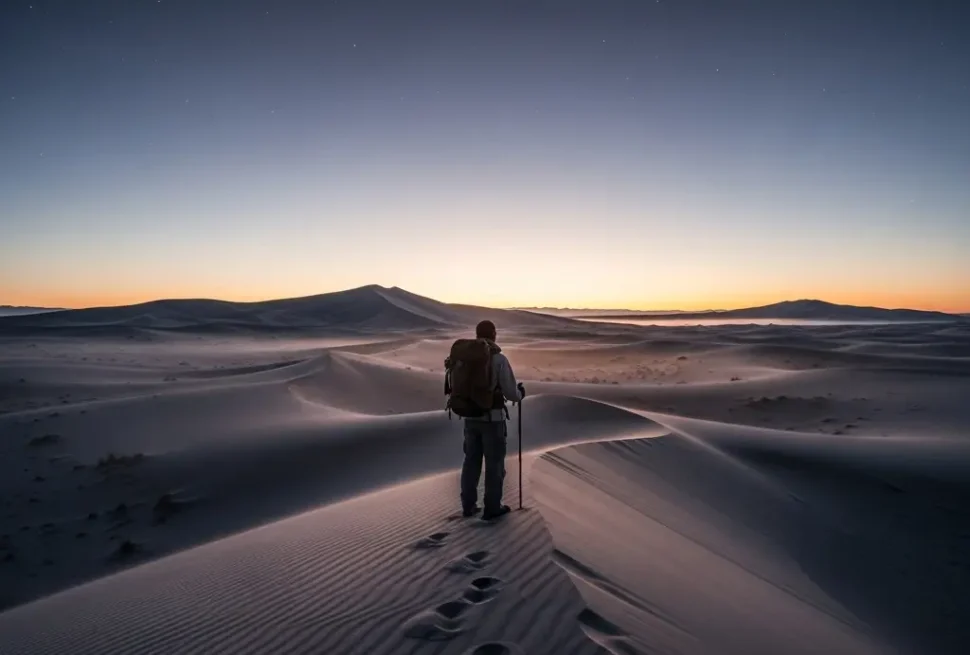
The dunes look like liquid mercury.
It is ghostly.
It is romantic.
It is deeply spiritual.
This is not a standard tour.
It is a celestial event.
In this guide, we will explore why the full moon changes everything.
We will tell you how to photograph it.
We will tell you why the animals behave differently.
We will show you how to book this specific experience.
Prepare to bathe in the moonlight.
1. The Lunar Calendar Strategy
The first step is planning.
You cannot just book this on a random Tuesday.
You need to check the Hijri calendar or a lunar app.
The full moon lasts for about three nights.
The night before, the night of, and the night after.
These are the “White Nights.”
Booking a Desert Safari Full Moon requires foresight.
You need to book weeks in advance.
Why?
Because photographers and nature lovers know this secret.
They fill up the best camps.
If you miss it, you have to wait another month.
Do not make the mistake of going during a New Moon if you want visibility.
New Moon is for stars.
Full Moon is for the landscape.
Decide what you want to see.
If you want to see the shape of the world, go when the moon is full.
2. The Drive: Twilight to Silver
The journey begins in the afternoon.
You leave the city.
The sun sets behind you.
Usually, this is when the world goes black.
But on a Desert Safari Full Moon trip, the light shifts.
As the red sun dips, the white moon rises.
It is a celestial relay race.
There is no moment of total darkness.
The sky turns a deep, bruised purple.
Then, the moon clears the horizon.
It looks massive.
This is called the “Moon Illusion.”
When it is near the horizon, it looks bigger than buildings.
Your driver will stop.
You will watch this giant orb climb into the sky.
It illuminates the road ahead.
It is a surreal beginning to the night.
3. The Visuals: Liquid Silver
What does the desert look like?
It looks like the ocean.
During the day, sand is yellow or red.
Under the Desert Safari Full Moon, color disappears.
The rods in your eyes (which see low light) take over.
They see in monochrome.
The world becomes black, white, and silver.
The silica in the sand reflects the moonlight.
It glitters.
It looks like snow.
It looks like water.
This visual trickery is the highlight of the trip.
You feel like you are walking on the surface of another planet.
It is not Earth.
It is a dreamscape.
4. Visibility and Safety
One of the benefits of the full moon is safety.
In the pitch black, walking on dunes is tricky.
You cannot see the drop-offs.
You cannot see the bushes.
On a Desert Safari Full Moon, visibility is perfect.
You can see for miles.
You can walk confidently.
You can let your children play on the sand without fear of them getting lost in the shadows.
It feels welcoming.
The fear of the unknown vanishes.
Everything is revealed in the soft, cold light.
This makes it the perfect time for first-time campers.
It is “nature light.”
5. Dune Bashing with a Twist
Dune bashing at night is usually scary.
You are trusting the headlights.
You see a tunnel of light and nothing else.
But during a Desert Safari Full Moon, the bashing is majestic.
You can see the crest of the dune before you hit it.
You can see the spray of sand as the car drifts.
The sand spray catches the moonlight.
It looks like diamond dust flying in the air.
Drivers love this time.
They can turn off their high beams.
They can drive by moonlight (in safe areas).
It is a smoother, more flowy experience.
You are surfing the silver waves.
For the best drivers who know how to navigate by moon, verify with https://royaldesertadventures.ae/.
They know the routes that catch the light best.
6. Night Photography: A Masterclass
If you are a photographer, this is your Super Bowl.
Shooting the desert at night is hard.
Usually, you need a very long exposure.
This results in star trails.
But with a Desert Safari Full Moon, you have a light source.
You can shoot with a lower ISO.
You can capture the texture of the sand.
You can capture your silhouette against the moon.
Tips for the shot:
Use a tripod.
Set your shutter speed to 10-15 seconds.
Open your aperture.
Frame the moon between two dunes.
Or use the moon to backlight a Ghaf tree.
The shadows are long and dramatic.
They create high contrast.
Your photos will look like fine art black and white prints.
No filter is needed.
7. The Wildlife Awakening
Animals love the full moon too.
Or some do.
Predators love it.
It helps them see.
Prey animals are more cautious.
However, the visibility allows you to see them.
On a standard night, you might hear a fox.
On a Desert Safari Full Moon, you can see the fox trotting on the ridge.
You can see the gazelle grazing.
You might see an owl flying across the face of the moon.
It adds a biological layer to the tour.
You are watching the nightlife of the ecosystem.
It is not hiding in the dark.
It is exposed.
8. The Cooling Effect
The full moon does not create heat.
But it signals the cool nights.
Clear skies mean the heat escapes the earth.
A full moon night is often a cold night.
The air is crisp.
It is fresh.
You need a jacket.
But this cold is refreshing.
After the heat of the city, the cool lunar breeze is therapy.
You can breathe deeply.
The dust settles.
The atmosphere is stable.
It is the cleanest air you will breathe all year.
9. Romance in the Dunes
There is nothing more romantic than moonlight.
It is a cliché for a reason.
If you want to propose, do it on a Desert Safari Full Moon.
Ask the driver to take you to a private dune.
Lay out a blanket.
The lighting is flattering.
The ambiance is quiet.
It feels like the universe is putting on a show just for you.
Couples often book private dinners on these nights.
Imagine eating by candlelight, with the moon as your chandelier.
It is unforgettable.
Check https://dubaidesertsafarie.com/ for private couple packages.
10. The Shadow Play
The moon moves.
As the night progresses, the shadows shift.
A dune that was bright becomes dark.
A valley that was hidden becomes illuminated.
The landscape is dynamic.
It changes every hour.
If you stay overnight, you watch this slow-motion movie.
It is hypnotic.
You can sit in one spot and watch the world transform.
It teaches you patience.
It teaches you observation.
This is the meditative power of a Desert Safari Full Moon.
11. Moon Bathing and Wellness
“Moon Bathing” is an ancient practice.
It is believed to cool the anger.
It is believed to increase feminine energy.
Whether you believe the mysticism or not, lying under the moon is relaxing.
The light is soft.
It does not hurt your eyes.
You can stare at the moon.
You cannot stare at the sun.
This direct connection calms the nervous system.
It lowers your heart rate.
Many yoga retreats happen during the full moon in the desert.
They do “Moon Salutations” instead of Sun Salutations.
It is a gentle, restorative practice.
12. The Acoustic Mystery
Does the moon affect sound?
Maybe not physically.
But psychologically, yes.
The bright night seems quieter.
Or perhaps we just listen better.
You can hear the wind shifting the grains of sand.
You can hear the crackle of the campfire.
On a Desert Safari Full Moon, people tend to whisper.
They don’t shout.
The beauty awes them into silence.
This creates a peaceful environment in the camp.
Even the loud tourists calm down.
The moon commands respect.
13. Camel Riding by Moonlight
Riding a camel in the day is hot.
Riding a camel in the pitch black is scary (you can’t see the ground).
Riding a camel by moonlight is perfect.
You can see where you are going.
The camel casts a long, strange shadow.
It feels like you are in a storybook.
“The Arabian Nights.”
You are a traveler in an ancient caravan.
The sway of the camel rocks you.
The moon guides you.
It is the most authentic way to feel the history of the Bedouins.
They traveled by night to avoid the sun.
They traveled by the moon.
You are reliving their journey.
14. The Science of the Tides (Sand Tides?)
The moon controls the ocean tides.
It does not move the sand.
But it affects the moisture.
Some guides say the dew is heavier on full moon nights.
This makes the surface of the sand slightly firmer in the morning.
It makes it easier to walk on.
It makes the driving slightly faster.
Is it true?
Ask your guide from https://htdesertsafari.com/.
They know the subtle changes in the terrain better than anyone.
15. The Folklore of the Moon
The moon is central to Islamic culture.
The calendar is lunar.
Ramadan starts with the moon.
Eid starts with the moon.
On a Desert Safari Full Moon, ask your guide about the legends.
They might tell you stories about the rabbit in the moon.
Or stories about travelers saved by the moonlight.
The moon is a friend to the desert dweller.
It is the lamp of God.
Hearing these stories while sitting under the actual object is powerful.
It connects the culture to the nature.
16. The Campfire Contrast
Fire and Moonlight.
Orange and Silver.
This color contrast is stunning.
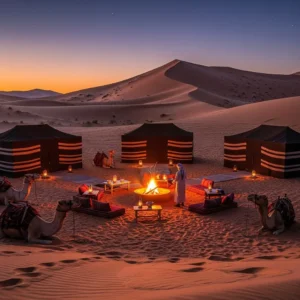
Sitting by the bonfire on a full moon night is visually spectacular.
One side of your face is warm and orange.
The other side is cool and blue.
It represents the duality of the desert.
Hot and cold.
Life and death.
It is a place of extremes.
Enjoying a hot tea while the cold moon watches you is a sensory delight.
17. The Overnight Sleep
Do not go home.
Stay the night.
Book an overnight Desert Safari Full Moon.
Sleep outside.
Do not sleep in the tent.
Drag your mattress out.
Sleep under the spotlight.
It might be hard to sleep because it is so bright.
But who cares?
You can sleep when you are dead.
Watch the moon arc across the sky.
Watch it set in the west just as the sun rises in the east.
Seeing both the sun and the moon in the sky at the same time at dawn is a rare balance.
It is the perfect end to the experience.
Conclusion
The desert is always beautiful.
But under the full moon, it is enchanted.
It becomes a place of silver silence.
It becomes a place where you can see without light.
It is a rare experience that requires timing.
It requires planning.
But the reward is a memory that glows.
Do not settle for the darkness.
Aim for the light.
Check the calendar.
Book your seat.
And witness the silver miracle.
Secure your lunar seat at https://royaldesertadventures.ae/.
Check the moon phases and book at https://dubaidesertsafarie.com/.
Plan your overnight moon watch at https://htdesertsafari.com/.
The moon is rising.
The dunes are waiting.
Comparison Table: New Moon vs. Full Moon Safari
| Feature | New Moon Safari | Full Moon Safari |
| Sky Brightness | Pitch Black | Bright / Illuminated |
| Star Visibility | Maximum (Milky Way visible) | Reduced (Stars washed out) |
| Landscape View | Invisible (Dark shapes) | Visible (Silver details) |
| Flashlight Need | Essential | Not Needed |
| Atmosphere | Mysterious / Scary | Magical / Romantic |
| Photography | Astro-photography (Stars) | Landscape (Dunes/Moon) |
| Wildlife | Hidden (Audio only) | Visible (Silhouettes) |
| Safety | Low Visibility | High Visibility |
| Mood | Deep Solitude | Festive / Awe |
| Best For | Stargazers | Photographers / Couples |
20 FAQs About Desert Safari Full Moon
1. When is the best time for a Full Moon Safari?
You need to check the Lunar Calendar. The 14th, 15th, and 16th days of the Hijri month are the Full Moon nights.
2. Is it safe to drive in the moonlight?
Yes. In fact, it is safer than a dark night because the driver can see the contours of the dunes without relying solely on headlights.
3. Can I see the stars during a full moon?
You can see the bright stars and planets (like Jupiter and Venus), but the smaller stars and the Milky Way will be washed out by the moon’s brightness.
4. Do I need a jacket?
Yes. Full moon nights are often clear nights, which means the heat escapes the earth rapidly. It gets chilly, especially in winter months.
5. Is the desert really bright enough to walk without a light?
Yes. Once your eyes adjust (takes about 20 minutes), the full moon provides ample light to walk, hike, and even read large print.
6. specific packages for Full Moon?
Some operators offer specific “Full Moon Yoga” or “Full Moon Trekking” events. However, you can book a standard or private safari on the date of the full moon to get the experience.
7. Why use the link royaldesertadventures.ae?
Using https://royaldesertadventures.ae/ allows you to request a private car, which is essential if you want to stop and enjoy the moon away from the bright lights of the main camp.
8. Can I take photos with my phone?
Yes. Modern smartphones have “Night Mode.” With the brightness of the full moon, you can get incredible shots of the dunes without professional gear.
9. Are there wolves or dangerous animals?
Wolves are very rare. You might see foxes or scorpions. The bright light actually makes it easier to spot them and stay safe.
10. Is it more expensive?
Usually, the price is the same as a standard safari. However, demand is higher, so you might need to book earlier.
11. Can we sleep outside?
Yes. Booking an overnight safari is the best way to experience the moon. Ask for an open-air sleeping setup.
12. Does the moon rise at the same time every day?
No. It rises about 50 minutes later each day. On the night of the full moon, it rises right around sunset.
13. What is the “Moon Illusion”?
It is the optical illusion where the moon looks much larger when it is near the horizon than when it is high in the sky. This happens at moonrise.
14. Why use the link dubaidesertsafarie.com?
Using https://dubaidesertsafarie.com/ helps you compare different operators to see which ones offer “Overnight” or “Nature” options that suit a lunar trip.
15. Is it romantic?
Extremely. The lighting is soft and flattering. The atmosphere is quiet. It is a top choice for dates and proposals.
16. Can I do sandboarding at night?
On a full moon night, yes. Visibility is good enough to slide down the dunes safely.
17. What if it is cloudy?
If it is cloudy, you miss the effect. The desert becomes pitch black. Check the weather forecast for “clear skies.”
18. Do the camps turn off the lights?
Standard camps keep lights on for safety and dinner. To get the full experience, you need to walk away from the camp or book a private setup where you control the lights.
19. Why use the link htdesertsafari.com?
Using https://htdesertsafari.com/ can help you find adventure packages that might include night buggy rides, which are thrilling under the moonlight.
20. Is the full moon safari suitable for kids?
Yes. Kids love the “spooky” but safe atmosphere. The visibility makes it easier to keep track of them than on a dark night.