
Desert Safari Dune Buggy 9 High-Speed Secrets For Adrenaline Lovers
Dubai is a city of speed. It is a city of power.
You see Ferraris on the highway. You see Lamborghinis at the mall.
But the real horsepower is not on the tarmac. It is in the sand.
For those who find the standard tour too slow, there is an answer.
That answer is the Desert Safari Dune Buggy.
This is not a bus ride. This is not a passenger seat experience.
This is you, a steering wheel, and a roll cage.
It is the most intense way to explore the Arabian desert.
You climb the highest peaks. You drift through the valleys.
You feel the raw power of a machine built for one purpose. To conquer the dunes.
Many tourists confuse this with quad biking. It is very different.
A buggy is faster. It is safer. It is more capable.
It is a mini race car for the sand.
If you are ready to upgrade your adventure, this guide is for you.
We will cover the machines, the safety, and the techniques.
We recommend https://royaldesertadventures.ae/ for the best fleet of buggies.
Let us start your engine.
1. What is a Dune Buggy Safari?
First, let us define the machine.
A dune buggy in Dubai is usually a high-performance UTV (Utility Task Vehicle).
The most common models are the Polaris RZR and the Can-Am Maverick.
These are not toys. They are engineering marvels.
They feature massive suspension travel. This absorbs the bumps.
They have powerful engines, often 1000cc or more.
They have a roll cage. This is a metal frame that protects you.
You sit inside a bucket seat. You wear a 4-point or 5-point harness.
This makes the Desert Safari Dune Buggy safer than a quad bike.
You are strapped in. You are protected.
This safety allows you to drive faster.
It allows you to tackle steeper dunes.
It is the closest you can get to being a rally driver.
2. The Difference Between Quads and Buggies
Many people ask this question. Which one should I choose?
A quad bike (ATV) has handlebars. You sit on top of it like a motorcycle.
You use your body weight to turn. You are exposed to the elements.
A buggy has a steering wheel. You sit inside it like a car.
You use pedals for gas and brake.
Buggies are generally more powerful.
They are also more stable. They have a wider wheelbase.
This makes them harder to flip.
Buggies can carry passengers comfortably.
You can sit side-by-side with your friend.
Quads are usually for one person.
If you want a physical workout, choose a quad.
If you want speed, safety, and comfort, choose the buggy.
Compare the specs on https://dubaidesertsafarie.com/.
3. Safety First: The Roll Cage Advantage
Safety is the main selling point of the buggy.
The desert is unpredictable. The sand shifts.
If you make a mistake on a quad, you might fall off.
If you make a mistake in a buggy, the cage protects you.
The roll cage is a reinforced steel structure.
It surrounds the driver and passenger.
In the unlikely event of a rollover, the cage hits the sand, not you.
This gives you confidence.
You also wear a helmet. This is mandatory.
You wear goggles to keep sand out of your eyes.
The seatbelts are racing style. They hold you tight to the seat.
This prevents you from bouncing around inside the cabin.
Operators like https://royaldesertadventures.ae/ maintain these safety features strictly.
4. Driving Techniques for Sand
Driving on sand is an art. It is not like driving on the road.
The surface is loose. Friction is different.
Momentum is King:
You cannot stop on an uphill slope.
If you stop, gravity pulls you down. The wheels dig in.
You must keep your speed up when climbing.
Steering Input:
You need to be smooth.
Jerky movements cause the tires to plow.
Turn the wheel gently. Let the tires find traction.
Throttle Control:
Do not just floor it constantly.
Use the power when you need it.
Ease off when you crest a dune.
If you jump the dune blindly, you might crash on the other side.
The Flow:
Read the dunes. Look for the “line”.
Follow the tracks of the guide.
They know the hard sand from the soft sand.
Mastering these skills makes the Desert Safari Dune Buggy incredibly rewarding.
5. Solo vs. Shared Buggies
You have options when you book.
1-Seater Buggy:
This is for the solo adventurer.
You are alone in the machine.
It is lighter and faster.
You have no distractions.
2-Seater Buggy:
This is the most popular.
You drive. Your friend or partner sits next to you.
You can swap drivers halfway through.
It is great for couples. You share the thrill.
4-Seater Buggy:
This is the family beast.
It has two rows of seats.
Dad can drive. Mom and kids can sit in the back.
It is a heavy machine, but very powerful.
It allows the whole family to experience the ride together.
Choose the configuration that fits your group.
6. The Terrain: Red Dunes of Al Lahbab
Where do you drive?
Not all deserts are equal.
Flat sand is boring for a buggy. You want hills.
The best location is the Al Lahbab desert.
This is known as the “Red Dunes”.
The sand is a deep, reddish-orange color.
The dunes are massive. Some are 300 feet high.
They offer long, sweeping slopes.
This is the playground for the Desert Safari Dune Buggy.
You can surf the dunes. You can climb the walls.
The scenery is spectacular.
It looks like Mars.
Most reputable tours take you here.
Verify the location on https://htdesertsafari.com/ before booking.
7. Morning Rides: The Driver’s Choice
When is the best time to drive?
Serious drivers prefer the morning.
Why? Because of the sand condition.
Overnight, the dew settles on the sand.
In the morning, the sand is firm. It has more grip.
Your tires bite into the surface better.
You can drive faster and with more precision.
Also, the visibility is perfect. The sun is bright.
There are no shadows hiding the bumps.
It is also cooler. The engine performs better in cooler air.
The desert is empty. You have the dunes to yourself.
If you care about performance, book a morning slot.
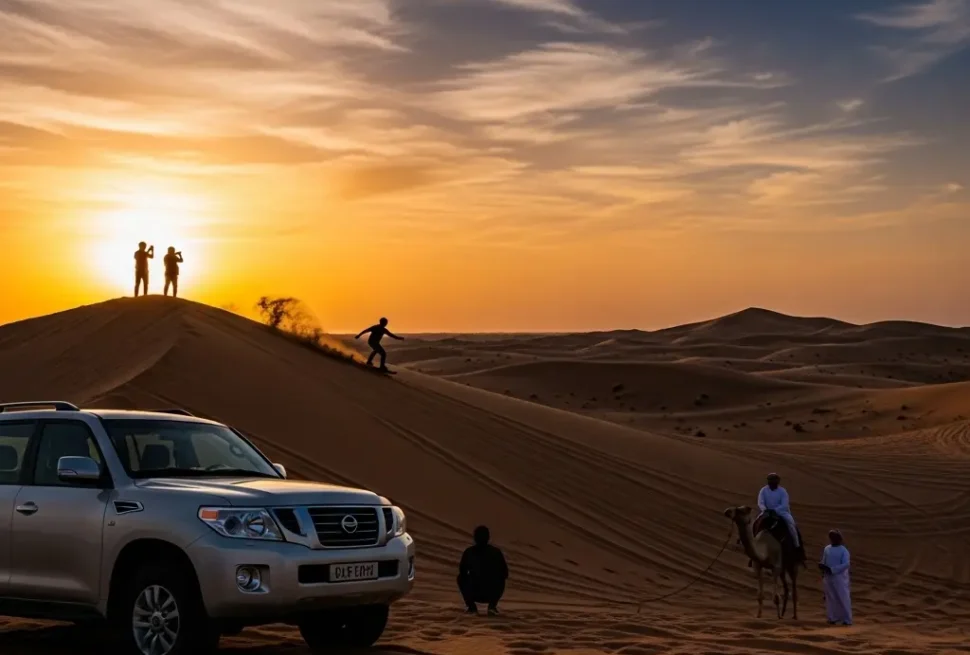
8. Sunset Rides: The scenic Choice
The evening ride is for the atmosphere.
Driving into the sunset is a movie moment.
The light is golden. The dunes glow.
It is incredibly beautiful.
However, visibility can be tricky.
As the sun gets low, shadows stretch.
It becomes harder to see the depth of the holes.
You have to be a bit more careful.
But the reward is the view.
After the ride, you can go to the camp for dinner.
This makes for a complete evening out.
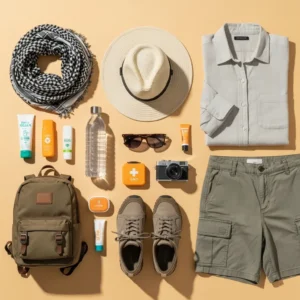
9. What to Wear for a Buggy Ride
You are in a cage, but you are not sealed in.
Dust gets everywhere.
Wear clothes you do not mind getting dirty.
The red sand can stain white fabric.
Wear long sleeves. This protects you from the sun.
It also protects you from flying sand particles.
Wear long pants. The engine heat can be felt.
Wear closed shoes. Sneakers or boots are best.
Do not wear sandals. They are dangerous for driving pedals.
Bring a scarf or bandana.
Wrap it around your face. It filters the dust.
It also looks cool in photos.
10. The Guided Convoy System
You are not just given a key and told “good luck”.
You ride in a convoy.
There is a lead guide. They drive in front.
They scout the path. They ensure it is safe.
You follow their line.
This prevents you from driving off a cliff.
It prevents you from getting lost.
There is also a tail guide. They drive at the back.
If you get stuck, they help you.
If you have a mechanical issue, they fix it.
This system ensures safety for everyone.
Do not try to race the guide. They are experts.
Respect the formation.
11. Age and License Requirements
Who can drive?
Generally, you must be at least 16 years old to drive.
You do not usually need a driver’s license.
The activity takes place off-road on private tracks.
However, you must carry ID to prove your age.
Passengers can be younger.
Kids as young as 5 or 6 can sit in the passenger seat.
They must be big enough to fit the seatbelt safely.
If the harness is too loose, they cannot ride.
Safety is strict on this.
Pregnant women are not allowed.
The ride is too bumpy.
People with back injuries should also avoid it.
12. Insurance and Liability
This is serious business.
These machines are expensive. A buggy costs over $30,000.
If you crash it, who pays?
Read the waiver carefully before you sign.
Most operators have insurance for third-party damage.
But if you roll the buggy because you were reckless, you might pay.
Reckless means ignoring the guide.
It means jumping dunes you were told not to.
Drive within your limits.
Do not try to show off.
If you respect the machine, you will be fine.
13. The Cost of Power
Desert Safari Dune Buggy is a premium activity.
It is more expensive than a regular safari.
Why? Because of the equipment.
Maintenance on these buggies is high.
Fuel consumption is high.
Safety gear is expensive.
Prices range from 800 AED to 2000 AED per hour.
It depends on the buggy size.
It depends on the tour length.
A shared buggy (2-seater) is cheaper per person.
A private buggy is more expensive.
But remember, you are paying for a high-end motorsport experience.
Check https://royaldesertadventures.ae/ for the latest price list.
14. Photography Opportunities
You will look like a badass in the buggy.
Helmet on. Goggles down. Hands on the wheel.
Ask your guide to take photos.
The best shot is action. Sand spraying from the wheels.
Or a static shot at the top of a high dune.
The buggy looks aggressive against the soft sand.
GoPro cameras are perfect here.
Mount one on the roll cage.
Record your reaction as you drop down a steep slope.
The footage is shaky but exciting.
It captures the noise and the speed.
15. The “Open Desert” vs. “Fenced Track”
Be careful when booking.
Some cheap tours take you to a small fenced circle.
You just drive round and round.
This is boring. It is a tourist trap.
You want an “Open Desert” tour.
This means you drive out into the wild dunes.
You explore the landscape.
You travel for kilometers.
Always ask: “Is this open desert driving?”
https://royaldesertadventures.ae/ specializes in open desert tours.
Do not settle for the fenced track.
16. Combining with Other Activities
You can make a day of it.
Start with the buggy ride.
Then do some sandboarding.
Then ride a camel to cool down.
Then head to the camp for BBQ.
Many operators offer “Combo Packages”.
This saves you money.
It gives you a full desert experience.
However, the buggy ride is tiring.
You might be exhausted after an hour.
Listen to your body. Drink water.
17. Hydration and Heat Management
We cannot stress this enough.
The engine is hot. The sun is hot. The adrenaline makes you sweat.
You lose water fast.
Drink water before you start.
Drink water during the stops.
Guides usually carry a cooler box.
Ask for water if you need it.
If you feel dizzy, stop immediately.
Heatstroke is dangerous.
The wind from driving masks the heat.
You don’t realize how hot you are until you stop.
18. Respecting the Environment
The desert is beautiful. Keep it that way.
Do not throw plastic bottles out of the buggy.
Keep them in the cabin.
Do not chase wildlife.
If you see a gazelle, slow down.
The noise scares them.
Stay on the tracks where possible.
Some areas are conservation reserves.
Your guide knows the boundaries.
Be a responsible adrenaline junkie.
19. The Mechanical Checks
Before you get in, look at the buggy.
Do the tires look inflated?
Does the roll cage look secure?
Is the seatbelt working?
Reputable operators check this daily.
But it never hurts to look.
If something feels loose, tell the guide.
You are trusting this machine with your life.
Safety checks are part of the Desert Safari Dune Buggy ritual.
20. Why Royal Desert Adventures?
We recommend https://royaldesertadventures.ae/ because of their fleet.
They invest in new buggies regularly.
Old buggies break down. They are slow.
New buggies are fast and reliable.
Their guides are mechanical experts.
If a belt snaps in the desert, they can fix it.
They prioritize safety over showing off.
They give you a real open desert experience.
They are transparent about costs.
21. Private Tours for Groups
If you have a group of friends, book a private convoy.
You can have 5 or 6 buggies just for your group.
This is incredible fun.
You can race each other (safely).
You can challenge each other on the climbs.
It is perfect for bachelor parties.
Or corporate team building.
It builds camaraderie.
You will talk about it for years.
22. Preparation Checklist
What to do before you go:
-
Sleep well. Driving requires focus.
-
Eat a light meal. A heavy meal might make you sick.
-
Charge your GoPro.
-
Bring sunglasses.
-
Wear the right shoes.
-
Bring a credit card (for the deposit).
-
Check your insurance.
Being prepared ensures a smooth trip.
23. The Adrenaline Hangover
After the ride, you will be buzzing.
Your hands might shake a little.
This is the adrenaline leaving your body.
It is a great feeling.
You feel alive. You feel powerful.
Take a moment to sit on the sand.
Look at the tracks you made.
Appreciate the machine that got you there.
This is the essence of the experience.
24. Booking in Advance
Do not wait until the last minute.
Buggies are limited.
There are only so many machines in the fleet.
In peak season (winter), they sell out weeks ahead.
Book online. Secure your slot.
Morning slots are especially popular.
Use https://dubaidesertsafarie.com/ to check availability across operators.
25. Conclusion
The Desert Safari Dune Buggy is the king of desert activities.
It combines the beauty of nature with the thrill of motorsport.
It is safer than a bike. It is faster than a camel.
It puts you in the driver’s seat of your own adventure.
Whether you are a solo speedster or a family of four.
There is a buggy for you.
Do not just look at the dunes. Conquer them.
Feel the power. Feel the sand.
Book your ride today.
The Red Dunes are waiting.
FAQs: Desert Safari with Dune Buggy Experiences
Here are 20 detailed questions and answers to help you plan your high-speed desert trip.
1. Do I need a driving license to drive a dune buggy?
In most cases, no. The activity takes place on off-road terrain, not public highways. Therefore, a standard international driving license is not strictly required by law for the desert activity itself. However, you must be of age (usually 16+) and carry a valid ID (Passport or Emirates ID). Some operators may ask for a license just as a proof of competency, so it is good practice to have it on your phone, but it is rarely a deal-breaker.
2. Is a dune buggy safer than a quad bike?
Yes, significantly safer. A Desert Safari Dune Buggy has a full roll cage structure. This protects you in case the vehicle tips over. You are also strapped into a bucket seat with a 4-point or 5-point harness, preventing you from being thrown out. Quad bikes have no such protection; if you flip, the bike can fall on you. For this reason, buggies are recommended for those who want speed with higher safety standards.
3. What is the minimum age for passengers?
Passengers can be younger than drivers. Usually, children as young as 5 or 6 can ride in the passenger seat. The main requirement is that they must be tall enough to fit the seatbelt securely. If the harness is too loose on their shoulders, it is unsafe. They must also be able to hold onto the grab handle and reach the floor with their feet for stability.
4. Can we swap drivers during the tour?
Yes, most operators allow this for 2-seater or 4-seater buggies. If you book a 1-hour tour, you can stop halfway (after 30 minutes) and switch seats so that both the driver and the passenger get a chance to drive. This makes the 2-seater buggy a very cost-effective option for couples or friends who both want to experience the thrill of driving.
5. What happens if I crash the buggy?
You are responsible for the machine. Before you drive, you will sign a liability waiver. If you damage the buggy due to reckless driving (e.g., hitting another buggy, ignoring the guide’s path, rolling it by drifting too hard), you will be charged for the repairs. These parts are expensive. However, mechanical failures (like a broken belt or engine issue) are the operator’s responsibility, not yours.
6. Do I need to wear a helmet in a buggy?
Yes, helmets are mandatory. Even though there is a roll cage, a helmet protects your head from hitting the frame bars during rough bumps. It also protects your face from sand and stones kicked up by the front wheels. Operators provide sanitized helmets of various sizes. You must wear them properly strapped at all times while the engine is running.
7. How fast do the buggies go?
These machines are powerful. A Polaris RZR or Can-Am Maverick can easily reach speeds of 80km/h to 100km/h on dirt. However, on soft sand dunes, the speed is lower due to resistance. The sensation of speed is intense because you are low to the ground. Guides will usually set a safe pace for the convoy, typically around 40-60 km/h, which feels incredibly fast in the dunes.
8. Can I go off on my own?
No, for safety reasons, all tours are guided. You drive in a convoy formation. A lead guide drives in front to carve a safe path through the dunes, avoiding steep drop-offs or soft pockets of sand. You follow their tracks. A tail guide follows behind to ensure no one gets left behind or stuck. “Free roaming” is not allowed as it is too easy to get lost or crash in the vast desert.
9. What should I wear?
Wear comfortable clothes that cover your skin. Long sleeves and long pants are best to protect against the sun and the dust. Avoid loose accessories like scarves that are not tied down, as they can get caught in the wind. Closed-toe shoes (sneakers) are essential; sandals can get stuck under the pedals. You will get very dusty, so don’t wear your best luxury outfit.
10. Is there a weight limit?
There is no strict weight limit like on a camel, but there is a size limit for the bucket seats. If a rider is very large, they might find the racing-style seats uncomfortable or the harness might not close. Generally, up to 120kg-130kg is fine. If you are concerned, contact https://royaldesertadventures.ae/ to ask about the seat dimensions of their specific fleet.
11. Is it better to go in the morning or evening?
For driving quality, morning is better. The sand is firmer from the night’s moisture, providing better traction and easier handling. It is also less crowded. For scenery, evening is better because of the sunset. However, evening visibility can be tricky with long shadows. If you are a driving enthusiast, choose the morning. If you are a photographer, choose the evening.
12. Can I bring my own GoPro?
Yes, and you should! Most helmets have mounts, or the buggies have bars where you can clamp a camera. Just make sure it is secured very tightly. The vibration is intense and can shake loose mounts. It is the best way to capture the action without holding a phone, which is dangerous and usually prohibited while driving.
13. What is the difference between a 1000cc and a 2000cc buggy?
The “cc” refers to engine displacement. A higher number means more power. A 1000cc buggy is standard and very fast. Some operators offer “Turbo” versions which have even more acceleration. For a beginner, 1000cc is more than enough thrill. The Turbo models are for experienced drivers who know how to handle extreme torque on sand.
14. Is pick-up and drop-off included?
This depends on the package. Premium packages usually include a private transfer from your hotel to the desert and back. Budget options might require you to meet at a central point or drive your own rental car to the desert meeting point. Checking https://htdesertsafari.com/ can help you compare packages with and without transfer.
15. Are there toilets at the buggy center?
Yes, the starting point (the base camp) usually has restroom facilities, a waiting area, and a shop to buy water or scarves. It is a good idea to use the facilities before you set off, as there are no toilets out in the deep dunes during the 1-hour drive.
16. Can I do a buggy ride without the dinner/camp?
Yes. This is very common. You can book a “Buggy Only” tour. You get picked up, do the 1-hour drive, and then get dropped back at your hotel. This is perfect for people who want the adrenaline but don’t want to sit through the belly dancing show or eat the buffet dinner. It saves time and is often cheaper.
17. How do I avoid getting stuck?
The key is momentum. When you see a slope approaching, accelerate. Do not stop at the bottom of a dune. Do not stop on the incline. Only stop on flat ground or at the very peak (crest) of the dune if instructed. If you drive too slowly, the tires will dig holes in the soft sand. If you do get stuck, don’t spin the wheels; wait for the guide to assist.
18. Is water provided?
Yes, the guide usually carries a cooler box with water bottles in their lead buggy. They will stop halfway for a break to let everyone drink and take photos. It is very important to stay hydrated as the heat and adrenaline dehydrate you quickly. You can also bring your own water bottle, but make sure it is secured so it doesn’t roll under the pedals.
19. Can I book a private tour for my family?
Yes, you can book a private convoy. If you have a large family, you can rent 3 or 4 buggies just for your group. You will have your own lead guide. This allows you to set the pace—fast for the teenagers, or slow and scenic for the parents. It is a fantastic way to bond without strangers holding you back.
20. Why are buggies more expensive than quads?
Buggies are much more expensive machines to buy and maintain. A Polaris RZR costs significantly more than a standard quad bike. They also consume more fuel and require more storage space. The safety features (roll cage, bucket seats) add to the cost. You are paying for a superior, safer, and higher-performance vehicle.
Table: Buggy vs. Quad Comparison
| Feature | Dune Buggy | Quad Bike |
| Control | Steering Wheel | Handlebars |
| Seating | Inside (Bucket Seat) | On Top (Saddle) |
| Safety | High (Roll Cage) | Moderate (Helmet only) |
| Capacity | 1-4 People | 1 Person |
| Speed | Very High | High |
| Cost | Premium ($$$) | Moderate ($$) |
Table: Driving Checklist
| Action | Why? |
| Belt Up | Keeps you in the seat. |
| Visor Down | Keeps sand out of eyes. |
| Two Hands | Maximum control. |
| Listen | Guide knows the path. |
| Hydrate | Beat the heat. |
This is your manual for speed.
The desert is your racetrack.
Respect the machine.
Book your Desert Safari Dune Buggy.
Feel the rush.