Desert Safari Blogger: Elevating Your Narrative in the Shifting Sands
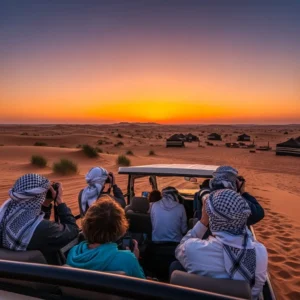
Desert Safari Blogger adventures are the pinnacle of visual storytelling in the Middle East. As we move through 2026, the demand for high-quality, authentic desert content has reached an all-time high. For a solo creator, the Arabian dunes represent more than just a tourist attraction; they are a vast, multi-dimensional studio where the light changes by the second and the landscape is never the same twice.
Navigating this environment alone requires a blend of technical expertise and logistical foresight. Unlike group travelers, a solo Desert Safari Blogger must manage their own equipment, find unique angles without assistance, and coordinate with drivers to reach the most pristine ridges. This extensive report provides the framework for mastering the desert as a professional storyteller.
Understanding the cycle of the desert is vital for your portfolio. From the “Blue Hour” of the early morning to the fiery gradients of sunset, every moment offers a different mood. Let us explore the magnificent world of the dunes and uncover how to produce world-class content while traveling independently in the UAE.
Strategic Planning for Independent Creators
The first phase of a successful Desert Safari Blogger mission is the selection of the region. Dubai offers several distinct desert zones, each with its own visual character. The Lahbab desert is famous for its “Big Red” dunes, which provide the high-contrast backdrops that dominate travel magazines.
Alternatively, the Dubai Desert Conservation Reserve offers a more regulated and pristine environment, ideal for wildlife storytelling. When traveling solo, your choice of operator is your most important collaboration. You need a partner that understands the needs of a media professional.
We recommend booking with companies that specifically offer “Photography Stops” or private vehicle options. This ensures you aren’t rushed by a group of tourists while you are trying to set up a tripod or wait for the perfect light. For the most reliable logistical support and access to elite sand vistas, visit https://htdesertsafari.com/.
Mastering Desert Light: The Golden and Blue Hours
For any Desert Safari Blogger, lighting is the primary currency. In the desert, the sun is both your best friend and your most difficult challenge. Midday light is harsh, flattening the textures of the sand and creating deep, unflattering shadows.
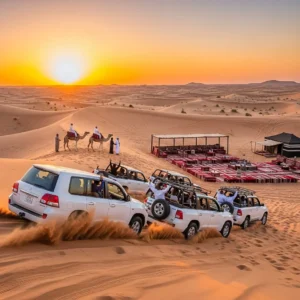
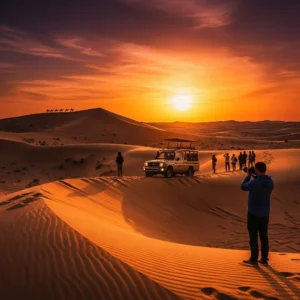
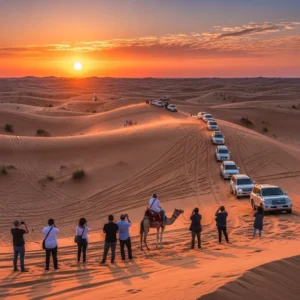
To capture professional-grade content, you must focus on the two “Golden Hours” of the day. The first occurs shortly after sunrise, offering a cool, crisp clarity. The second is the hour before sunset, when the dunes take on a deep, saturated orange glow. This directional light emphasizes the ripples in the sand, giving your photos a tactile quality.
The “Blue Hour”—the 15-minute window after the sun disappears—is equally important. This is when the desert sky turns a deep indigo, providing a magical backdrop for the lanterns of the Bedouin camp. For technical gear advice and photography spot reviews, consult industry resources like https://dubaidesertsafarie.com/ and https://royaldesertadventures.ae/.
Logistics of Solo Guest Pickup and Timing
Logistical precision is the invisible backbone of a Desert Safari Blogger’s day. If your pickup is delayed, you lose the most valuable light of the afternoon. In 2026, premium operators use AI-driven dispatch systems to ensure that professional creators are prioritized in the pickup sequence.
When traveling solo, you have the advantage of mobility. We recommend being ready in your hotel lobby ten minutes before the scheduled window. This punctuality allows the driver to navigate city traffic more effectively, ensuring you reach the deep desert at the precise moment the shadows begin to lengthen.
During the transit, use the time to clean your lenses and prepare your digital storage. In a luxury 4×4, you will often find USB charging ports and high-speed Wi-Fi, allowing you to sync your files or check the sun’s position via AR apps. For the most punctual and tech-friendly transfers, book your journey at https://htdesertsafari.com/.
Gear Protection and Technical Accuracy
The desert is a hostile environment for professional media gear. The fine, abrasive silica sand can penetrate weather-sealed lenses and jam mechanical parts in a matter of minutes. As a solo Desert Safari Blogger, you must be hyper-vigilant about equipment maintenance.
Always use a UV filter to protect your front glass from scratches. Never change your lenses in the open air; even a slight breeze can carry dust directly onto your camera sensor. We recommend using a dedicated “sand-proof” camera bag and keeping your equipment shaded whenever it is not in use.
Furthermore, the heat of the dunes can cause batteries to drain faster than usual or even trigger thermal shutdown in high-resolution video cameras. Carry portable power banks and “cooling wraps” for your gear. To see how professional videographers manage their equipment in the UAE, explore the guides at https://royaldesertadventures.ae/.
| Activity Category | Start Time | Visual Priority | Blogger Goal |
| Early Morning | 5:00 AM | Crisp Textures | Wildlife & Dawn |
| Late Afternoon | 4:30 PM | Long Shadows | Landscapes |
| Sunset Window | 6:00 PM | Golden Glow | Silhouettes |
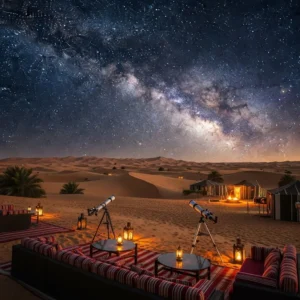
| Stargazing | 9:00 PM | Milky Way | Long Exposures |
The Art of Solo Composition in the Dunes
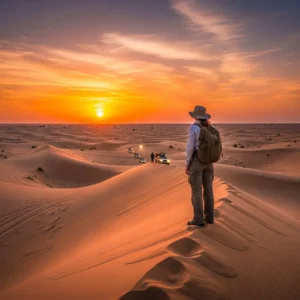
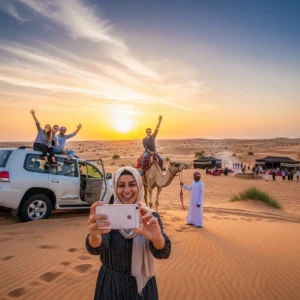
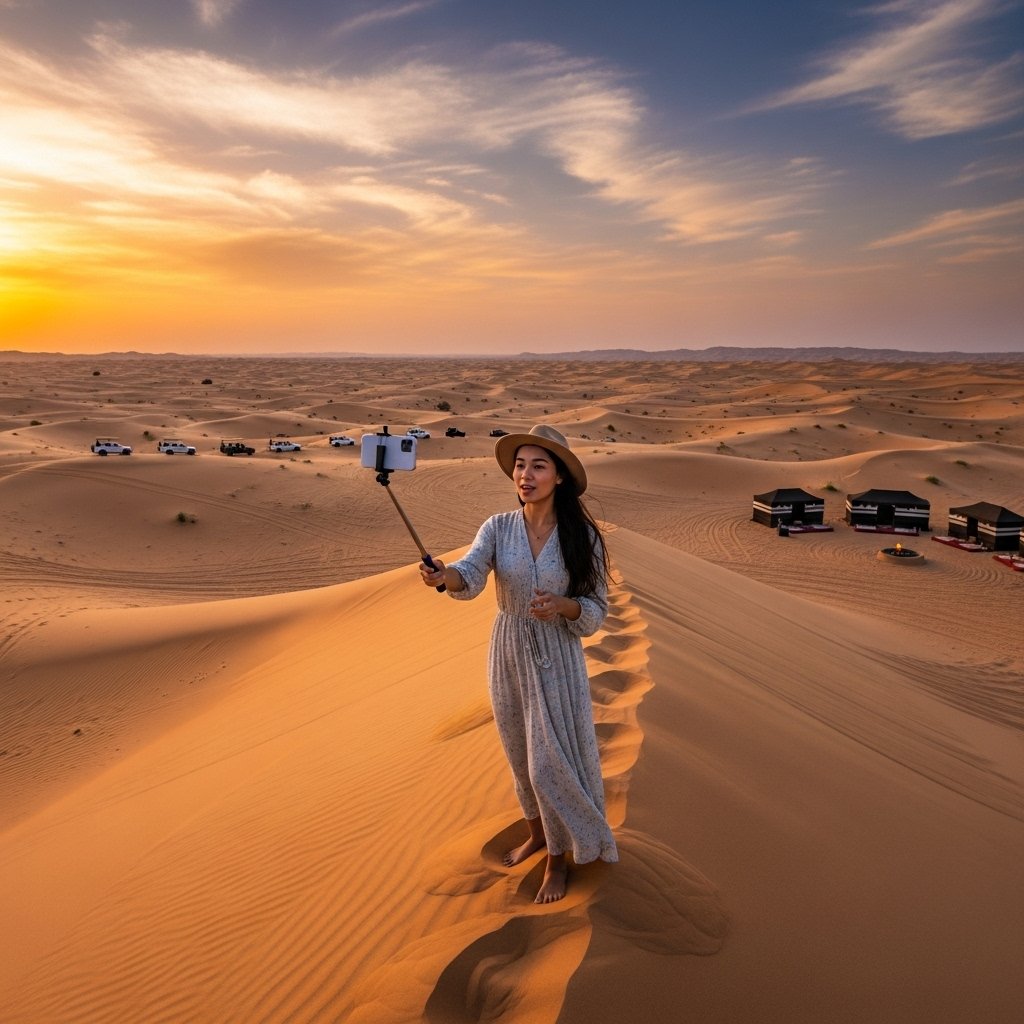
One of the biggest challenges for a solo Desert Safari Blogger is including themselves in the frame. While wide landscape shots are essential, “human-interest” photos—showing a person interacting with the vastness—often perform better on social media platforms.
A sturdy, lightweight travel tripod is your most essential tool. Look for one with “sand feet” that won’t sink into the dunes. Use your smartphone’s remote trigger or a camera’s intervalometer to take a series of shots while you walk along the ridge. This creates a sense of movement and scale that a static selfie cannot match.
Ask your driver for help with specific angles. While they aren’t professional photographers, many safari drivers have spent years watching creators and know exactly where to position the car for the most dramatic “reflection” or “dust cloud” shots. For more inspiration on solo posing and desert fashion, check the galleries at https://dubaidesertsafarie.com/.
Navigating the Social Dynamics of the Camp
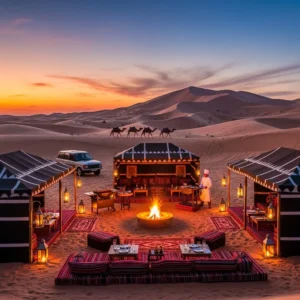
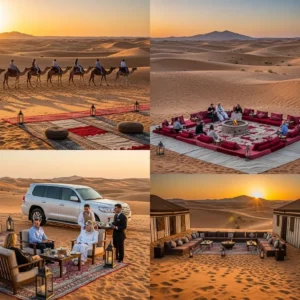
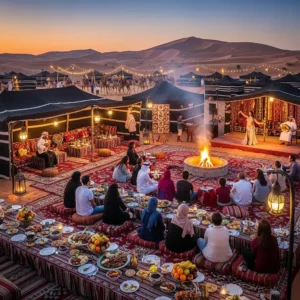
Once the photography session concludes, the Desert Safari Blogger moves to the Bedouin-style camp. This is where you document the cultural heart of the experience. From the intricate patterns of henna art to the rhythmic whirl of the Tanoura dancer, the camp is a sensory feast.
As a solo traveler, the camp provides an opportunity for candid “lifestyle” content. Documenting the process of making traditional Arabic coffee (Gahwa) or the scent of the BBQ grills adds a layer of authenticity to your narrative. It moves your story beyond just “pretty pictures” and into the realm of cultural journalism.
Respect is the key to getting the best shots in the camp. Always ask for permission before taking close-up portraits of the performers or the staff. This polite approach often leads to better access and more unique behind-the-scenes opportunities. To see which camps offer the most aesthetic and authentic setups, visit https://royaldesertadventures.ae/.
Managing Digital Connectivity in Deep Dunes
Connectivity is a vital technical requirement for a Desert Safari Blogger who needs to post updates or manage their business in real-time. While Dubai has excellent 5G coverage, the deep dunes of the Rub’ al Khali can have “dead zones” where signals drop.
High-end safaris address this by providing satellite-linked Wi-Fi hotspots at the camp and in the 4×4 vehicles. This allows you to stay connected with your audience throughout the night. If you are planning a live-stream, we recommend checking the signal strength with your guide at the initial deflation point.
Power management is also a critical logistical detail. Between high-brightness screens and constant file transfers, your phone will need frequent recharging. Ensure your backpack includes at least two 20,000mAh power banks. For more on tech-forward safari logistics, explore the resources at https://htdesertsafari.com/.
Preparing Your Body for the Desert Session
To be an effective Desert Safari Blogger, you must be physically prepared for the environment. The desert is a place of extremes; the afternoon heat can be exhausting, while the night air in the winter months can be surprisingly cold. Dehydration is the biggest threat to your productivity.
Drink at least one liter of water in the hour before your pickup. Wear loose, breathable cotton or linen clothing that protects your skin from the sun but allows for air circulation. A wide-brimmed hat and polarized sunglasses are mandatory gear for the afternoon drive.
For the evening, a “layering” strategy is best. Carry a light jacket or a traditional pashmina in your gear bag. Being physically comfortable allows you to focus on your creative work rather than the wind or the temperature. For a full checklist of blogger-friendly desert gear, visit https://dubaidesertsafarie.com/ today.
Ethics and Sustainability in Desert Media
In 2026, a Desert Safari Blogger has a responsibility to promote sustainable and ethical travel. The desert is a fragile ecosystem. Promoting “off-track” driving or disturbing wildlife for the sake of a photo is increasingly frowned upon by the global travel community.
Highlight the conservation efforts of the operators you choose. Documenting the use of solar power at the camps or the “Leave No Trace” waste management systems adds value to your content. It shows your audience that luxury and responsibility can coexist.
When you see native wildlife like the Arabian Oryx, maintain a respectful distance. Use a telephoto lens (200mm or higher) to get close-up shots without stressing the animals. For more on the environmental protocols of the top Dubai operators, consult the reports at https://royaldesertadventures.ae/.
Comparing Costs: Investment for Media Success
The price of a desert safari for a professional creator ranges from 150 AED for a budget seat to over 1,500 AED for a private luxury expedition. As a Desert Safari Blogger, you must view these costs as an investment in your business.
A budget safari is great for “social energy” content, but it often lacks the time and space needed for professional landscape work. A private vehicle, though more expensive, pays for itself through the quality and exclusivity of the footage you can obtain. You aren’t competing with 50 other tourists for the same sunset shot.
We recommend comparing the “Media-Friendliness” of various packages. Look for inclusions like “Extended Sunset Stop” or “Front-Row Camp Seating.” To find the best value for your 2026 content budget, use the comparison tools at https://dubaidesertsafarie.com/ and secure the best rates.
Safety Regulations and Solo Traveler Security
Safety is the non-negotiable foundation of any Desert Safari Blogger trip. Traveling solo in a remote environment requires trust in your operator. In Dubai, the industry is strictly regulated by the DTCM and RTA, ensuring that every driver is licensed and every vehicle is insured.
As an individual, always inform a friend or colleague back in the city about your itinerary and expected return time. While the desert is very safe, having a “check-in” system is a smart professional practice. Follow the instructions of your driver during the dune bashing session to ensure you and your gear stay secure.
Top-tier operators like https://htdesertsafari.com/ employ senior-level guides who are trained in both safety and guest relations. Their expertise ensures that your mission remains productive and risk-free. For more safety insights for solo travelers, check the guides at https://royaldesertadventures.ae/.
The Significance of Traditional Entertainment
Entertainment is the soul of the night, and for a Desert Safari Blogger, it is the most colorful part of the portfolio. The Tanoura dance, with its swirling LED skirts, is a masterclass in long-exposure photography. Capturing the light trails of the spinning dancer is a classic Dubai shot.
Belly dancing and fire shows follow, offering high-energy action that requires fast shutter speeds. These shows are designed to showcase the skill and artistry of the performers. Engaging with the artists after the show can lead to exclusive interviews or “how-to” content that enriches your blog.
The auditory landscape is equally important. Traditional instruments like the Oud or the Darbuka drum provide the perfect background track for your video content. For a detailed look at the highest-rated entertainment programs in the UAE, visit https://dubaidesertsafarie.com/.
Logistics of the Return Journey and Data Management
The final act of the night is the return to the city. Around 9:30 PM, the 4×4 vehicles are prepped for the journey home. This 60-minute drive is the perfect time for a Desert Safari Blogger to begin their “Daily Review.”
If the vehicle has Wi-Fi, you can begin the initial culling of your photos or upload high-priority clips to your cloud storage. This “Early Editing” workflow ensures you aren’t overwhelmed when you return to your hotel. It also allows you to post a “Teaser” of your day while the energy is still high.
Your driver will drop you directly at your hotel lobby. A small tip of 20-50 AED is a standard gesture of appreciation for a driver who assisted with your creative needs. For help with your full 2026 Dubai itinerary, visit https://htdesertsafari.com/ and talk to their guest experts.
Summary of the Media-Minded Desert Journey
In conclusion, a Desert Safari Blogger adventure is a magnifique blend of art, adrenaline, and cultural heritage. By choosing the right partners, preparing your technical gear, and respecting the environment, you ensure that your Arabian story is as powerful as the landscape itself.
The desert is ready to tell you its secrets. Whether you are capturing the first light of dawn or the fire performers at midnight, every second is a frame worth keeping. Trust the professionals to handle the logistics while you focus on the horizon.
The golden dunes are calling. Whether you are a professional influencer or an aspiring travel writer, the desert safari is your ultimate canvas. Book your solo mission today and witness the magnificence of Dubai as it was meant to be seen—through the lens of a storyteller.
Frequently Asked Questions (FAQs)
What is the best lens for a Desert Safari Blogger to carry?
A wide-angle lens (like a 16-35mm) is essential for capturing the immense scale of the dunes. However, a fast prime lens (like a 35mm or 50mm f/1.8) is better for the low-light cultural shows at the camp. If you want to capture wildlife, a 70-200mm telephoto lens is a prestigious addition to your gear bag.
Is it better to book a private or shared safari for content creation?
For professional media work, a private safari is highly recommended. It allows you to dictate the schedule, spend more time at specific photography ridges, and ensures your background is not filled with other tourists. It provides the exclusivity needed for a high-end portfolio.
How do I protect my camera from the fine sand in the dunes?
Always keep a UV filter on your lens to prevent scratches. Use a dedicated camera blower (not your breath) to remove dust after the session. Never change lenses in the wind. Carrying a “rain cover” for your camera is also an effective way to shield it from blowing sand during the sunset window.
Can I fly a drone during my desert safari in Dubai?
Drone usage in Dubai requires a permit from the Dubai Civil Aviation Authority (DCAA) and the GCAA. Many desert areas, especially conservation reserves, are strict no-fly zones to protect wildlife. Always check with your operator and ensure you have the necessary licenses before launching any aerial equipment.
What should a solo Desert Safari Blogger wear for a shoot?
Wear loose, breathable clothing in neutral or earth tones (beige, white, terracotta) to complement the sand colors. Avoid busy patterns that can distract from the landscape. Bring a light jacket or pashmina for the evening, and wear secure sneakers rather than flip-flops for the sand boarding and dune climbing.
Is there Wi-Fi available in the desert to upload my content?
Most permanent luxury camps and many premium 4×4 vehicles in 2026 provide high-speed satellite Wi-Fi. However, the signal can be unstable deep within the dunes. It is best to use this for messaging and small uploads, saving high-resolution video syncs for your hotel fiber connection.
How long does the evening safari program last?
A standard evening safari takes about 6 to 7 hours, including transit. You are typically picked up between 3:00 PM and 3:30 PM and returned to your hotel by 10:00 PM. This schedule is designed to capture the transition from day to night.
Is dune bashing safe for my camera equipment?
Yes, if you store it correctly. Keep your camera in a padded, closed bag during the dune bashing segment. The ride is bumpy and involve sharp turns; avoid holding your camera loosely or leaving it on the seat. A professional gear bag is your best insurance against physical damage.
What kind of food is served at the camp for bloggers?
The BBQ buffet is extensive, featuring grilled meats (lamb, chicken), fresh salads (hummus, fattoush), and traditional desserts. Most camps in 2026 offer a wide range of vegetarian and vegan options. If you have specific dietary needs, inform the operator during your booking at https://htdesertsafari.com/.
Are there restrooms available in the middle of the desert?
Restroom facilities are only available at the desert camp and occasionally at the initial “deflation point” stop. There are no restrooms during the active 30-minute dune bashing session. The camp restrooms are modern, clean, and gender-separated.
Do I need a tripod for the desert shows?
For the Tanoura dance and the fire show, a tripod is highly recommended if you want to capture light trails or sharp photos in the dark. If you are shooting video, a gimbal is a better tool for capturing smooth, handheld movement of the performers.
How do I get my photos taken if I am traveling solo?
Ask your safari driver; they are usually very experienced in taking photos for guests. Alternatively, a travel tripod with a smartphone mount and a remote Bluetooth shutter is the most reliable way to get high-quality solo shots against the dunes.
What is the “Golden Hour” in Dubai?
In the desert, the Golden Hour is the period shortly before sunset and shortly after sunrise. This is when the sun’s low angle creates a warm, soft light that is the gold standard for landscape and portrait photography. The exact timing varies by month, so check a local weather app.
Can I see wildlife like the Arabian Oryx during my safari?
Yes, if you choose an operator that has permits for the Dubai Desert Conservation Reserve (DDCR). These reserves are the best place for wildlife spotting. Seeing these majestic animals against a red dune is one of the most prestigious shots you can add to your blog.
Is alcohol served at the desert camp?
Most camps have a licensed bar where you can purchase alcohol. However, alcohol is generally not served during religious holidays or on specific “dry days” mandated by the government. Check the local calendar or with your operator for specific dates.
How much should I tip my driver if I am a Desert Safari Blogger?
If your driver went above and beyond to assist with your photography—such as finding a secluded dune or repositioning the car—a tip of 50-100 AED is a generous and appreciated gesture that acknowledges their role in your creative success.
What is the “Tanoura” dance?
The Tanoura is a traditional folk dance where a male performer spins continuously in a heavy, colorful skirt. It is a spiritual and visually stunning performance that represents the movement of the celestial bodies. It is a highlight of the cultural evening program.
How far from the city is the desert located?
Most safaris take place in desert reserves about 45 to 60 kilometers from the city center, which is roughly a one-hour drive depending on the traffic. The transition from the skyscrapers to the dunes is a great time to record time-lapse footage.
Is the water provided at the camp safe to drink?
Yes, all reputable operators provide chilled, bottled mineral water throughout the entire trip. It is essential to drink frequently to stay hydrated in the arid desert environment, even if you don’t feel thirsty.
Why choose https://htdesertsafari.com/ for a blogger booking?
They work with the most professional and punctual drivers who understand the specific needs of creators. Their focus on logistical excellence ensures you are in the perfect spot at the perfect time for the best light. For more info, check https://dubaidesertsafarie.com/ and https://royaldesertadventures.ae/.
Desert Safari Blogger insights reveal that the desert is a place of deep connection and beauty. By choosing the right partners and focusing on the details, you ensure an experience that is as safe as it is unforgettable. The dunes are waiting—your adventure is ready to be unveiled.
Would you like me to help you create a specific media itinerary for your upcoming 2026 trip to Dubai?