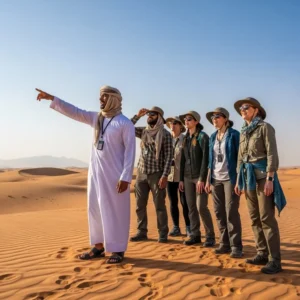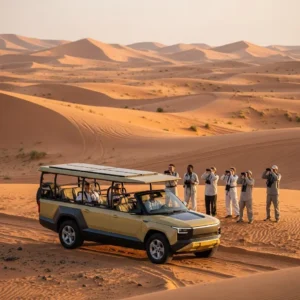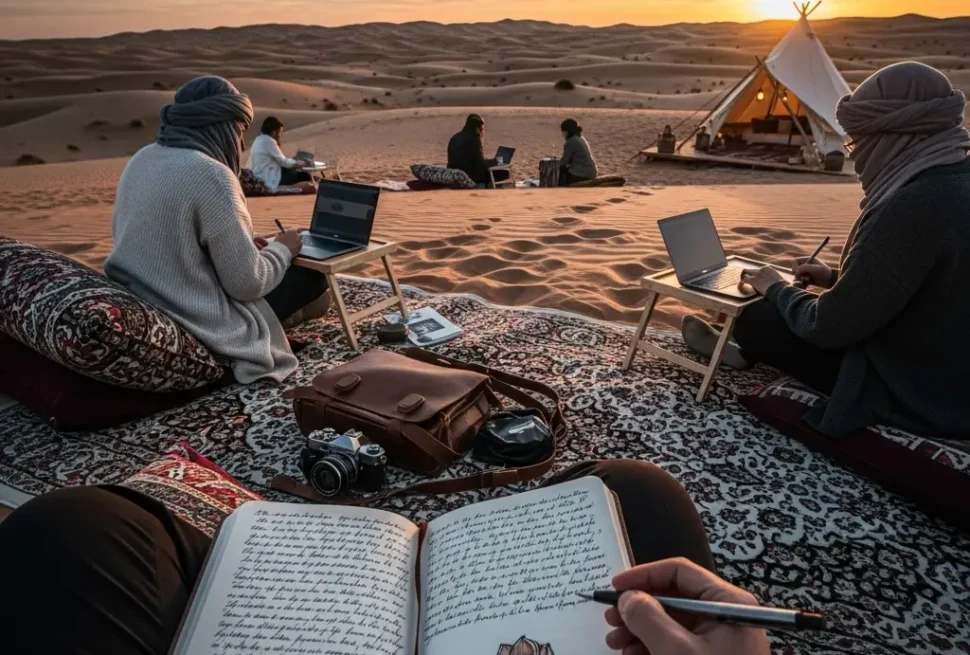

Desert Safari Accessibility 13 Ways To Enjoy Dubai Comfortably
Dubai is a city that strives for the impossible. It builds islands in the sea. It builds towers in the clouds.
It also strives to be the most accessible city in the world.
This vision extends beyond the malls and the metro. It reaches deep into the golden sands of the desert.
For a long time, the desert was seen as a hostile place. It was only for the young, the fit, and the adventurous.
The idea of Desert Safari Accessibility was non-existent.
If you had mobility issues, you stayed in the hotel. If you hated the heat, you stayed in the mall.
But times have changed. The tourism industry has evolved.
Operators now realize that the magic of Arabia should be open to everyone.
It does not matter if you use a wheelchair. It does not matter if you have back pain.
It does not matter if you simply demand a higher level of comfort.
There is a safari for you.
This guide is dedicated to comfort. It is dedicated to safety.
We will explore how the industry has adapted.
We will look at specialized vehicles, accessible camps, and VIP services.
We will show you how https://royaldesertadventures.ae/ is leading the way in inclusive tourism.
Let us explore the desert without barriers.
1. Defining Accessibility in the Desert
What does Desert Safari Accessibility actually mean?
It means removing the friction from the experience.
The desert is naturally challenging. The sand is soft and uneven. The temperatures are extreme.
Accessibility means engineering solutions to these problems.
It involves three main pillars.
First is Mobility. How do we get people across the sand who cannot walk on it?
Second is Environment. How do we make the extreme heat or cold comfortable?
Third is Experience. How do we ensure everyone can see the show and eat the food?
It is about dignity. Every guest deserves to feel welcome.
They should not feel like a burden.
When these three pillars are met, the desert opens up.
It becomes a place of joy, not a place of struggle.
2. The Private Vehicle Advantage
The first step to comfort is transportation.
Standard safaris use shared vehicles. You sit with six strangers.
You have no control over the driving style. You have no control over the AC.
For Desert Safari Accessibility, a private vehicle is mandatory.
A private SUV gives you dominion over your environment.
You can adjust the seat. You can recline if you have back pain.
You can ask the driver to stop whenever you need a break.
You can control the music or ask for silence.
Most importantly, you control the speed.
If you have motion sickness, you can drive slowly.
If you have a wheelchair, you have space in the trunk to store it safely.
It transforms the journey from a bus ride into a limousine service.
3. The “Nature Drive” vs. Dune Bashing
Dune bashing is the most famous part of a safari.
But it is also the least accessible.
It involves high speeds, sudden drops, and lateral G-forces.
For pregnant women, elderly guests, or those with spinal issues, it is dangerous.
This is where the “Nature Drive” comes in.
This is a cornerstone of Desert Safari Accessibility.
Instead of driving over the dunes, the driver drives between them.
They stick to the flat valleys and tracks.
The car moves smoothly. It is no bumpier than a gravel road.
You still see the massive dunes towering above you.
You still get the photos. But you do not get the physical stress.
This allows almost anyone to enter the heart of the desert safely.
4. Wheelchair Access in the Dunes
Sand is the enemy of wheels.
Thin wheelchair tires sink instantly. It is impossible to push.
So, how do we solve this?
The solution lies in infrastructure and assistance.
Good camps create hard-packed paths.
They lay down heavy carpets or wooden boardwalks.
This allows a wheelchair to roll from the car to the dining area.
Getting from the car to the carpet is the gap.
Drivers and staff are trained to assist.
They can help transfer a guest.
Some specialized operators even offer “Beach Wheelchairs” with balloon tires.
These float on the sand.
Always verify the specific facilities with https://royaldesertadventures.ae/ before booking.
5. Ramps and Camp Design
The design of the camp is crucial.
Traditional camps have steps. They have low seating pits.
An accessible camp is designed differently.
It has ramps at the entrance, not stairs.
It has wide doorways to accommodate wheelchairs.
It has flat surfaces.
The dining area is the most important part.
Standard camps have floor cushions.
This is impossible for many seniors or people with knee problems.
Accessible camps have standard-height tables and chairs.
They have sofas.
This simple furniture change makes a massive difference in Desert Safari Accessibility.
6. Accessible Restrooms
This is the most critical facility.
You cannot enjoy your trip if you are worried about the bathroom.
Standard desert toilets can be small and basic.
Accessible camps have dedicated disabled restrooms.
These are larger cubicles. They allow a wheelchair to turn around.
They have grab bars on the walls.
They have raised toilet seats.
They have sinks that are reachable from a seated position.
They are kept impeccably clean.
Knowing these facilities exist removes anxiety.
It allows guests to hydrate and relax without fear.
7. Climate Control Strategies
Heat is a major barrier to comfort.
In summer, the desert is over 40°C.
For people with health conditions, this heat is risky.
Desert Safari Accessibility includes climate control.
You need an air-conditioned environment.
The car is the first safe zone.
The second safe zone must be at the camp.
Look for camps with glass-enclosed “Majlis” areas.
These are fully air-conditioned tents.
You can watch the show through the glass. You can eat in the cool air.
In winter, the cold is the issue.
Accessible camps provide patio heaters and heavy blankets.
Comfort is about managing the temperature.
8. The VIP Service Level
VIP service is often marketed as luxury.
But for accessible travel, it is a necessity.
In the standard section, you have to queue for food.
You have to walk to the bar for water.
In the VIP section, the service comes to you.
Waiters bring the food to your table.
They refill your drinks.
They bring you the shisha pipe.
This eliminates the need to move around on the uneven sand.
It conserves energy.
It reduces the risk of slips and falls in the crowd.
It is the highest form of Desert Safari Accessibility.
9. Dietary Requirements and Food Safety
Health often dictates diet.
Diabetics need regular meals. People with hypertension need low salt.
Standard buffets are “one size fits all”.
Accessible tourism requires flexibility.
If you book a private or VIP tour, you can speak to the chef.
You can request grilled chicken without heavy sauces.
You can request steamed vegetables.
You can ensure there are sugar-free drink options.
Food safety is also higher in VIP sections.
The food is brought fresh from the kitchen, not sitting in a buffet line.
This protects guests with sensitive stomachs.
10. Visual and Auditory Accessibility
What about guests with sensory impairments?
For the visually impaired, the desert is about texture and sound.
Guides can describe the landscape.
They can let the guest touch the sand, the camel, and the falcon.
It becomes a tactile experience.
For the hearing impaired, the visual spectacle is key.
The fire show and belly dance are visual arts.
However, the loud music can be a problem for those with sensory processing disorders.
Or for those with hearing aids that amplify noise.
Desert Safari Accessibility means offering a quiet zone.
A place where the music is not overwhelming.
This allows everyone to enjoy the evening.
11. Medical Preparedness
Safety is the foundation of comfort.
Operators must be ready for emergencies.
Drivers are trained in First Aid.
Vehicles carry medical kits.
But for high-risk guests, you need more.
You need to know the route to the nearest hospital.
You need to have mobile signal at all times.
You need a cool box to store medication like insulin.
Inform https://royaldesertadventures.ae/ of any medical conditions.
They will brief the driver.
They will ensure the safety protocols are in place.
12. Pregnancy and the Desert
Pregnancy is not a disability, but it requires care.
Doctors strictly forbid dune bashing for pregnant women.
The risk of jarring motions is too high.
But this does not mean they cannot see the desert.
The “Dinner Only” option is perfect.
The guest is picked up in a standard car.
They are driven on the highway to the camp entrance.
They skip the drive entirely.
They enjoy the sunset, the food, and the henna.
They sit on comfortable chairs.
It is a safe way to experience the magic without the risk.
This is a key aspect of Desert Safari Accessibility.
13. The Role of the Guide
The human element is the most important.
An accessible tour requires a patient, trained guide.
They need to know how to assist someone walking.
They need to know how to communicate clearly.
They need to be empathetic.
They should offer help before it is asked for.
“Would you like my arm?” “Shall I bring the car closer?”
This attitude changes everything.
It makes the guest feel valued.
We recommend checking reviews on https://htdesertsafari.com/ to find guides praised for their patience.
14. Managing Expectations
To have a comfortable trip, you must be realistic.
The desert is still nature.
There will be dust. There will be some walking.
Communication is key.
Tell the operator exactly what you need.
“My mother cannot climb steps.”
“My son is sensitive to loud noises.”
The more they know, the better they can prepare.
Do not assume facilities exist. Ask for photos.
Verify the details.
15. The Cost of Comfort
We must address the price.
Desert Safari Accessibility often costs more.
Private cars are expensive. VIP service is expensive.
Maintaining accessible facilities costs money.
But do not look at it as a cost. Look at it as an investment.
You are investing in safety. You are investing in dignity.
You are ensuring that the memory is happy, not stressful.
A cheap, uncomfortable safari is a waste of money.
A premium, accessible safari is a cherished memory.
16. Sustainability and Accessibility
These two concepts work together.
Sustainable camps are often better designed.
They use natural materials that are cooler.
They manage waste better, so the camp is cleaner.
They are often quieter, respecting the desert silence.
This aligns with the needs of guests seeking comfort.
A clean, quiet, well-managed camp is an accessible camp.
17. The Camel Ride Challenge
Riding a camel is hard.
The motion of standing up is violent.
For accessibility, we focus on interaction, not riding.
Guests can stand next to the camel.
They can pet its nose. They can take a photo.
Operators can bring the camel to the guest, rather than making the guest walk to the camel.
This allows for the cultural connection without the physical risk.
It is a small adjustment that makes a big difference.
18. Booking Channels
How do you book these specialized tours?
Do not use automated booking engines.
Call the number. Send a WhatsApp message.
Speak to a human.
Explain your needs in detail.
https://royaldesertadventures.ae/ has a dedicated team.
They will build a custom itinerary for you.
They will assign the right car and the right guide.
Personalized booking is part of the service.
19. The Future of Accessible Tourism in Dubai
Dubai has a goal to be the world’s most accessible city.
This includes the desert.
We are seeing more innovations.
Better off-road wheelchairs.
More accessible toilets in remote areas.
Sensory rooms in tourist attractions.
The future of Desert Safari Accessibility is bright.
It is becoming inclusive for everyone.
20. Conclusion
The desert is a place of healing.
It offers silence, beauty, and vastness.
It should not be denied to anyone.
With the right planning, the barriers disappear.
The sand becomes a carpet. The heat becomes a warm embrace.
Desert Safari Accessibility is about opening doors.
It is about saying “Yes, you can.”
If you have hesitated to visit the dunes, hesitate no more.
There is a comfortable seat waiting for you.
There is a sunset with your name on it.
Book your accessible adventure today.
Visit https://royaldesertadventures.ae/.
Experience the comfort of the desert.
FAQs: Desert Safari Accessibility and Comfort Options
Here are 20 detailed questions and answers to help you plan a comfortable and safe trip.
1. Can a wheelchair user go on a desert safari?
Yes, absolutely. While the standard dune bashing experience is not suitable due to the violent movement and soft sand, wheelchair users can enjoy a “Dinner Only” or “Nature Drive” safari. You must book a private vehicle. The car can drive you directly to the entrance of the camp. Inside the camp, look for operators that provide paved paths or heavy carpets that allow wheelchairs to roll. Accessible restrooms are available at premium camps.
2. Is the safari safe for people with back pain?
If you have back pain, you must avoid “Dune Bashing.” The bouncing and lateral forces can aggravate spinal injuries. However, you can still go to the desert. You should book a “Flat Desert Drive” or “Gentle Drive.” In this option, the driver stays on the smooth tracks between the dunes. You get the views without the bumps. Always inform the driver of your condition so they drive smoothly.
3. What is the most comfortable car for a safari?
The Toyota Land Cruiser is the industry standard for a reason. It has excellent suspension that absorbs bumps. However, for maximum comfort, the Nissan Patrol is often considered slightly smoother and more spacious in the back seat. When booking a private tour, you can request a specific vehicle type. Ensure the car is a newer model (less than 4 years old) for the best suspension and air conditioning.
4. Are there Western-style toilets at the camps?
Yes, reputable camps have permanent toilet blocks with Western-style seated toilets. They are tiled, plumbed, and have running water. They are maintained by cleaning staff. However, budget camps might have squat toilets or portable cabins. To ensure Desert Safari Accessibility and hygiene, always book with a premium operator like https://royaldesertadventures.ae/ and ask about the facilities specifically.
5. How do I avoid the heat in summer?
To avoid the heat, you must book a safari that includes access to an air-conditioned tent or “Majlis” at the camp. Do not book an open-air standard package in July or August. Also, ask for a later pickup time (around 4:30 PM) so you arrive as the sun is setting. Stay in the AC car until the temperature drops. Hydrate constantly.
6. Is the food suitable for people with dietary restrictions?
The standard buffet is extensive but mixed. If you have severe allergies (like nuts or gluten) or medical dietary needs (low sodium), a standard buffet is risky due to cross-contamination. The best option is to book a VIP table service where you can speak to the chef, or bring your own specialized meal. Most camps are happy to accommodate if you give them advance notice.
7. Can pregnant women go on a safari?
Pregnant women should strictly avoid dune bashing. It is unsafe for the baby. However, they can still enjoy the desert. They should book a “Direct to Camp” option where they are driven on the road to the campsite. They can enjoy the evening entertainment, food, and henna painting. It is a relaxing experience as long as the off-road driving is skipped.
8. What is VIP seating?
VIP seating is a premium area within the camp. It usually features raised tables and chairs or sofas, rather than floor cushions. This is essential for elderly guests or those with knee problems. It offers table service (waiters bring food), so you don’t have to stand in queues. It is usually located closer to the stage for a better view without obstruction.
9. Are there medical facilities in the desert?
There are no hospitals in the desert. However, tour guides are trained in First Aid and CPR. Camps have first aid kits for minor injuries. For serious emergencies, operators have direct lines to Dubai Ambulance and Police, who have excellent response times even in remote areas using helicopters or 4×4 ambulances. Always carry your personal medication with you.
10. Is the music too loud?
The music during the shows can be quite loud. If you or a family member has sensory sensitivity or hearing aids, this can be uncomfortable. Request a table at the back of the VIP section, which is furthest from the speakers. You can also bring noise-cancelling headphones or earplugs to ensure comfort while still watching the visual performance.
11. Can I bring a baby?
Yes, you can bring a baby, but you need a private car. You must bring your own baby car seat (it is a legal requirement). You cannot do dune bashing with an infant; you must do a gentle nature drive. At the camp, bring a stroller with big wheels if possible, or a carrier. Ensure you have baby food, as the buffet is not suitable for infants.
12. Is there a lot of walking?
In a private tour with door-to-door service, walking is minimal. The car drops you at the dune for photos (10 meters walking) and then at the camp gate. If you book a shared bus, you might have to walk further. To maximize Desert Safari Accessibility, book a private Land Cruiser that can pull up right next to the seating area.
13. Do drivers speak English?
Yes, licensed safari guides in Dubai must speak English. However, proficiency varies. If you need clear communication for health or comfort reasons, request a “Senior Guide” or a native English speaker if available when booking. Clear communication is vital for explaining your comfort needs to the driver.
14. Can I skip the camel ride?
Yes, all activities are optional. The camel ride can be jerky and uncomfortable for people with back or hip issues. You are welcome to just pet the camel or take a photo next to it without riding. Do not feel pressured to participate in any activity that makes you uncomfortable.
15. What if I get motion sickness?
If you are prone to motion sickness, avoid dune bashing or request a “Light Dune Bashing” session. Sit in the front seat of the car and look at the horizon. Take medication 30 minutes before pickup. Keep the AC cool. Tell the driver immediately if you feel unwell; they will stop and let you recover.
16. Are there handrails in the camp?
Most traditional camps do not have extensive handrails as they are single-level structures on sand. However, the steps leading to the VIP platform usually have rails. The restrooms in accessible camps should have grab bars. If you need stability assistance, bringing a walking stick is a very good idea for navigating the sand.
17. How do I book an accessible tour?
Do not book online through a generic “Buy Now” button. Contact the operator directly via WhatsApp or email. Explain your specific needs (wheelchair, elderly, back pain). Ask them to propose a custom itinerary. https://dubaidesertsafarie.com/ is a good place to find operators who specialize in custom private tours.
18. Is it better to go in the morning or evening?
For comfort regarding temperature, winter evenings are best. For avoiding crowds (which aids accessibility), morning safaris are better. They are quieter, cooler (in summer), and allow for a more relaxed pace. However, morning safaris usually lack the full camp entertainment and dinner. Choose based on what matters more: climate or crowds.
19. Can I bring my own food?
Yes, you are allowed to bring your own snacks or meals, especially for medical reasons or toddlers. The camp staff will not stop you. It is actually recommended for anyone with strict dietary needs to bring a backup meal just in case the buffet options are not suitable.
20. Why pay more for a private car?
A private car is the single biggest factor in Desert Safari Accessibility. It gives you control. You control the time, the speed, the temperature, and the stops. You are not waiting for others. You are not compromised by the group’s desire for speed. For anyone needing comfort, the extra cost of a private car is the best investment you can make.
Table: Comfort Level Comparison
| Feature | Shared Safari | Private/VIP Safari |
| Transport | Shared (6-7 pax) | Private (Your Group) |
| Driving Style | Driver’s Choice | Your Choice (Gentle) |
| Seating | Floor Cushions | Raised Tables/Chairs |
| Food Service | Self-Service Queue | Table Service |
| AC Access | Car Only | Car & VIP Tent |
Table: Accessibility Checklist
| Item | Requirement |
| Car | Private SUV with Step |
| Drive | Nature Drive (No Bashing) |
| Seating | VIP Area (Chairs) |
| Toilets | Accessible/Western |
| Diet | Confirm Special Meals |
This guide is your passport to a comfortable adventure.
Do not let barriers stop you.
The desert is open to all.
Book your accessible trip with https://royaldesertadventures.ae/.
Enjoy the dunes in dignity and style.