Desert Quad Biking 7 Thrilling Secrets To Mastering The Dunes
Dubai is peaceful. The desert is silent.
But for some, silence is boring.
Some travelers want noise. They want power.
They want the roar of an engine.
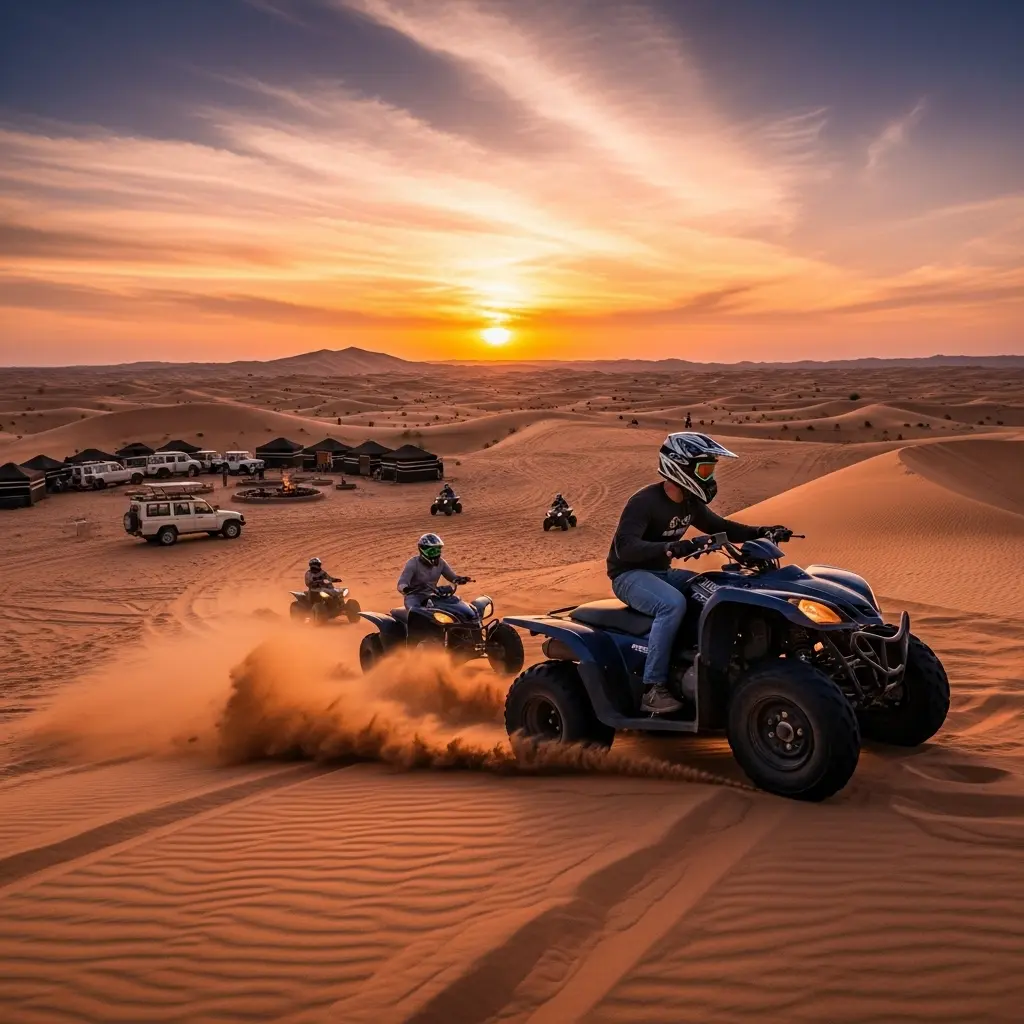
They want the sand spraying behind them.
This is where Desert Quad Biking comes in.
It is the ultimate adrenaline fix.
It puts you in control. You are the driver.
You are not just a passenger in a 4×4.
You decide the speed. You decide the path.
It is one of the most popular activities in the UAE.
But it is not a toy. It is a powerful machine.
You need to know how to handle it.
You need to know the safety rules.
You need to know where to book.
We recommend https://royaldesertadventures.ae/ for the best bike fleets.
This guide is your manual.
We will teach you how to ride.
We will tell you what to wear.
We will explain the difference between bikes.
Get ready to rev your engine.
1. Why Choose a Quad Bike Over a Car?
Dune bashing in a Land Cruiser is fun.
But you are inside a bubble.
You are separated from the elements.
Desert Quad Biking removes the barrier.
You feel the heat of the engine.
You feel the wind on your face.
You feel every bump in the sand.
It is a visceral experience.
It requires focus. You cannot look at your phone.
You have to read the terrain.
It engages your whole body.
Your arms work to steer. Your legs work to balance.
It is a workout disguised as fun.
It gives you a sense of freedom that a car cannot.
2. Understanding the Machines
Not all quad bikes are the same.
There are different sizes. There are different powers.
The most common is the 350cc.
This is a great all-rounder.
It has enough power to climb.
But it is not too aggressive for beginners.
Then there are the big boys. The 800cc beasts.
These are for experienced riders.
They have incredible torque.
They can fly up the steepest dunes.
Most rental bikes are automatic.
This means no gears. Just gas and brake.
It makes it easy to learn.
You do not have to worry about the clutch.
Just push the thumb throttle and go.
Check the bike options at https://dubaidesertsafarie.com/.
3. Safety Gear is Non-Negotiable
This is the most important section.
The desert sand looks soft.
But at 40km/h, it hits hard.
If you fall, you need protection.
A helmet is mandatory. Do not argue about this.
It protects your skull.
It also protects your face from the sun.
Goggles are essential.
The bike kicks up a lot of dust.
Without goggles, you will be blinded.
Sand in your eyes is painful. It ruins the ride.
Gloves are a good idea.
You will be gripping the handlebars tight.
Sweaty hands can slip. Gloves give you grip.
Wear long pants.
The engine gets hot. It is near your legs.
Shorts can lead to burns.
Safety is part of the Desert Quad Biking culture.
4. The Terrain: Red Dunes vs. Flat Sand
Where you ride matters.
There are two main types of areas.
First is the open flat desert.
This is usually near the camp entrance.
It is safe. It is flat.
It is good for children or nervous riders.
You can drive in circles. You can get used to the bike.
Then there are the Red Dunes.
This is the real deal.
This is where the adventure happens.
The dunes are high. The slopes are steep.
You need momentum to climb them.
You need control to descend them.
The sand here is loose. It shifts under the tires.
It is challenging but rewarding.
https://royaldesertadventures.ae/ offers tours in the deep Red Dunes.
5. Learning the Controls
Before you head out, you get a briefing.
Listen to the instructor.
The controls are simple.
On the right handlebar is the throttle.
It is usually a thumb lever.
Push it to go. Release it to stop.
The brakes are hand levers.
Just like a bicycle.
Left is usually the rear brake. Right is the front.
Use both gently.
If you brake too hard in sand, you slide.
The handlebars turn the wheels.
But you must also use your body weight.
Lean into the turn.
This keeps the bike stable.
If you sit stiff, the bike might tip.
Be active on the seat.
6. Uphill Riding Techniques
Climbing a dune requires confidence.
You cannot hesitate.
If you stop halfway up, you get stuck.
You need speed at the bottom.
Hit the gas before the slope.
Look at the top of the dune.
Keep your momentum going.
Lean forward over the handlebars.
This keeps the front wheels down.
If you lean back, the bike might do a wheelie.
That is dangerous on a hill.
As you reach the peak, let off the gas.
You do not want to fly over the edge.
You want to crest it smoothly.
Mastering the climb is the key to Desert Quad Biking.
7. Downhill Riding Techniques
Going down is scary for beginners.
It looks steep.
The instinct is to slam on the brakes.
Do not do that.
If you lock the wheels, you lose steering.
You will slide sideways and roll.
Let the engine braking do the work.
Release the throttle.
Tap the brakes gently if you are too fast.
Lean back. Shift your weight to the rear.
This keeps the back wheels grounded.
Keep the wheels straight.
Do not turn sharply on a steep downhill.
Gravity will pull you down. Just guide the bike.
8. Turning in the Sand
Turning on sand is different from asphalt.
The tires dig in.
If you turn the bars but don’t lean, you might flip.
You must hang off the side.
If you are turning left, lean left.
Push your weight onto the inside footpeg.
Keep the power on.
Power helps pull you through the turn.
If you let off the gas, the front wheels bury.
This makes steering heavy.
It takes practice.
Start with wide turns.
Get the feel of the sliding rear end.
It is called “drifting”. It is very fun once you get it.
9. Getting Stuck and Unstuck
You will get stuck. It happens to everyone.
Usually, it happens at the top of a dune.
This is called “high-centering”.
The frame of the bike sits on the sand.
The wheels hang in the air. They spin freely.
Do not just rev the engine.
You will just dig a deeper hole.
Get off the bike.
Lift the back end.
Push it sideways to solid ground.
Or ask your guide for help.
They are experts at recovery.
Do not be embarrassed. It is part of the Desert Quad Biking learning curve.
10. The Guided Convoy
Most tours operate as a convoy.
There is a lead guide. There is a tail guide.
You follow the leader.
Do not overtake the leader.
They know the safe path.
They know where the drop-offs are.
If you go rogue, you might crash.
Keep a safe distance from the bike in front.
If they stop suddenly, you need room to brake.
Dust is also an issue.
If you are too close, you eat their dust.
Stay back. Save your lungs.
Enjoy the ride together.
11. Morning vs. Sunset Rides
When should you go?
Morning: The visibility is perfect. The sand is firm from the night moisture. This makes driving easier. It is cooler. You can ride harder without overheating. The light is bright and crisp.
Sunset: The views are spectacular. The ride feels more adventurous as the light fades. However, visibility can be tricky. Shadows hide the bumps. You have to be more careful. It is very romantic if you are a couple.
For pure driving performance, go morning.
For atmosphere, go evening.
Check timetables on https://htdesertsafari.com/.
12. Age Limits and Restrictions
Who can ride?
Generally, you must be over 16 to drive.
Some operators allow 14-year-olds on smaller bikes.
Kids cannot drive the big quads.
However, many bikes are two-seaters.
A parent can drive. The child can sit on the back.
This is a great family option.
The passenger must hold on tight.
Pregnant women should not ride.
The bouncing is too risky.
People with back problems should avoid it.
The jolts can aggravate injuries.
Be honest about your health.
13. What to Wear
We mentioned safety gear. But what about clothes?
Wear clothes you don’t mind getting dirty.
The sand is fine. It gets into the fabric.
It might stain white clothes.
Wear breathable cotton.
Polyester gets very sweaty under the safety gear.
Wear sneakers or boots.
Do not wear sandals.
The engine heat will burn your toes.
Sandals will fall off in the sand.
Bring a change of clothes for after the ride.
You will want to be clean for dinner.
14. The Cost of the Thrill
Desert Quad Biking is an extra cost.
It is usually not included in the basic safari ticket.
You rent the bike by the hour or half-hour.
Prices range from 150 AED to 400 AED.
It depends on the bike size.
It depends on the duration.
A 20-minute ride in the circle is cheap.
A 1-hour open desert tour is expensive.
But it is worth the money.
It transforms the day.
Budget for it in advance.
15. The Private Tour Option
You can book a private quad tour.
Just you and the guide.
This is fantastic.
You do not have to wait for slow riders.
You can go as fast as your skills allow.
You can stop for photos whenever you want.
The guide can teach you advanced tricks.
They can take you to deeper, untouched dunes.
This is the premium experience.
https://royaldesertadventures.ae/ specializes in private adventure tours.
16. Hydration is Critical
Riding is hard work.
You are wrestling a heavy machine.
You are in the sun.
You sweat a lot.
The wind dries the sweat instantly.
You might not feel hot, but you are dehydrating.
Drink water before you start.
Drink water during the breaks.
Most guides carry water bottles.
Ask for one.
Do not wait until you feel dizzy.
Dehydration leads to mistakes. Mistakes lead to crashes.
17. Respecting the Machine
The quad bike is tough. But it can break.
Do not abuse it.
Do not rev the engine in neutral.
Do not slam gears (if manual).
Do not jump the bike unless instructed.
If you break the bike due to negligence, you might pay.
There are usually liability waivers.
Read them.
Treat the bike with respect.
It will take care of you.
18. Respecting the Environment
The desert is an ecosystem.
Do not chase animals.
If you see a camel, slow down.
The noise scares them.
Do not throw trash.
Keep your water bottles in your pocket.
Stay on the tracks if requested.
Some areas are protected conservation zones.
Riding there is illegal.
Your guide knows the boundaries.
Follow them.
19. Photography Tips
You want to look cool on the bike.
Ask your guide to take photos.
Action shots are hard to get.
The best shot is you stopped at the top of a dune.
Helmet under your arm.
Looking out over the horizon.
It looks heroic.
GoPro cameras are great here.
Mount it on your helmet.
Or on the handlebars.
Capture the driver’s eye view.
It makes for an amazing video.
20. Combining with Buggies
Quads are fun. But have you seen the Buggies?
Dune Buggies are larger.
They have a roll cage. They have bucket seats.
They are safer than quads.
They are often faster.
You can drive a buggy with a passenger next to you.
It is like a go-kart on steroids.
Many operators offer both.
You can try a quad for 30 minutes.
Then switch to a buggy.
Compare the two.
Buggies are more expensive but very comfortable.
Check comparisons at https://dubaidesertsafarie.com/.
21. Insurance Questions
Does your travel insurance cover this?
Check your policy.
Many policies exclude “extreme sports”.
Some exclude “motorsports”.
Quad biking usually falls under these categories.
You might need to buy an add-on.
The tour operator has third-party insurance.
But that covers damage to others, not necessarily your medical bills.
Be smart. Check before you ride.
22. The Role of the Guide
Your guide is not just a leader.
They are a mechanic. They can fix a loose chain.
They are a medic. They have first aid kits.
They are a teacher. They help beginners.
If you are struggling, tell them.
They will adjust the pace.
They will show you an easier line.
Do not be too proud to ask for help.
They want you to have fun safely.
23. Dealing with Dust
Dust is the enemy.
It gets everywhere.
It gets in your nose. It gets in your ears.
Wear a scarf (Shemagh) over your nose and mouth.
It filters the air.
It also looks very local and cool.
Do not wear your best watch.
The fine dust can get inside the mechanism.
Leave expensive electronics in the car.
Or put them in a sealed ziplock bag.
24. Sunset Photography on a Quad
Imagine this scene.
You are on a high dune.
The sun is a giant red ball.
You are sitting on your quad bike.
The silhouette is striking.
This is the money shot.
Guides know exactly when to stop for this.
Trust their timing.
Do not keep driving if they wave you to stop.
They are trying to get you the best view.
25. Group Bookings
Quad biking is great for groups.
Race your friends (safely).
See who can climb the highest.
It is a bonding experience.
You can book a private convoy for your group.
This keeps you all together.
You don’t have strangers mixing in.
It is perfect for bachelor parties.
Or corporate team building.
26. The Physical Toll
Be prepared to be sore.
The next day, your arms will ache.
Your thumbs will be tired from the throttle.
Your thighs will burn from balancing.
It is a good pain.
It means you rode hard.
Stretch after the ride.
Drink plenty of water.
Book a massage for the next day.
27. Why Royal Desert Adventures?
We consistently mention https://royaldesertadventures.ae/.
Here is why.
Their bikes are maintained.
We have seen operators with old, dangerous bikes.
Royal keeps their fleet fresh.
Brakes work. Tires have tread.
Their safety record is excellent.
They provide clean helmets.
Hygiene matters. Putting on a sweaty helmet is gross.
They sanitize their gear.
28. Conclusion
Desert Quad Biking is not for the faint of heart.
It is for those who want to feel alive.
It connects you to the desert in a raw, powerful way.
You conquer the dunes with your own hands.
It is an adventure you will never forget.
The roar of the engine. The golden sand. The adrenaline.
It is the highlight of any Dubai trip.
Do not just watch the desert from a window.
Ride it.
Master it.
Book your bike today.
The dunes are calling.
FAQs: Desert Safari with Quad Biking Adventures
Here are 20 detailed questions and answers to help you plan your high-speed adventure.
1. Do I need a driver’s license to ride a quad bike? No, you generally do not need a driver’s license to ride a quad bike in the designated desert areas. The activity is conducted off-road on private tracks or open desert. However, you must carry a valid ID (passport copy or Emirates ID) to prove your age. The rental agreement acts as a temporary permit for the duration of the tour.
2. Is quad biking dangerous? Like any motorsport, there is a risk involved. However, accidents are rare when riders follow instructions. The most common injuries occur when riders show off, speed excessively, or ignore the guide’s path. If you wear your helmet, keep a safe distance, and ride within your limits, it is a safe and thrilling activity.
3. What is the minimum age for quad biking? The minimum age to drive a full-sized adult quad bike is typically 16 years old. Some operators have smaller 90cc or 150cc bikes for children aged 10-15. Children younger than that can often ride as passengers with an adult on a double-seater bike, provided they can reach the footrests and hold on securely.
4. Can I ride a quad bike if I have never driven one? Yes, absolutely. Most tourists are first-time riders. The bikes are automatic, meaning there is no clutch or gear shifting to worry about. It is “rev and go”. The guides provide a safety briefing and a tutorial on how to steer and brake. You will start on flat sand to get comfortable before hitting the big dunes.
5. How fast do the quad bikes go? The speed depends on the engine size. A 350cc bike can reach speeds of 60-80 km/h on flat ground. However, on sand, the resistance slows you down. In the dunes, speed is less about top speed and more about momentum to climb. Guides will usually set a pace of 30-40 km/h for safety, which feels much faster on rough terrain.
6. Is insurance included in the rental price? Standard rental includes third-party liability insurance, which covers damage you might cause to others. However, it often does not cover damage to the bike itself if it’s deemed your fault (recklessness). It also might not cover your personal medical bills. Check if your personal travel insurance covers “quad biking” or “ATV riding”.
7. Can I bring my own helmet? Yes, you can, and it is a great idea if you have one. While operators provide helmets, they are shared (though sanitized). Bringing your own ensures a perfect fit and hygiene. It must be a certified safety helmet (DOT or ECE rated). A bicycle helmet is not sufficient protection for motorsports.
8. What happens if the bike breaks down? If the bike breaks down due to mechanical failure, the operator will replace it immediately with a spare bike or transport you back to camp. You will not be charged. However, if the bike breaks because you crashed it or abused it (e.g., jumping dunes against the rules), you may be liable for repair costs.
9. Can we double up on one bike? Yes, many operators offer double-seater quad bikes. These are larger and more stable. This is a great option for couples or for a parent with a child. It is usually cheaper than renting two separate bikes. The driver controls the bike, and the passenger holds onto the handles or the driver’s waist.
10. Is it better to book in advance or at the camp? It is much better to book in advance. If you book online with https://royaldesertadventures.ae/, you get a fixed price. If you try to rent at the camp, you are subject to availability and often higher “walk-in” prices. Pre-booking ensures your bike is reserved and ready for you upon arrival.
11. Can I take my phone with me on the ride? You can, but it is risky. If it falls out of your pocket, it is gone forever in the sand. It is better to keep it in a zipped pocket or a secure pouch. Do not try to hold your phone and drive at the same time. Stop the bike safely if you want to take a photo.
12. What is the difference between a Quad and a Buggy? A Quad bike (ATV) has handlebars like a motorcycle and you sit on top of it. You use your body weight to turn. A Dune Buggy has a steering wheel, pedals, and a roll cage, and you sit inside it like a car. Buggies are generally safer and faster, but Quads offer a more physical, connected experience.
13. Are there female-only sessions? While mixed groups are standard, you can request a private tour if you prefer a female-only environment. Some large operators may have female guides available upon request, but this is rare. The activity itself is very popular with women, and the safety gear is unisex.
14. How long does the experience last? The standard rental time is 30 minutes or 1 hour. 30 minutes is enough for a taste, but 1 hour allows you to explore deeper into the desert. If you are fit and adventurous, you can book 2 hours, but be warned—it is physically exhausting. Most people find 1 hour to be the sweet spot.
15. Can I wear shorts? It is not recommended. The engine of the quad bike is located between your legs and gets very hot. Wearing shorts exposes your bare skin to this heat, which can be uncomfortable or cause minor burns. Also, in the event of a fall, long pants provide a layer of protection against the abrasive sand.
16. Is there a weight limit for riders? Yes, usually around 120kg to 150kg for a single rider. If you exceed this, the bike’s suspension may struggle in the dunes, making it dangerous. For heavier riders, renting a larger engine bike (800cc) or a dune buggy is a better and safer option.
17. What if I get lost in the desert? You should never leave the convoy. The guide is there to navigate. If you do get separated, stop immediately. Do not keep driving. Turn off your engine and listen. The guide will backtrack to find you. The bikes are loud and leave tracks, so you will be found quickly if you stay put.
18. Can I do quad biking in the summer? Yes, but the heat is intense. It is strongly advised to book the early morning slot (sunrise) or the late afternoon slot (sunset). Midday riding in summer is dangerous due to heatstroke risks. The wind from riding cools you down, but the sun is relentless. Drink liters of water.
19. Do the bikes have lights for night riding? Yes, the bikes have headlights. However, most commercial tours operate during daylight or twilight for safety. Night riding in the deep dunes is dangerous as you cannot see the drop-offs. Night rides are usually restricted to the flat, lit areas near the camp.
20. Why check DubaiDesertSafarie.com for reviews? https://dubaidesertsafarie.com/ aggregates reviews from many travelers. You can see which operators have the newest bikes and the best safety records. Reading recent reviews helps you avoid companies that might have rude guides or faulty equipment. It is a valuable research tool before you book.
Table: Bike Size Guide
Table: Safety Checklist
This is your roadmap to the dunes. Read it. Learn it. Then book your ride. Conquer the sand.