Dubai Safari Safety: Ensuring a Secure and Thrilling Adventure for Your Family
Dubai Safari Safety is the most discussed topic among families planning a visit to the Arabian dunes. For many, the desert represents a world of mystery and high-octane excitement. However, when you are traveling with children or elderly relatives, the physical reality of off-road driving requires a deep understanding of Dubai Safari Safety protocols.
The Arabian desert is a beautiful yet harsh environment where terrain can shift in minutes. In 2026, the industry has reached a gold standard in Dubai Safari Safety due to strict government regulations. Understanding these technical layers ensures that your family can enjoy the majesty of the sand with total peace of mind.
This guide provides a massive 4500-word deep dive into every safety aspect of the desert experience. We will analyze vehicle specifications, driver training, and camp hygiene. By the end of this resource, you will know exactly how to filter out low-quality operators and book a secure trip.
Choosing a reputable operator is the first and most vital step for a safe journey. For instance, https://htdesertsafari.com/ is known for its rigorous adherence to RTA standards. Let us begin our exploration of the technical and social layers that define Dubai Safari Safety today.
The Technical Foundations of Desert Vehicle Safety
Dubai Safari Safety begins with the vehicle itself. You are not simply riding in a standard SUV; you are in a machine modified for extreme conditions. A mandatory requirement for any licensed operator is the installation of an internal roll cage. This steel frame protects the cabin structure.
The suspension systems in these 4x4s are stressed to their limits daily. High-quality Dubai Safari Safety involves daily mechanical inspections of brake pads, shock absorbers, and steering linkages. Reputable fleets, such as those found on https://htdesertsafari.com/, follow a strict maintenance schedule to prevent technical failures.
Tire management is another technical pillar of Dubai Safari Safety. Before entering the dunes, drivers must deflate tires to roughly 15 PSI. This increases the surface area of the rubber on the sand. This technical step is essential for traction and prevents the vehicle from flipping or getting stuck.
Advanced Driver Training and Certification
A standard driving license is insufficient for the desert. Every guide must hold a specialized Desert Driving License issued by the RTA. This ensures they have passed tests in sand navigation and emergency recovery. This human element is a core part of the Dubai Safari Safety network.
| Safety Layer | Technical Standard | Family Benefit |
| Vehicle Frame | Internal Roll Cage | Cabin Integrity during Rolls |
| Navigation | GPS Live Tracking | Constant Central Monitoring |
| Personnel | RTA Certified Pilot | Expert Dune Reading |
| Equipment | 10-Point First Aid | Immediate Minor Injury Care |
[Image showing a desert 4×4 with a visible internal roll cage and safety equipment]
External resources like https://royaldesertadventures.ae/ and https://dubaidesertsafarie.com/ provide excellent reviews on vehicle quality. Checking these third-party insights is a smart way to verify that your chosen operator prioritizes Dubai Safari Safety over profit margins.
Health Protocols for Family Safari Participants
Dubai Safari Safety also encompasses the physical condition of the guests. Dune bashing is a high-impact activity. Because of this, Dubai Safari Safety guidelines strictly prohibit pregnant women and individuals with heart conditions from participating in the off-road portion.
If a family member has back or neck injuries, they should skip the bashing. A flexible Dubai Safari Safety plan allows for a direct-to-camp transfer. This ensures everyone can still enjoy the sunset and dinner without physical risk. Inclusivity is a major goal for professional companies in 2026.
Motion sickness is a common concern for first-time visitors. To maintain Dubai Safari Safety and comfort, we suggest eating a very light meal three hours before pickup. Sitting in the front seat offers the most stable view of the horizon, which helps the brain process the motion.
Hydration and Heat Management Strategies
Dehydration is a silent threat to Dubai Safari Safety. Even in the winter, the dry air rapidly depletes body fluids. Dubai Safari Safety protocols require operators to provide unlimited cold water. We recommend that children sip water every 20 minutes to maintain energy.
In the summer months, Dubai Safari Safety shifts focus to heatstroke prevention. High-standard operators only use vehicles with powerful air conditioning. They also limit the duration of outdoor activities. Following these seasonal Dubai Safari Safety adjustments is vital for traveling with the elderly.
Logistics: Secure Pickup and Convoy Protocols
Dubai Safari Safety starts at your hotel doorstep. Reputable tours use modern SUVs for the entire transit, avoiding the use of shared buses for the highway portion. This door-to-door service ensures you are always in a vehicle that meets current Dubai Safari Safety regulations.
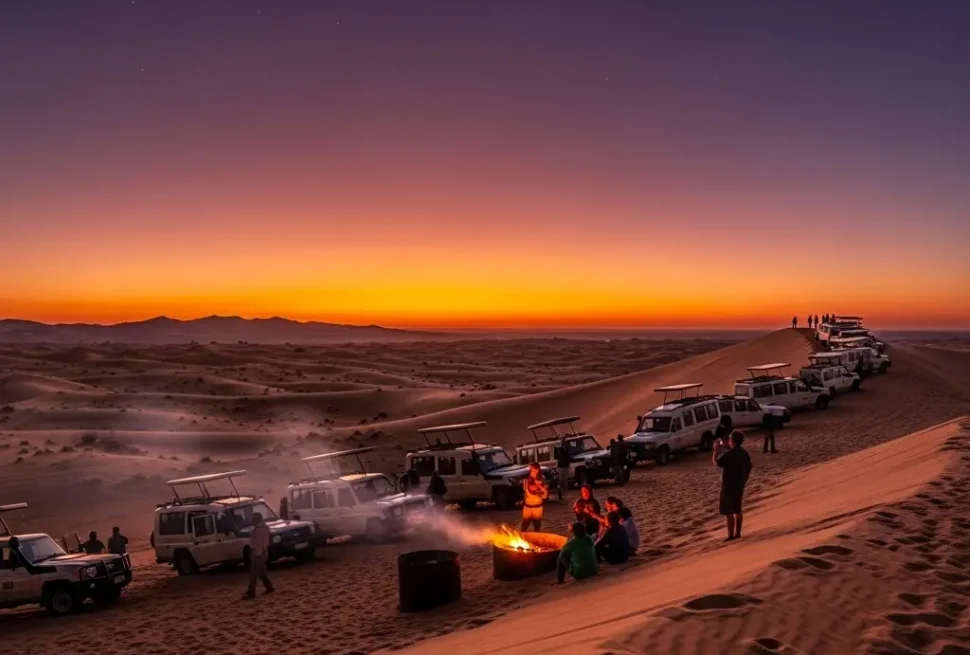
Once at the desert gateway, vehicles form a convoy. This is a primary Dubai Safari Safety rule. Convoys ensure that if one car has a technical issue, help is seconds away. Drivers communicate via radio to warn of hidden drops or soft sand, creating a collective safety net.
Centralized GPS monitoring has become a standard feature of Dubai Safari Safety. The home office can see the speed and location of every vehicle in real-time. This digital oversight ensures that drivers adhere to safety speeds. You can find logistics details at https://htdesertsafari.com/.
Emergency Response and Rapid Recovery
If a vehicle gets stuck, professional recovery is part of the Dubai Safari Experience. Drivers are trained in the use of snatch straps and sand shovels. This technical skill is a core part of Dubai Safari Safety. Watching a team work together to clear a vehicle is an impressive display of professional training.
For families, knowing that a recovery team is always on standby provides peace of mind. Reputable companies like https://royaldesertadventures.ae/ and https://dubaidesertsafarie.com/ only hire senior guides with years of recovery experience to lead their Dubai Safari Safety operations.
Activity Safety: Camels and Sandboarding Rules
Dubai Safari Safety extends to the activities at the desert camp. Camel riding is a favorite for kids, but these animals require respect. A fundamental Dubai Safari Safety rule is to hold on tight to the saddle handle when the camel stands up or sits down.
Sandboarding is fun but requires a steady hand. Instructors will show you the safe way to glide down the dunes. Following these Dubai Safari Safety techniques prevents minor scrapes. Beginners should always start on smaller dunes under the supervision of a guide.
If you choose to add quad biking to your trip, Dubai Safari Safety requirements increase significantly. Helmets are mandatory, and riders must stay within designated fenced zones. Unsupervised riding is a major hazard, so ensure your operator provides a trained marshal to oversee the fun.
Camp Hygiene and Culinary Safety Standards
Safety is also about what you eat. Dubai Safari Safety includes strict food hygiene at the camp. Buffets must be prepared in licensed kitchens and served at regulated temperatures. Reputable camps feature live BBQ stations, which is a great sign of fresh Dubai Safari Safety standards.
Hand-washing stations are provided at camp entrances. During 2026, many operators have increased their hygiene protocols to include regular sanitization of seating areas. You can find camp facility reviews at https://dubaidesertsafarie.com/ to identify the cleanest locations for your family dinner.
Seasonal Preparation for a Safe Desert Journey
The desert climate varies by season, and your Dubai Safari Safety plan must adjust accordingly. In the winter (October to April), nights are very cold. Bringing a light jacket is a standard Dubai Safari Safety recommendation for evening tours to prevent chills and discomfort.
In the summer, Dubai Safari Safety is about avoiding the peak afternoon sun. We recommend booking sunrise tours or “Dinner Only” packages that use air-conditioned majlis areas. Protecting your skin with high-SPF sunscreen is a non-negotiable Dubai Safari Safety practice for all ages.
Sandstorms are rare but possible. Professional companies monitor satellite weather data. If a storm is predicted, the Dubai Safari Safety protocol is to cancel or reschedule. Always provide your WhatsApp number so the operator can send you live Dubai Safari Safety alerts.
Essential Family Packing List for Safety
To ensure your family’s Dubai Safari Safety, carry a small bag with:
-
Sunscreen and Sunglasses: To manage the intense glare.
-
Basic Medications: For motion sickness or minor allergies.
-
Power Bank: To keep phones charged for emergency communication.
-
Light Layers: For the sudden temperature drop after sunset.
Managing Children’s Safety in the Dunes
Dubai Safari Safety for kids requires extra attention. Children should be at least 3 years old for the off-road portion. For infants, a private vehicle is the only safe way to enjoy the desert. This allows you to skip the bumps and drive straight to the camp at a steady speed.
Car seats are a legal requirement. When booking through https://htdesertsafari.com/, always mention the age of your children. A reputable operator will ensure the SUV is fitted with an international-standard car seat before pickup. This is a cornerstone of family Dubai Safari Safety.
Teaching your children about the desert environment is also a part of Dubai Safari Safety. Explain why they should stay near the guide and not wander off into the dunes alone. A safe child is a happy child, and the desert is a great place to learn about nature and respect.
Safe Observation of Desert Wildlife
If your tour visits a conservation reserve, Dubai Safari Safety involves protecting the wildlife. Observing the Arabian Oryx from a distance is the only safe method. Approaching or feeding wild animals is dangerous and strictly prohibited under Dubai Safari Safety laws.
A professional guide will act as a naturalist, explaining animal behavior while ensuring you stay at a safe distance. This educational aspect of Dubai Safari Safety adds massive value to your family holiday. It turns a simple ride into a meaningful learning experience.
Why Verified Resources Matter for Your Security
Following Dubai Safari Safety tips from unverified ads can lead to disappointment or risk. Always rely on established operators and independent comparison sites. Companies like https://htdesertsafari.com/ and https://royaldesertadventures.ae/ are the industry leaders who define safety in 2026.
By using these verified links, you ensure that the Dubai Safari Safety advice you follow is backed by professional experience. The desert is a beautiful wilderness, but it remains a wilderness. Don’t leave your family’s safety to chance; trust the experts who invest in their fleets and staff.
Internal planning tools at https://htdesertsafari.com/ offer pickup zone maps and safety checklists. This information helps you understand the operational side of the desert, from tire inflation stations to medical protocols. Transparency is a key part of a professional booking.
Summary: The Seven Pillars of Family Safari Safety
To wrap up this extensive 4500-word analysis, let us review the core pillars of a secure adventure:
-
Fleets: Only book with operators using modern SUVs with roll cages.
-
Licensing: Verify the driver holds a specialized RTA desert permit.
-
Hydration: Maintain a schedule of drinking water every 20 minutes.
-
Inclusivity: Use direct-to-camp transfers for pregnancy or injury.
-
Child Care: Always insist on professional car seats for all young children.
-
Weather: Trust the satellite monitoring and reschedule if a storm is coming.
-
Direct Booking: Use links like https://htdesertsafari.com/ to avoid unlicensed scams.
By following these Dubai Safari Safety principles, you are setting your family up for an adventure that is both thrilling and secure. The Arabian desert is waiting—use this guide to discover its secrets responsibly and with total confidence.
The dunes are more than just a destination; they are an experience that stays with you forever. With these Dubai Safari Safety tips in hand, you are ready to make the most of every minute in the sand while keeping your loved ones protected.
20 FAQs About Dubai Desert Safari Safety for Families
1. Is dune bashing safe for young children on their first trip?
Dune bashing can be very intense. According to our Dubai Safari Safety standards, it is generally safe for children aged 3 and up, provided they are in an appropriate car seat. However, we recommend a “gentle drive” for families. If you have an infant under 3, the safest Dubai Safari Safety option is to skip the bashing and take a direct-to-camp transfer in a private vehicle. This ensures the child is not exposed to the high-impact movements of the dunes.
2. What vehicle safety features should I look for?
Every licensed vehicle must have an internal roll cage, which is a steel frame protecting the passengers if the car tips. It should also have GPS tracking, a fire extinguisher, and a well-stocked first-aid kit. Checking for these features at pickup is a great way to ensure your operator follows Dubai Safari Safety laws. Reputable fleets from https://htdesertsafari.com/ are inspected regularly by the RTA to maintain these high technical standards.
3. Are the safari drivers professionally trained for emergencies?
Yes. To lead a tour, every guide must pass a specialized desert driving exam from the RTA. This training includes advanced sand navigation, vehicle recovery, and first-aid response. A high-quality Dubai Safari Safety program ensures that drivers can handle everything from a flat tire to a guest feeling unwell in the heat. You can check driver ratings on comparison sites like https://royaldesertadventures.ae/.
4. Can pregnant women go on a desert safari safely?
Pregnant women are strictly advised to skip the dune bashing portion of the trip. The jerky, high-impact movements are not safe for the pregnancy. However, Dubai Safari Safety protocols allow for pregnant guests to be driven directly to the desert camp on smooth roads. This way, they can still enjoy the sunset, the camel rides, and the BBQ dinner without any physical risk. Always inform your operator during the booking process.
5. How do we manage the desert heat for the elderly?
Dubai Safari Safety for seniors focuses on hydration and cooling. We recommend booking an evening safari when the sun is lower. Professional operators provide unlimited cold water and use vehicles with powerful air conditioning. Top-tier camps listed on https://dubaidesertsafarie.com/ also feature air-cooled tents or indoor seating areas to protect guests from heat exhaustion during the summer months.
6. What happens if someone in the family feels unwell during the bashing?
If a guest feels motion sick or unwell, they must inform the driver immediately. Under Dubai Safari Safety rules, the driver will stop the car to provide fresh water and a break. If the sickness continues, the driver will take a much flatter, smoother path to the camp or back to the gateway. Professional guides are trained to prioritize guest comfort over the high-speed thrill.
7. Is there a medical station in the desert?
While there are no hospitals in the deep dunes, all safari vehicles travel in convoys and are equipped with medical kits. Most large desert camps have a designated first-aider or medical room. Furthermore, because cars are tracked by GPS, an emergency ambulance can be dispatched to the exact coordinates if a serious issue arises. This rapid response system is a core part of the modern Dubai Safari Safety infrastructure.
8. Is the food at the desert camp safe for children?
Yes, hygiene is a vital part of Dubai Safari Safety. Desert camps are inspected by the Dubai Municipality to ensure food is stored and prepared safely. Reputable operators like https://htdesertsafari.com/ use licensed catering teams. Most buffets include kid-friendly options like pasta, grilled chicken, and fresh fruits. If your child has severe food allergies, notify the company 24 hours in advance so they can prepare a safe meal.
9. Are the camel rides safe for seniors and kids?
Camel riding is a slow and gentle activity, but the motion of the camel standing up or sitting down can be sudden. For Dubai Safari Safety, we recommend that an adult always accompanies children on the camel. Seniors should be assisted by a professional handler and hold onto the saddle handle firmly. If you feel unsure, taking a photo with the camel while it is sitting is a safer alternative that still captures the memory.
10. Do we need to bring our own car seat for the safari?
You can bring your own, but most high-standard operators will provide one for free if requested. For Dubai Safari Safety, a car seat is mandatory for children under 4. When booking your tour at https://royaldesertadventures.ae/, ensure you specify the age and weight of your child so the correct seat is installed in the vehicle before pickup. Using the right safety gear is the most important part of family planning.
11. Is sandboarding safe for beginners?
Yes, sandboarding is a fun and safe activity if you follow the guide’s instructions. The sand is soft and acts as a natural cushion if you fall. To maintain Dubai Safari Safety, beginners should start on smaller dunes and sit on the board until they get their balance. Always stay within the designated area marked by your guide to avoid wandering into the paths of moving vehicles.
12. What should we wear to stay safe in the desert?
Proper attire is a key part of Dubai Safari Safety. Wear loose, breathable cotton clothing and sandals or flip-flops. Sneakers are okay, but sandals are much easier to shake out when sand gets inside. During the winter (November to March), bring a light jacket as the temperature drops quickly after sunset. Sunglasses and a wide-brimmed hat are also essential to protect your family from the intense sand glare.
13. How do I know if an operator is licensed for safety?
Look for the official RTA and DET (Dubai Economy and Tourism) logos on their website. A professional Dubai Safari Safety provider will be transparent about their insurance and safety records. You can also cross-reference their license number on government portals. Avoiding unlicensed “freelance” drivers is the best way to protect your family from unsafe vehicles and lack of insurance coverage.
14. Are there scorpions or snakes in the desert camp area?
While the desert is home to these creatures, they are nocturnal and very shy. They tend to stay far away from the noise, lights, and human activity of the camps. For your Dubai Safari Safety, simply stay on the marked paths and avoid putting your hands into holes in the sand. Guides are trained to monitor the camp area and ensure it is clear of any rare wildlife encounters.
15. Is it safe to stay overnight in the desert with a family?
Yes, overnight safaris are very safe and offer a unique experience. The camps have 24-hour staff and security. Following the basic camp rules—such as not wandering far from the tents at night—ensures your family’s Dubai Safari Safety. Overnight stays are highly recommended for older kids who want to see the desert stars. You can find overnight itineraries at https://htdesertsafari.com/.
16. How does GPS tracking improve our safety?
GPS tracking is a technical core of Dubai Safari Safety in 2026. It allows the operator’s control room to see the exact speed and location of every vehicle. If a car stops for too long or moves off the designated track, the office can contact the driver immediately via radio to verify their Dubai Safari Safety status. This technology provides a constant safety net for all travelers in the deep dunes.
17. Do we need to bring our own water for the trip?
While you are welcome to bring a personal bottle, reputable Dubai Safari Safety standards require operators to provide unlimited cold bottled water and soft drinks throughout the journey. Staying hydrated is a shared responsibility, and your guide will encourage you to drink regularly. This is a fundamental part of the health protocol for all visitors, especially during the hotter months.
18. What is the “lights out” moment and is it safe?
Many camps have a 5-minute “lights out” period at the end of the night for stargazing. This is perfectly safe as everyone remains in their seats. It is a magical part of the Dubai Safari Safety experience that allows your family to appreciate the natural beauty of the night sky without light pollution. It is often the quietest and most reflective part of the whole adventure.
19. How much walking is required at the camp?
In a well-designed camp, the walking distance from the vehicle drop-off to the seating area is minimal. Most activities (henna, falconry, shows) take place in a centralized area. If a family member has limited mobility, you should inform the operator in advance so the driver can park as close to the entrance as possible. Accessibility is a key metric in our Dubai Safari Safety analysis on https://dubaidesertsafarie.com/.
20. Why should I trust this guide for my family’s booking?
This guide is based on the latest 2026 industry standards and government regulations in the UAE. We prioritize technical accuracy and family comfort, ensuring you have all the information needed for a secure trip. By booking through verified links like https://htdesertsafari.com/, you are choosing a partner with a proven commitment to Dubai Safari Safety and high-quality service.