
Desert Safari Challenges 24 Hours of Survival and Thrills
Most people visit the desert for a few hours.
They take a selfie.
They eat a barbecue dinner.
Then they go back to their air-conditioned hotels.
But there is a different breed of traveler.
Some seek something harder.
They seek the Desert Safari Challenges that only a full day and night can provide.
Spending 24 continuous hours in the dunes is not a vacation.
It is a test.
It tests your body against the heat and the cold.
It tests your mind against the silence and the vastness.
The desert is a living, breathing entity.
It changes every hour.
At noon, it is a furnace.
At midnight, it is a freezer.
To survive and enjoy this, you need more than just a ticket.
You need preparation.
You need the right mindset.
This guide is for those who want to push their limits.
We will walk you through the 24-hour cycle of the Arabian desert.
We will show you how to turn a difficult environment into a personal victory.
Are you ready to face the Desert Safari Challenges?
The Psychology of the 24-Hour Challenge
Why do we do this?
Why leave comfort for hardship?
The answer lies in resilience.
Modern life is too easy.
We have forgotten what it feels like to be uncomfortable.
The Desert Safari Challenges strip away the layers of modern convenience.
There is no Wi-Fi in the deep dunes.
There is no Uber to pick you up if you get tired.
You are committed.
This commitment creates a mental shift.
You stop worrying about emails.
You start worrying about water.
You stop worrying about likes.
You start worrying about the sun.
This shift is incredibly healthy for the brain.
It resets your dopamine receptors.
It forces you to be present in a way that meditation apps never could.
When you complete the 24 hours, you feel a sense of accomplishment.
You survived the elements.
You respected the wild.
And you come back stronger.
Phase 1: The Preparation and Gear
You cannot just walk into the desert.
That is dangerous.
The first of the Desert Safari Challenges is packing.
You need to pack for two different seasons.
Summer for the day.
Winter for the night.
The Day Kit:
-
Loose, white linen clothes.
-
Wide-brimmed hat.
-
UV-blocking sunglasses.
-
Sunscreen (SPF 50+).
-
Electrolyte powder.
The Night Kit:
-
Thermal underwear.
-
Wool socks.
-
Heavy hoodie or fleece jacket.
-
Beanie hat.
-
Sleeping bag rated for 10°C.
You also need a “Go Bag” for emergencies.
This should have a whistle, a small mirror (for signaling), and a first aid kit.
Water is heavy, but you must carry it.
Rule of thumb: 4 liters per person for 24 hours.
Do not rely solely on the tour operator.
Have your own backup.
Booking with https://royaldesertadventures.ae/ ensures you have professional backup.
They provide the infrastructure.
But you provide the personal gear.
Phase 2: The Afternoon Heat (Hours 1-4)
The journey usually begins at 2:00 PM.
This is the hottest part of the day.
The sun is high.
The sand is blindingly bright.
The first of the physical Desert Safari Challenges is heat tolerance.
You get into the 4×4 Land Cruiser.
The AC is on, but the sun beats through the glass.
You drive away from the city.
The buildings disappear.
The road turns to gravel, then to sand.
The driver deflates the tires.
The ride gets bumpy.
Motion sickness is a real threat here.
Your body is fighting the heat and the movement simultaneously.
To survive this, look at the horizon.
Do not look at your phone.
Sip water constantly.
When the car stops for a photo, step out.
The heat will hit you like a hammer.
Embrace it.
Feel the power of the sun.
But do not stay out for more than 10 minutes.
Get back in the car to cool down.
This interval training prepares your body for the evening.
Phase 3: The Dune Bashing Endurance (Hours 4-6)
Dune bashing is fun for 20 minutes.
Doing it for an extended period is a workout.
Your core muscles engage to keep you upright.
Your neck muscles work to stabilize your head.
It is physically exhausting.
The Desert Safari Challenges here are about stamina.
You will feel tired.
The adrenaline wears off, and fatigue sets in.
This is the “slump.”
Push through it.
Engage with the driver.
Ask him to stop on a high ridge.
Get out and walk.
Walking on soft sand is 3 times harder than walking on pavement.
Your calves will burn.
Your heart rate will spike.
This is the workout you signed up for.
It clears the toxins from your body through sweat.
Just make sure you are replacing that sweat with electrolytes.
Check https://dubaidesertsafarie.com/ for operators who offer extended dune bashing sessions if you want to push this physical aspect further.
Phase 4: The Sunset Transition (Hours 6-7)
The sun begins to dip.
The temperature drops slightly.
The light turns gold.
This is the mental break.
The challenge here is to slow down.
Your brain is racing from the drive.
You need to switch gears.
Find a quiet spot.
Sit on the sand.
Watch the colors change.
This requires patience.
Most people take a photo and leave.
The challenge is to sit there for the full hour.
Watch the sun actually touch the horizon.
Watch the blue hour fade into black.
This transition is profound.
It signals the end of the “Day Survival” phase.
It signals the start of the “Night Survival” phase.
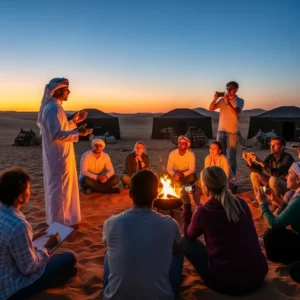
Phase 5: The Camp and Social Dynamics (Hours 7-10)
You arrive at the camp.
There are other people.
There is food.
The challenge here is social.
You are tired.
You might be sandy and sticky.
But you are part of a community for the night.
Engage with the culture.
Try the Henna painting.
Smoke the Shisha.
Eat the BBQ dinner.
But be mindful of your intake.
Do not overeat.
Digesting heavy meat takes energy.
It raises your body temperature.
Eat light.
Stick to salads and grilled chicken.
Hydrate with water, not just soda.
The entertainment (belly dancing, Tanoura) is a distraction.
Enjoy it, but remember your goal.
You are here for the 24 hours.
Don’t use all your energy clapping.
Save some for the long night ahead.
Operators like https://htdesertsafari.com/ offer excellent camp facilities that balance comfort with authenticity.
Phase 6: The Exit of the Crowds (Hour 10)
Around 9:00 PM, a strange thing happens.
The buses arrive.
The tourists pack up.
The engines roar.
And then, they leave.
The camp empties out.
The lights are dimmed.
The generator is turned off.
Suddenly, silence.
This is the real beginning of the Desert Safari Challenges.
You are now alone (or with a small group).
The desert feels bigger.
The darkness feels heavier.
The safety net of the crowd is gone.
It is just you and the elements.
This moment can be scary for some.
It triggers a primal fear of the dark.
Acknowledge the fear.
Then let it go.
Phase 7: The Cold Reality (Hours 10-12)
By 11:00 PM, the heat is a memory.
The sand sheds heat rapidly.
The temperature can drop to 15°C or 10°C.
If it is winter, it can go to 5°C.
You will start to shiver.
The Desert Safari Challenges now become about thermal regulation.
Put on your layers.
Put on your beanie.
Do not wait until you are freezing.
Start the campfire.
Gathering wood (if permitted) or managing the fire is a task.
It keeps you moving.
It keeps you warm.
Sit close to the fire.
The warmth is life.
This is when stories are told.
This is when you feel like a true Bedouin.
Phase 8: The Psychological Wall (Hours 12-16)
It is 2:00 AM.
The fire has died down.
You are in your sleeping bag.
It is pitch black.
The silence is so loud it hurts your ears.
You might hear a fox bark.
You might hear the wind hiss.
Your mind starts to play tricks on you.
“Is that a snake?”
“Is that a scorpion?”
This is the psychological wall.
It is the hardest of the Desert Safari Challenges.
You are far from your comfort zone.
You are vulnerable.
To overcome this, look up.
The stars are your companions.
The Milky Way is visible.
Focus on the beauty, not the fear.
Control your breathing.
Trust your equipment.
Trust that you are safe in the designated camp area.
Eventually, exhaustion will take over.
And you will sleep the deepest sleep of your life.
Phase 9: The Pre-Dawn Chill (Hours 16-18)
4:00 AM.
This is the coldest part of the night.
The dew settles on your sleeping bag.
You might wake up shivering.
The dampness seeps into your bones.
This is the endurance test.
You want to go inside.
But there is no inside.
You have to tough it out.
Curl up tighter.
Pull the blanket over your head.
Remember that the sun is coming.
This discomfort builds character.
It makes you appreciate your bed back home.
It makes you grateful for a roof.
Phase 10: The Resurrection (Hour 18)
5:30 AM.
The sky turns purple.
The birds start to chirp.
The sun breaks the horizon.
The warmth hits your face instantly.
This feeling of relief is indescribable.
You survived the night.
You made it through the cold.
The Desert Safari Challenges reward you with the most beautiful sunrise you will ever see.
The fog lifts off the dunes.
The world is reborn.
You feel energized.
You feel alive.
Make a hot coffee.
Hold the cup in your hands.
That first sip is victory.
Phase 11: The Morning Trek (Hours 19-21)
Now that you are awake, move.
The morning sand is firm.
It is cool.
Go for a hike.
Explore the area around the camp.
Look for tracks.
You will see the evidence of the night’s activity.
Beetle tracks.
Lizard trails.
Fox prints.
The desert was busy while you slept.
This trek is the exploration phase of the Desert Safari Challenges.
Climb the highest dune you can find.
Sit on top.
Meditate.
There is no sound of engines.
No sound of people.
Just the wind.
This solitude is the prize.
Phase 12: The Breakfast of Champions (Hour 21)
You return to the camp.
The staff prepares breakfast.
Eggs, bread, fruit.
It tastes better than any brunch in the city.
You eat with your hands (if you want).
You share stories with your fellow survivors.
There is a bond formed.
You went through the Desert Safari Challenges together.
You respect each other.
The food refuels your body.
You realize how much energy you burned just by existing in the desert.
Phase 13: The Final Hours (Hours 22-24)
The sun is rising higher.
The heat is returning.
The cycle is completing.
You pack up your gear.
You shake the sand out of your shoes.
You leave the campsite exactly as you found it.
“Leave No Trace” is part of the challenge.
Respect the environment.
The drive back to the city begins.
You look out the window.
The dunes look different now.
They are not just scenery.
They are a place you lived in.
You know how cold they get.
You know how hard they are to walk on.
You have a relationship with the landscape.
The Role of Water in the Challenge
We mentioned water, but let’s go deeper.
Dehydration in the desert is sneaky.
The sweat evaporates instantly.
You don’t feel wet, so you think you are fine.
But your blood is thickening.
Your headache starts.
The challenge is to drink before you are thirsty.
Set a timer on your watch.
Every 20 minutes, take a sip.
Monitor your urine color.
If it is dark, you are failing the Desert Safari Challenges.
Drink more.
This discipline is crucial.
It keeps your mind sharp.
It keeps your body functioning.
The Wildlife Encounter
During the 24 hours, you are the intruder.
The animals own this place.
You might see an Arabian Oryx.
You might see a Gazelle.
You might see a Camel Spider (harmless but scary looking).
The challenge is to observe without disturbing.
Do not chase them.
Do not feed them.
Sit still.
Let them come to you.
Being close to a wild animal in its habitat is a privilege.
It reminds you that we share this planet.
Why Choose Royal Desert Adventures?
You need a partner for this 24-hour mission.
You need someone who won’t abandon you.
https://royaldesertadventures.ae/ specializes in overnight stays.
They provide high-quality sleeping gear.
They have security at the camp.
They have backup vehicles.
Knowing you have this support allows you to push your limits safely.
They handle the logistics.
You handle the experience.
Digital Detox as a Challenge
One of the hardest parts of the Desert Safari Challenges is the phone.
You will want to check Instagram.
You will want to text friends.
Challenge yourself to turn it off.
Or use it only for photos (in airplane mode).
Disconnecting for 24 hours is hard.
We are addicted to dopamine hits.
But the desert offers a different kind of dopamine.
The dopamine of discovery.
The dopamine of peace.
If you can last 24 hours without the internet, you win.
You reclaim your attention span.
The Cost of the Challenge
Is it expensive?
It costs more than a standard evening tour.
You are paying for 3 meals.
You are paying for sleeping gear.
You are paying for the staff to stay overnight.
But compare it to a hotel room.
A hotel room is just a room.
This is an experience.
The value is in the memory.
Five years from now, you won’t remember the hotel.
You will remember the night you froze in the desert and loved it.
Conclusion
The Desert Safari Challenges are not for everyone.
If you like room service and fluffy robes, stay in the city.
But if you want to feel alive, go to the dunes.
The 24-hour cycle is a journey through extremes.
Heat and cold.
Light and dark.
Noise and silence.
It tests every part of you.
But it gives back more than it takes.
It gives you confidence.
It gives you perspective.
It gives you a story.
So, pack your bag.
Prepare your mind.
And accept the challenge.
Start your 24-hour adventure with https://royaldesertadventures.ae/.
Find the best overnight packages at https://dubaidesertsafarie.com/.
Test your endurance with https://htdesertsafari.com/.
The clock is ticking.
The desert is waiting.
Survive it.
Comparison Table: 6-Hour vs. 24-Hour Safari
20 FAQs About Desert Safari Challenges
1. Is it safe to stay in the desert for 24 hours?
Yes, if you book with a licensed operator. They have secure campsites, first aid kits, and communication devices. Staying alone without a guide is dangerous and not recommended for beginners due to the risk of getting lost or stuck.
2. How cold does it really get at night?
In winter (December-February), it can drop to 5°C-10°C. In summer, it stays around 25°C-30°C. The drop from the daytime high is drastic, which shocks the body. Always pack layers regardless of the season.
3. What happens if I have a medical emergency at 3 AM?
Professional operators have emergency protocols. They can transport you to the nearest hospital or clinic, which is usually 45-60 minutes away. Guides are trained in CPR and first aid.
4. Are there toilets available overnight?
Yes, established overnight camps have permanent toilet and shower blocks. They are clean and have running water. You don’t have to dig a hole. This makes the Desert Safari Challenges much more manageable for hygiene.
5. Can I bring my own tent?
Usually, the operator provides tents, mattresses, and blankets. If you have a specific high-tech tent you want to test, ask the operator beforehand. Most are happy to let you pitch your own gear within the camp perimeter.
6. What about scorpions and snakes?
They exist, but they avoid human activity. They are shy. Keep your tent zipped up. Shake out your shoes before putting them on. Do not walk barefoot in the dark. Encounters are extremely rare in tourist camps.
7. How much water should I bring?
The operator provides unlimited water. However, for a 24-hour challenge, it is smart to bring your own 2-liter CamelBak or water bottle to keep with you in the tent or during hikes, so you don’t have to walk to the kitchen every time.
8. Can I charge my phone?
Most camps have charging stations or sockets in the communal area. However, power might be turned off late at night to save generator fuel. Bring a high-capacity power bank (20,000mAh) to be self-sufficient.
9. Is food provided for the whole 24 hours?
Typically, dinner and breakfast are provided. Lunch for the next day might be included depending on the package, or you might be dropped back before lunch. Pack some energy bars or nuts for snacks in between meals.
10. Can children do the 24-hour challenge?
Yes, kids love camping. However, the extreme temperature changes can be hard on infants. It is best for children aged 5 and up. Ensure you bring extra warm clothes for them.
11. What is the hardest part of the challenge?
For most people, it is the cold at night or the lack of digital entertainment. Boredom can set in if you are not used to silence. Preparing mentally for “doing nothing” is key.
12. Can I start a bonfire?
You cannot gather wood from the desert (it damages the ecosystem). The camp will provide wood and a designated fire pit. Do not start fires randomly in the dunes.
13. What if I get sand in my eyes?
It happens. Rinse it out with clean water immediately. Do not rub your eyes as sand can scratch the cornea. Wear wraparound sunglasses to prevent this.
14. Is alcohol allowed?
Most camps have a bar where you can buy drinks during the evening. However, getting drunk is a bad idea for a survival challenge. Alcohol dehydrates you and lowers your body temperature, making the night feel colder.
15. Can I do this solo?
Yes, it is a great solo challenge. You will be safe in the camp with the staff. It is a powerful way to build self-reliance and confidence.
16. Do I need trekking shoes?
Yes. Walking in sand with flip-flops is annoying and tiring. Lightweight hiking boots or sneakers are best. They protect your feet from heat, cold, and insects.
17. Why use the link royaldesertadventures.ae?
Using https://royaldesertadventures.ae/ ensures you are booking a “supported” challenge. They provide the safety net that allows you to push your limits without risking your life.
18. What do I do if I panic?
The vastness of the desert can cause agoraphobia (fear of open spaces) or anxiety. Focus on your breathing. Sit near the fire. Talk to the guide. Remember that you are in a controlled environment, not lost in the wild.
19. How do I clean up in the morning?
There are showers at the camp. Bring a towel and toiletries. A morning shower after a night in the sand is incredibly refreshing and helps wake you up for the day ahead.
20. Will I have mobile signal?
In most Dubai desert camps, yes, there is 4G signal. But as part of the Desert Safari Challenges, try not to use it. If you need it for an emergency, it is there.